
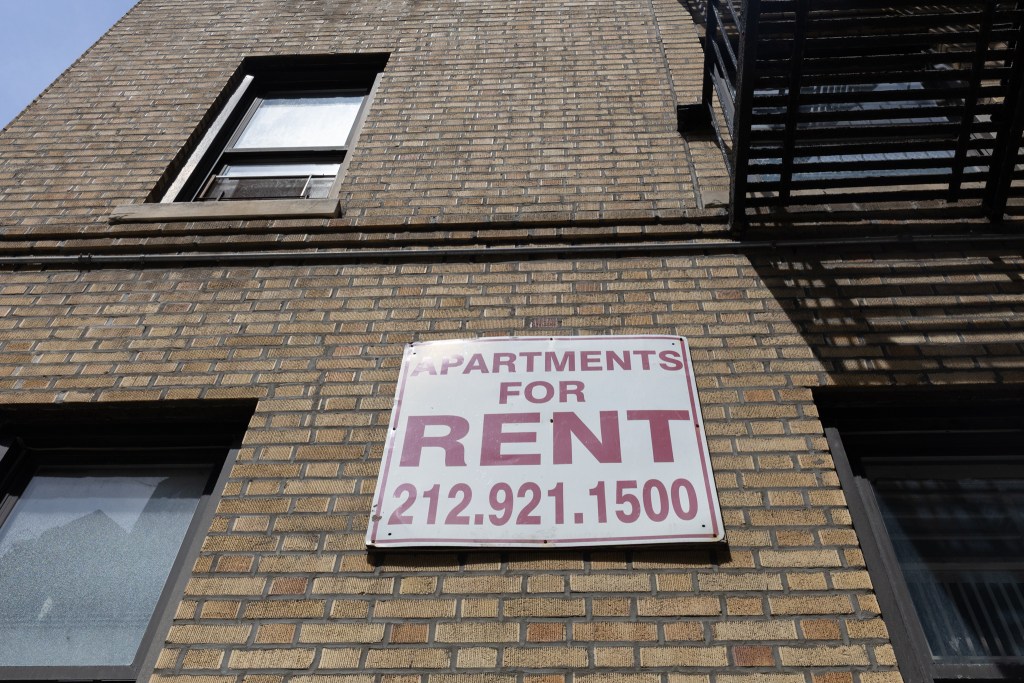
A year after New York City passed a law limiting who pays broker fees, the bill created a flood of complaints about landlords not following the rules — and generated more than $15,000 in fees paid back to tenants so far.
The Fairness in Apartment Rental Expenses Act, which went into effect last June, requires whoever hires a broker to pay the fee. The law specifies that if a broker publishes a listing for a rental property, that broker is to be paid by the landlord.
The law, also known as the FARE Act, marked a sea change for New York. Before last June, it was customary for tenants to pay the broker fee, even if they found the apartment themselves.
Now, tenants have an option to report illegal fees — and possibly get that money back. The law has spurred thousands of complaints and questions as well as dozens of summons and violations in the past year, according to the agency that enforces it.
New Yorkers have filed more than 2,000 complaints and queries related to the FARE Act with the Department of Consumer and Worker Protection since the law took effect. In the same span, the agency issued 74 summonses alleging 100 violations of this law, including 46 violations that resulted in roughly $27,000 in total penalties, officials said.
In all, DCWP settled eight cases before they reached a hearing, and 12 had hearing appearances before the Office of Administrative Trials and Hearings. OATH awarded about $15,000 in refunded broker fees to tenants, according to the department, which did not specify how many tenants got money back.
“A lot of these cases are moving through OATH and you are seeing the number of recoveries for consumers steadily rising,” Commissioner Sam Levine told the City Council in late May.
One of the people slated to get money back is Cal, a 31-year-old tenant in Williamsburg, who shared only his first name because he feared retaliation if he moves in the future. He said that last year he paid a broker fee to an agent he did not hire and filed a complaint with DCWP.
“I’m put off by people not following the rules,” he said. “It’s my most Karen trait, I think.”
Cal said he and his girlfriend planned to move in together last summer, but they put off the search until mid-June, waiting for the FARE Act to take effect. Cal found the two-bedroom apartment they would eventually move into on listings site StreetEasy. The unit was spacious, rent-stabilized and had a backyard, he said.
The couple put in an application, Cal said, and soon he got a call from a broker who told them they were the best applicants, but that another applicant would get the apartment because that applicant had covered the broker fee. Cal agreed to pony up for the fee, equal to one month’s rent of about $4,000, and moved in that September. His “awful, terrible” apartment search was over, he said, but he was “very pissed.”
Over the winter, a problem with the building’s pipes meant the couple had no water for three days. Fueled by frustration, Cal decided to complain about the broker fee to DCWP. He said he included screenshots from his communications with the broker, the online apartment listing and other information in the complaint, which he submitted in March.
Within the month, he heard back from a lawyer at the department, who asked him if he’d prefer to have the agency fight on his behalf to get the money back, or go to small claims court himself. Cal chose the former option.
By early April, he said, the lawyer told him his case was resolved and to expect a check by mail. He said he’s still waiting for the money, as the check may have gotten lost in the mail.
“It’s kind of triumphant, but I shouldn’t have to do this. It’s ridiculous,” Cal said. “It took me like six months to work up the courage to do it, and I’m more on the risk-taker end of the spectrum.”
Lack of Supply
The FARE Act was meant to make moving more affordable for people trying to find housing in the city’s tight rental market. Broker fees aren’t subject to a cap, but are frequently equal to a month’s rent or even 15% of the total annual rent — meaning apartment seekers could shell out thousands of dollars on top of other moving expenses.
An analysis by StreetEasy, which supported the FARE Act, found the average upfront cost of moving hovered near $13,000 in 2024, but estimated tenants could expect to pay closer to $7,500 without a broker fee.
Many real estate agents opposed the legislation, warning apartments would disappear from the market and rents would increase because landlords would bake the fees into the rent.
Recent data shows rent is still high in New York City, but it’s hard to untangle any discrete effects of the FARE Act from broader housing market dynamics. A December analysis by StreetEasy found asking rents rose just more than 1% on average among listings represented by brokers.
Brad Greenburg, executive director of the NYU Furman Center, a real estate think tank, said he looked to study the FARE Act’s impacts on rentals, but the lack of reliable data on actual rents and broker commissions made it impossible.
“We have a general supply issue,” Greenburg said. “That makes it doubly hard to try to understand whether what’s driving off-market listings and the lack of inventory is the general lack of supply or the FARE Act.”
Some real estate professionals contended the law exacerbated the problems plaguing the city’s housing market.
“The many negative impacts from the FARE Act have come to fruition — plummeting inventory, skyrocketing rents and widespread confusion around what the law actually regulates,” Real Estate Board of New York President James Whelan said in a statement. “New Yorkers deserve real solutions, not legislation that makes the affordability crisis worse. We have made our case in court and will continue to fight this damaging, unconstitutional law.”
REBNY took to a federal appeals court last July in an effort to end the FARE Act, after a federal judge rejected the group’s initial request for an injunction to block the law.
Janna Raskopf, an agent with brokerage Douglas Elliman, said the FARE Act compounded the lack of apartments on the market.
“I’m getting more tenant calls than I ever had, but it’s been so challenging to find them apartments because there is no inventory whatsoever,” she said. “The inventory I’m finding is gone in five seconds. When I represent the landlords, there are bidding wars.”
Raskopf, who has been a broker for more than two decades, also said the fees she was used to commanding have generally decreased, though she declined to discuss specific amounts.
City Councilmember Chi Ossé, who sponsored the FARE Act, touted its success.
“What we are now seeing, overall, is a rental market where people can finally move without the threat of a massive fee hanging over them, precisely what this law was designed to deliver,” he said in a statement. “Still, there’s more work to do, but the amount of money this law has saved renters is undeniable, and the benefits even extend beyond renters.”
He pointed to the city Human Resources Administration’s $6.7 million in annual savings from avoiding paying broker fees for voucher-holders who receive rental assistance.
The Search Continues
At a recent open house for a two-bedroom rental in Park Slope, apartment seeker Camilo Ortiz said he was unwilling to pay a broker fee. The 27-year-old tech worker said he was preparing to relocate from Boston with his partner and paid a fee three years ago when he locked down his current place there.
It also used to be commonplace for tenants to pay broker fees in Boston, whether or not they hired the broker. But last summer, Massachusetts banned the practice of tenants paying brokers unless they hire one.
“I remember how it was really frustrating back when we were looking for the apartment,” Ortiz said. “We paid a month of rent, and it was so much money for just putting up the apartment and a FaceTime tour.”
So far, he said his search has been arduous, especially in the popular Brooklyn neighborhoods where he’s been looking. Ortiz said he’s encountered bidding wars and fielded some questionable offers.
“This one broker asked us to hire her if we wanted to see off-market stuff,” he said. “She said she wasn’t hired yet by the landlords of two units, and so if we wanted to see them, we could hire her, but I wasn’t too sure that was going to work.”
The FARE Act bars brokers from saying anything about unlisted apartments that require tenants to hire them to secure the unit, according to DCWP. However, the law allows for brokers to advertise their services to tenants.
All of Ortiz’s friends who have searched for apartments have “experienced some sort of chaotic searching behavior,” he said. “It’s just like this crazy mountain to get over.”
Has the FARE Act affected your decision about whether to move? Has it cut your expenses? Did you have to — or choose to — pay a fee? If you submitted a complaint, what happened next? The City Reporter wants to hear from you. Email reporter Samantha Maldonado.
Our nonprofit newsroom relies on donations from readers to sustain our local reporting and keep it free for all New Yorkers. Donate to THE CITY today.
The post Broker Fee Law’s First Year: Complaints, Violations and Uphill Climb to Recoup for Tenants appeared first on The City Reporter.
