
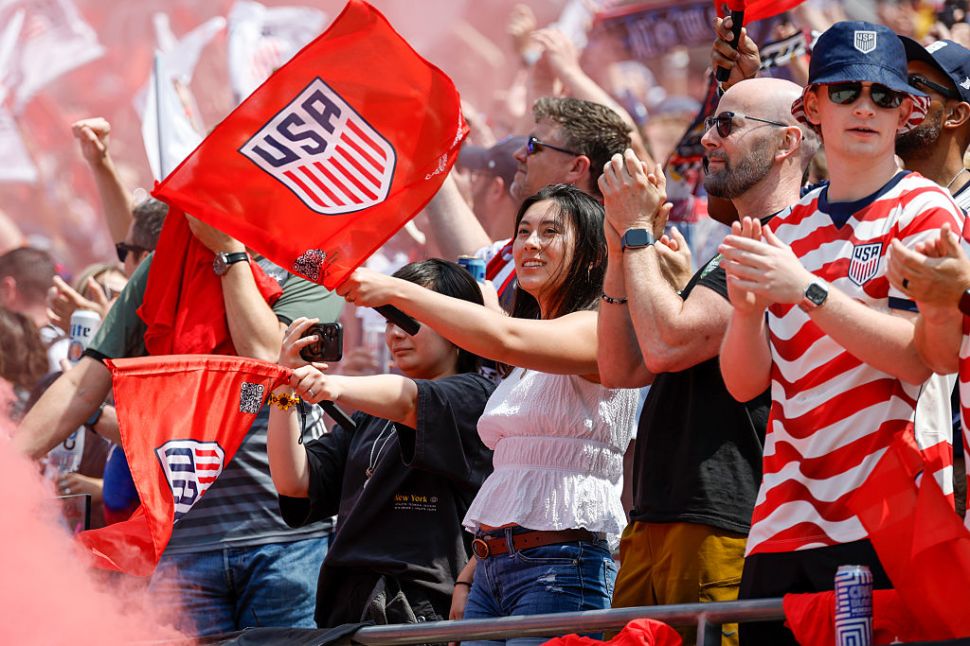
In a world in which the combined media rights value for North America’s Big Four sports leagues (NFL, NBA, MLB and NHL) currently eclipses $15 billion annually, bargain hunters must beware. The 2026 World Cup may be the last major sports broadcast deal secured at a real discount. And that might just be the first domino in a problematic chain reaction for Hollywood.
Back in 2015, FOX was able to extend U.S. World Cup rights through this year for a pittance. Yet, that is exactly why the next round of negotiations is expected to produce fireworks. Sports rights are the last vestige of consistent mass-audience appeal on linear television and the best way to engage high-risk subscribers and juice ad-supported tiers on streaming. But with every new envy-inducing deal that crosses the finish line, the entertainment ecosystem is forced to contract.
How Fox landed the deal of the century
The 2022 World Cup Final between France and Argentina was watched by around 1.5 billion people. So how in the world is Fox only paying $485 million for this year’s cushy U.S.-held tournament when the rights are estimated to be worth more than three times that amount?
Over the decades, FIFA has cultivated a reputation as a financial shark always on the hunt for the best meal. In doing so, it agreed in 2014 to hold the 2022 World Cup in Qatar, the New York Times reported. Yet the nation’s hot climate wasn’t conducive to the tournament’s usual summer schedule. So FIFA offered Fox a rights deal through 2026 in exchange for not challenging the shift to fall, when the broadcast network knew the World Cup would have to compete with the NFL, College Football and the NBA. A mere concession in the moment transformed into laughably monumental value in the present day.
Neither FIFA nor Fox knew 10 years ago that the 2026 games would be held in the U.S. with an expanded 48-team roster, following years of domestic soccer growth and a ballooning market for live sports rights. All of these factors turned this year’s games into the deal of the century. Yet it’s set the stage for a massive price hike in future World Cup negotiations that aligns with broader recent sports broadcast trends.
The World Cup’s value has exploded because networks and platforms are desperate for events that draw tens of millions of viewers to justify higher ad rates. Most of the “good stuff” has migrated to streaming, and attention spans are more fractured than the San Andreas Fault (yes, I did just drop a geology joke).
Scarcity, FOMO, impulse buying and other factors have created a consistent trend: viewers are more likely to buy an advertised product while watching a live event, such as a sporting event. Annual ad spending on sporting events is expected to reach roughly $25 billion by 2030. That’s a lot of money—and it isn’t the only backdrop that makes the World Cup bargain so astonishing. Recent data from Antenna proves that live spectacle such as Netflix’s NFL broadcasts consistently attracts a greater share of “light viewers,” or households that watch the least on a given platform, than the baseline. That’s powerful.
The rest of the sports market is famously moving in the opposite direction. The crowning example is professional football. Annual combined NFL rights cost around $10 billion at the moment, accounting for 31 percent of all sports media rights and 8 percent of all content spend (film, TV, sports rights, etc.), per State of the Screens. Amidst ongoing renegotiations, that total number is expected to rise by another $6 billion or so in the next round of deals. That’s all well and good for the NFL, but all that new money has to come from somewhere. Therein lies the rub.
The real cost of sports deals
Every additional cent spent on the NFL, World Cup, NBA, College Football and the UFC is money taken from another division’s budget. In layman’s terms, that means less money to go around for other programming.
The NFL’s price hike is expected to result in an estimated 7 percent reduction in scripted TV, film and other content allocations. In the words of Puck News’ John Ourand, the new NFL media deals are “widely expected to suck billions out of the pool of money available for lesser sports properties, not to mention Hollywood entertainment budgets.” He describes it as a “blast radius.”
This moves the economic reality from conceptual bean-counting to tangible winners and losers. In theory, this may prevent the Disneys of the world from delivering the next Shogun. This partially speaks to the decline in Netflix original volume as the streamer allocates more money towards sports: multiple NFL games, WWE, MLB’s opening night, Home Run Derby and Field of Dreams game, the 2027 and 2031 FIFA Women’s World Cup, combat sports, etc. Why spend enormous sums of money on original question marks when sports deliver a proven guarantee?
Fox obviously won the negotiation for the 2026 World Cup and will reap enormous benefits as a result. But after taking this lump, FIFA is well-positioned for the future. Fox knows its deal of the century is on borrowed time. NBC knows what the World Cup property should be worth. So do Amazon, Apple and Netflix.
The next round of negotiations will be made with the media landscape of the 2030s firmly within the scope of dealpoint discussions. That world is defined by the scarcity, high demand and soaring value of live sports rights. This could be the last sports bargain to be had for the foreseeable future. Unfortunately, that might mean Hollywood needs to be worried about what it will be forced to sacrifice to fund the next round of media deals.
