
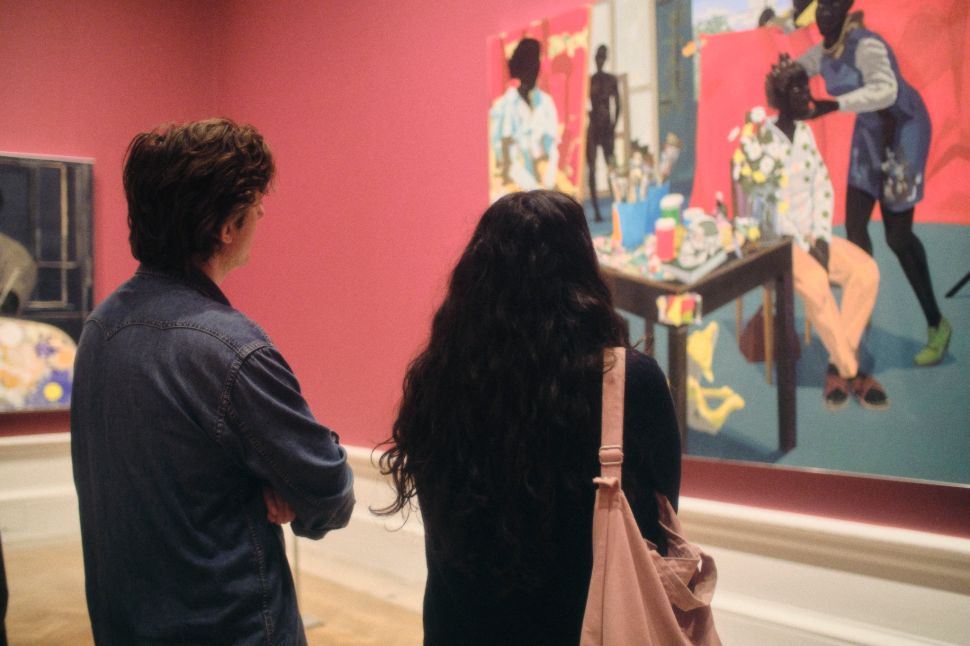
What is the next generation of collectors and patrons looking for? This is probably the most important question the art world is facing today, and on multiple levels. As a major wealth transfer unfolds in the U.S. and Europe and a generation of legendary collectors passes away, an entire industry is trying to understand who its next target will be. This is especially urgent as the art world continues to be led by legacy participants within hierarchical structures that follow a template set many decades ago. Those old ways may not hold up in the face of a rising buyer base that brings with it an entirely different set of behaviors, priorities and value systems.
A coming book by seasoned art writer Georgina Adam, NextGen Collectors and the Art Market, confronts hard truths about this generational handover. Millennial and Gen Z collectors are younger, often self-made, more globally dispersed, digitally native and less bound to old codes of collecting than previous generations. Their rise could reshape not only what art is bought but also how it is bought, where it is bought and what forms of cultural value matter. The key theme of the book is that traditional art-market institutions risk losing this cohort if they cannot adapt to younger collectors’ expectations around transparency, immediacy, access, identity, sustainability and new modes of ownership. As Adam points out, these new collectors are not simply inheriting the old market; they are actively disrupting the status quo, with novel sources of wealth, motivations, tastes and buying habits.
“A Changing of the Guard,” Avant Arte’s annual survey of the collecting and cultural habits of collectors under 45 years old, makes this picture even clearer. (Worth noting is that Avant Arte is one of these next-generation art world ventures, led by Millennial founders Christian Luiten, Curtis Penning and Mazdak Sanii and closely attuned to the needs of the generation it aims to serve through its mission of making art collecting and patronage more accessible.) It found that next-gen art entrepreneurs are increasingly carving their own paths, creating models shaped by their peers’ preferences and behaviors rather than politely adapting to the market’s existing norms and rituals.
Conceived in 2015 as a curated marketplace to help younger art enthusiasts discover and collect art across a range of budgets, Avant Arte evolved into a global platform connecting contemporary artists with a worldwide audience. It then shifted its focus to the intersection of collecting and patronage. The platform has actively partnered with institutions and raised more than $10 million for major international museums and cultural organizations, including LACMA, the Guggenheim and Dia Art Foundation, through the sale of limited-edition artworks by high-profile artists.
Surveying more than 2,000 collectors, enthusiasts and art professionals in 62 countries, the report offers a clear picture of a generation more engaged and invested in the future of museums and institutions than many would assume. But it also reveals a cohort of collectors actively pushing for drastic changes in a market that’s traditionally been slow to change. Put another way, they are willing, even eager, to engage with and support the arts, but on their own terms. What follows are the key takeaways from Avant Arte’s research.
They treat art as a personal storytelling device
For a generation that grew up in a world of visual communication and the transition from the early Internet to the technological takeover of nearly every aspect of life, all the way through to digital overload, art is an important source of meaning—a form of experiential and symbolic authenticity that feels unmanipulated or, at the very least, less obviously engineered.
More than nine in 10 collectors surveyed describe art as being as important to them as fashion, music or interior design for self-expression. Most approach art not as an accessory but as something deeply embedded in their daily lives and central to their personal brand. “I buy art because it builds a narration of my surroundings and me,” said one collector from Poland. Among the higher earners in the Avant Arte collector community, nearly half reported spending as much on art as they would on a car or a luxury watch. Most prioritize art over other luxury purchases at the same price point. The rising cost of living may be biting into incomes, but this generation still treats art as a non-negotiable part of identity.
Most importantly, they are buying art from a personal, human perspective—one that values connections with creators and their visions over financial returns. More than seven in 10 respondents said they buy specifically to support artists, and the youngest cohort, ages 18-24, is 25 percent more likely to buy based on the story behind a work. This new generation places more value on how an artwork can serve as a signal of a person’s life journey, tracking growth and evolution in taste over time. As a U.K. collector in the 25-34 age range put it, “I buy art that symbolizes or brings to life thoughts I’ve held in my mind. It serves as a reminder.”
Common wisdom suggests that young collectors are victims of hype and trends, but the new generation appears far more likely to follow its own tastes, buying omnivorously and fluidly across periods, styles and mediums. The breadth of interest is striking: a third of under-45s expressed a strong interest in both Old Masters and work by contemporary artists (23 percent more than the older generation). They are a third more likely than their older counterparts to have a strong interest in works by Old Masters and 29 percent more likely to be drawn to works from artist estates.
They enter earlier and collect faster
According to Avant Arte, if given the right access point, next-gen collectors tend to enter the market earlier in life than their predecessors. A third of surveyed collectors in their late 20s and early 30s have been buying for five years or more. These buyers also enter with serious ambition: 39 percent of those who started in the past year plan to increase their spending; the majority of respondents purchasing editions priced above €5,000 are under 45. More than a fifth dedicate at least 10 percent of their household income to art each year, rising to almost half in the U.S. among those who spend more than $5,000.
Additionally, 40 percent of young collectors are willing to spend more than a month’s salary on a single artwork, and young collectors are 65 percent more likely than those over 45 to plan an increase in art spending in the coming year. Among Avant Arte’s collector community, 68 percent spend more than $1,000 annually on art, a third spend more than $5,000 and one in seven spends more than $10,000.
They rely on digital discovery first
Younger buyers entered the market at a moment when technology made art much more broadly accessible than in years past. Nearly two-thirds of next-gen art collectors use Instagram as their primary tool for discovering artists and exhibitions. Forty-eight percent reported that digital content from museums motivated them to buy products from those institutions. And seven in 10 use Instagram to decide which exhibitions to visit, with 68 percent saying they have been directly motivated to visit a museum after seeing a post. Moving from Millennials to Gen Z, TikTok use increases sharply: the new generation is seven times more likely to use it for discovery, with the youngest collectors, ages 18-24, being 16 times more likely.
What the next generation laments is that museums still don’t really understand how to engage people on social media. Nearly two-thirds of new-gen collectors think museums perform worse digitally than large consumer brands in fashion, media and entertainment. As attention spans shrink amid endless visual overstimulation, short-form video is proving far more successful than image carousels with captions. “Our research has shown that you have to communicate with young people through digital channels because that is how they find out about things,” confirms a spokesperson for the Design Museum in London, which launched TikTok and Snapchat channels specifically to reach younger audiences.
They still crave in-person engagement
Those next-gen collectors who experienced the world before the Internet and social media fully overtook daily life have grown increasingly nostalgic for what came before, as the current revival of 1990s culture makes clear. They are also placing growing value on in-person, meaningful experiences and connections. As a spokesperson for the National Gallery put it, “they want the real-life experience because they spend their whole life on a screen, and actually they want to experience real things with real people.”
Younger audiences are highly active museum visitors, with three-quarters visiting museums or galleries at least four times per year and 44 percent visiting monthly. They increasingly see museums as social spaces where they can meet friends and escape the isolation of the screen, and they are seeking authentic experiences that resonate when they visit. More than two-thirds feel strongly that programming should reflect contemporary cultural, political and social themes, while a similar proportion says museums should better tailor their offerings to younger audiences.
The broader consumer world has already seen the same drift: GWI’s 2025 analysis of Gen Z spending habits argued that brands trying to reach this cohort should focus on immersive experiences, technology and authenticity. In the museum context, that means digital visibility alone is not enough. The online encounter may get this audience through the door, but what they are looking for once inside is a credible, embodied experience that feels socially and emotionally real and symbolically relevant. They want something more than a passive visit. The strongest demand is for participatory, social experiences, with seven in 10 survey respondents saying they would be more likely to visit for an artist talk or tour.
They see access as less important than belonging
The traditional membership model is less effective in engaging younger audiences. According to the report, this new generation is 30 percent less likely to hold an active museum membership than those over 45. Just 16 percent currently do, and barely a third have ever held one. More tellingly, half of new-gen respondents who held a membership have canceled one in the last three years, and they are 40 percent more likely to have done so than the older generation. But this isn’t because they don’t want to support institutions. Younger collectors are still giving, with nearly two-thirds of respondents reporting having donated to museums within the last year (seven in 10 say they want to increase their financial support over the next 12 months).
The issue is likely that the traditional membership model feels outdated. It often lacks emotional or social value and fails to offer the sense of community participation and belonging that this generation increasingly seeks in an age of dissociation and alienation. Young patrons want their contribution to feel meaningful, part of their own personal storytelling and part of how they project themselves in the world. They’re not looking for discounts or transactional benefits—or not exclusively so. Rather, they want access to the symbolic value that institutions and art represent. As a spokesperson from SFMOMA put it, “One thing people are asking for from membership is a sense of belonging, a place where they can have social, mindful experiences and be with others they can connect with.” Among respondents, 58 percent want behind-the-scenes tours, nearly half want late openings and more than 40 percent want talks, parties and preview tours. Direct access to artists is also among the benefits they’d like to see.
A key takeaway is that next-generation collectors are looking for more direct and active engagement at multiple levels, as well as accountability and responsibility; they’re less interested in passive models of patronage. More than half of respondents said they would be more likely to donate if institutions clearly explained how funds would be used. (The success of so many targeted campaigns, particularly those launched by artists during COVID, is one example of a path forward.) It is not surprising that editions and other artist-made items that connect back to an institution’s program and mission have proven particularly successful in directing next-generation money toward both art and museums. Younger audiences appear far more motivated by social impact and community engagement than by prestige, recognition or legacy. More than four in 10 surveyed prioritize social impact and local community engagement when supporting institutions.
Ultimately, next-generation collectors are seeking the right access points and opportunities to contribute to the arts. From collecting to patronage, what they are looking for are impactful modes of participation and a sense of belonging. “What the insights from our survey make clear is that this generation’s relationship with art is built on connection and belonging, rather than investment or prestige,” Avant Arte co-founder Mazdak Sanii told Observer. Over seven in 10 buy specifically to support the artists they love, and a similar proportion say they need to connect with the story behind a work before they’ll buy it, he notes. The same logic extends to how they engage with institutions. “As one collector put it, they want memberships to feel more personal and impactful, transforming it from a simple subscription into a form of cultural patronage.” If the models that sustained previous generations of art collectors and patrons were built on access and recognition, this generation is motivated by something different: shared values, transparency and a genuine sense of belonging to something meaningful. “The most important question is how best our cherished institutions can respond—our survey seeks to help provide some answers.”
The biggest change implied in this generational shift, then, is the move from ownership and status consumption toward belonging, shared experience, identity, access and values-based participation. As these generations navigate continuous financial instability, younger audiences are not consuming culture only to own, display or accumulate; they are buying entry into a community, a set of values and a feeling of connection. As Deloitte’s 2025 Gen Z and Millennial Survey frames it, these generations are pursuing a balance of “money, meaning, and well-being,” consuming culture to locate themselves within communities, values, peer groups and experiences that give them a sense of participation.
