
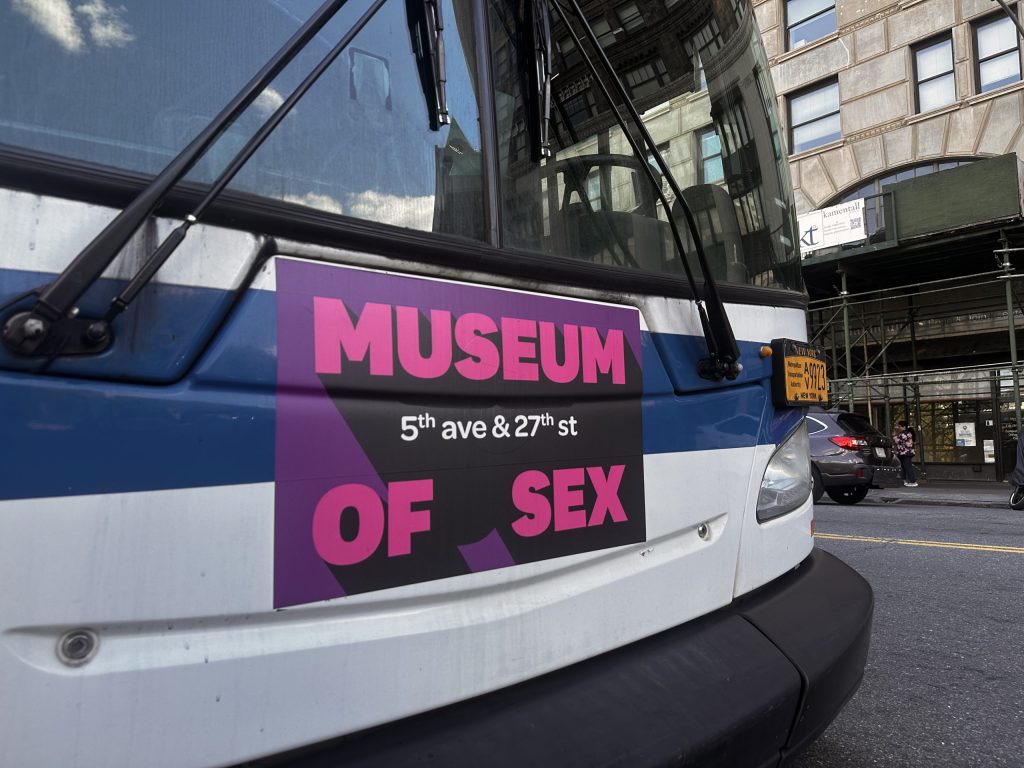
Those Museum of Sex ads plastered on MTA buses are making for rough rides.
As Orthodox Jewish critics of the inescapable promotional signs pressed the MTA to expel them from the fronts of buses, the head of the transportation authority conceded Wednesday that some commuters and transit workers have been exposed to crude cracks because of them.
“There were wiseguys who were getting on and being nasty to some of the other people on the bus, including our operators,” said Janno Lieber, MTA chairperson and chief executive. “You can imagine how those dialogues go.”
Lieber’s comments came after multiple public speakers at the MTA’s monthly board meeting said they were “repulsed” and “hurt” by the colorful and pervasive museum ads that appear on the buses.
“Orthodox Jews are forbidden to willingly look at ads and images that attract them to sex,” said Rabbi Abraham Zimmerman of the Central Rabbinal Congress. “We are very hurt and upset when such ads are thrown and forced in front of our faces.”
“We plead and we beg with you, please, please, don’t put such ads that hurt thousands of law-abiding citizens,” he added.
Rita Friedman described herself as “repulsed” by signs for the museum that opened on West 27th Street in 2002 and which bills itself as “one of the most dynamic and innovative institutions in the world.”
R-rated relics currently on display there include an early vibrator from Great Britain, a Braille issue of Playboy magazine and an “erotic fortune-telling machine” featuring the drag queen RuPaul.
The ads say only “Museum of Sex” in large lettering and list its Flatiron address.
“What chance do my children, grandchildren and great-grandchildren and other members of society have to moral values with such provocative exposure on a daily basis?” said Friedman, the daughter of Holocaust survivors. “I implore you to end this travesty, no more indecent ads.”
Lieber said the MTA is bound by constitutional obligations that prevent the agency “from becoming the censor of all ads,” which are reviewed by an advertising committee.
“I’m very sympathetic to those folks because they do have a different standard of propriety and we don’t like offending anybody,” he said. “But we are operating in a world of First Amendment constraints.”
During the public-speaking session prior to the MTA board meeting, Bernard Fryshman argued that the ads could have been rejected for being “harmful to children.”
“These ads demean us, they cheapen the public space,” he said.
Lieber added that he would “be happy if they chose not to advertise like they do all over our buses,” while adding there is little the MTA can do. He did say the transportation authority previously asked museum officials to make the long-running ad campaign a little more explicit — not in terms of skin, but location.
So, the museum agreed to list its Fifth Avenue and West 27th Street address for any commuters who may have somehow thought the bus was actually sex on wheels.
“We said, ‘Listen, if you want to do this advertising, we can’t stop you because of the First Amendment,’” Lieber said. “But you really got to make it clear that it’s a place and not some performance-art thing that miscommunicates and creates negative, weird impressions.”
It’s not the first time the MTA has faced criticism over ads from residents of Orthodox Jewish neighborhoods.
In 2015, then-Brooklyn City Councilmember David Greenfield urged the MTA to strip ads for plus-sized Lane Bryant lingerie off F trains after complaints from constituents in Midwood and Borough Park.
A Museum of Sex spokesperson did not respond to a request for comment from The City Reporter. The MTA was unable to provide a breakdown of how much the museum advertises with the transportation authority, which pulled in an estimated $183 million in advertising revenue last year, according to the office of State Comptroller Thomas DiNapoli.
That figure has been climbing for five years since bottoming out to under $80 million in 2020, during the depths of the COVID pandemic. The MTA last year overturned its prohibition on alcohol ads, which had been banned in 2018.
Zimmerman said the ads for the sex museum are contrary to what youngsters should come across on mass transit.
“We try to raise our children and grandchildren and shield them from anything that attracts them to sex,” he said. “While MTA should do whatever they can to raise revenue, it shouldn’t do so in a way that hurts and offends so many youngsters and parents.”
Our nonprofit newsroom relies on donations from readers to sustain our local reporting and keep it free for all New Yorkers. Donate to THE CITY today.
The post Orthodox Critics Call For MTA to Nix ‘Museum of Sex’ Bus Ads appeared first on The City Reporter.
