
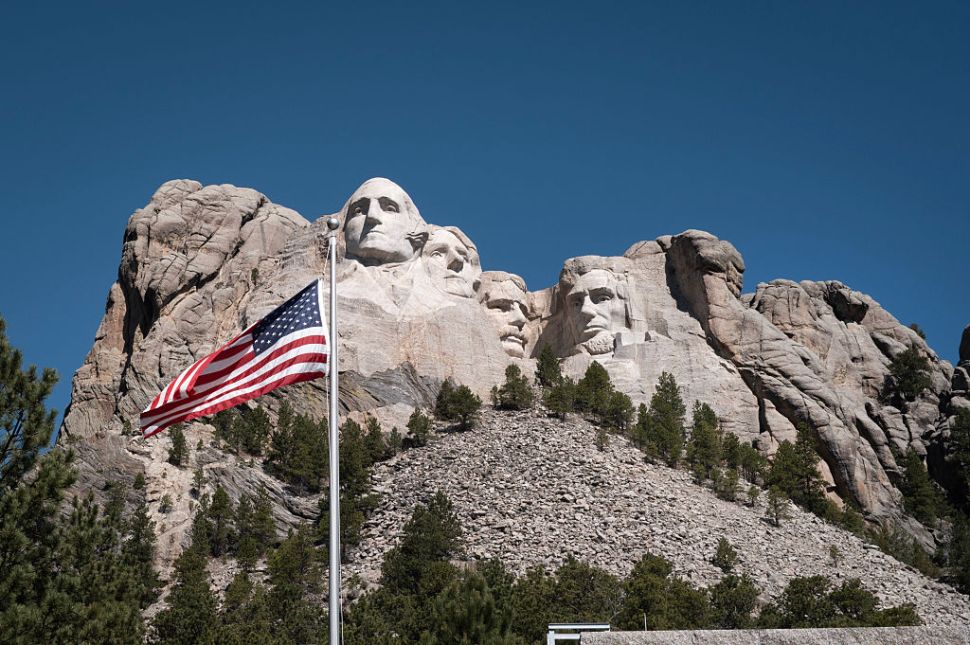
America’s national parks belong to the public, but their creation and maintenance have often required private money. For more than a century, philanthropists with large fortunes have bought land, restored monuments and funded programs across the National Park System.
Few families shaped that tradition more than the Rockefellers. John D. Rockefeller Jr. (1874–1960), the only son of Standard Oil founder John D. Rockefeller Sr., helped finance and donate land for parks including Acadia, Great Smoky Mountains, Yosemite, Shenandoah and Yellowstone. In Wyoming, he quietly assembled land to protect the Grand Teton landscape, later donating 32,000 acres that became part of the park’s 1950 expansion. His son, Laurance Rockefeller (1910–2004), carried the work forward, helping create Virgin Islands National Park, donating the family’s JY Ranch to Grand Teton, and contributing $1 million to launch the National Park Foundation, the Park Service’s official nonprofit partner, in 1967.
Today’s park philanthropy has widened beyond land conservation alone. As the U.S. marks its 250th birthday, living donors are backing civil rights preservation, climate resilience, monument restoration and wider access to the parks. Here are five American philanthropists whose money has helped create or reimagine the country’s national parks and National Park Service sites.
Ken Griffin, founder of Citadel
Ken Griffin founded Citadel in 1990 after getting his start trading from his Harvard dorm room, eventually building it into one of the world’s largest hedge fund firms. Through Griffin Catalyst, his philanthropic platform, he has given more than $2.5 billion to causes spanning education, medical research, civic life and American history.
In June, the National Park Foundation announced that Griffin would lend his collection of signed copies of the Emancipation Proclamation and the 13th Amendment for display inside the Lincoln Memorial’s newly opened undercroft museum. The rare documents, which Griffin acquired in 2025, will remain on view there through June 2027. Griffin said in a statement that he was proud to share them “as a reminder of our ongoing responsibility to strengthen the promise of America.”
This is not the first time Griffin has used his vast fortune to put foundational American documents in public view. In 2021, he successfully bid a record $43.2 million at Sotheby’s for a first printing of the U.S. Constitution. The billionaire now owns the only two privately held first printings of the Constitution, both of which he has lent for public exhibition ahead of America’s 250th anniversary: one to the National Constitution Center in Philadelphia and the other to the South Street Seaport Museum in New York.
More recently, Griffin gave $26 million to help complete the Theodore Roosevelt Presidential Library in Medora, N.D., where the west wing will bear his name. While not part of the National Park System, the library will expand with exhibits on Roosevelt’s life and conservation legacy, along with an A.I. guide that draws on his letters and speeches to answer visitors’ questions.
Roxanne Quimby, co-founder of Burt’s Bees
Roxanne Quimby led one of the most consequential private land gifts in recent National Park Service history. After living in a remote cabin in Maine in the 1970s, Quimby co-founded Burt’s Bees in 1984, transforming the personal-care company from a modest beeswax business into a household name. In 2007, Clorox acquired the brand for $925 million, giving Quimby the means to pursue her conservation efforts in Maine.
In the late 1990s, Quimby began assembling land piece by piece around Mount Katahdin, the Appalachian Trail’s northern terminus. While her goal was to create a protected national park, the plan initially drew opposition from residents concerned about federal control and a loss of logging jobs. Over the next decade, Quimby and her son, Lucas St. Clair, met with locals to build support.
For Quimby, parks represent a shared alternative to private ownership. A park, she told Yankee Magazine in 2008, “takes away the whole issue of ownership. It’s off the table; we all own it and we all share it. It’s so democratic.”
“Growing up, one of the things that I loved about the national parks was that there were no barriers to anyone,” Quimby was quoted as saying in an article for the National Park Foundation. “Everyone was welcome, and to me, that was a real symbol of democracy and what this country meant to our family, and what this country means to everyone.”
In 2016, Quimby and her family donated 87,500 acres to create Katahdin Woods and Waters National Monument on the eastern border of Maine’s Baxter State Park, along with a $20 million endowment and a pledge of $20 million more in future support. The National Park Foundation facilitated the land transfer, and President Barack Obama designated the monument on Aug. 24, 2016, one day before the National Park Service’s centennial.
David Rubenstein, co-founder of the Carlyle Group
The Baltimore-born billionaire and longtime philanthropist co-founded the Carlyle Group in 1987, helping build the Washington, D.C.-based private equity firm into a global investment giant. Before Carlyle, he worked in the Carter Administration and practiced law; more recently, he became the controlling owner of the Baltimore Orioles, leading a $1.7 billion purchase of the team in 2024.
His giving to national parks has concentrated in the nation’s capital. Rather than funding wilderness preserves, Rubenstein has given at least $60 million to National Park Service sites and related projects, mostly directed toward the U.S. monuments and memorials that attract millions of visitors each year. “To give back to the country—what I call patriotic philanthropy—reminds people of the history and heritage of our country,” Rubenstein wrote on his philanthropy webpage.
In recent years, his donations have helped restore the earthquake-damaged Washington Monument, fund a new state-of-the-art museum at the Thomas Jefferson Memorial, and support the Lincoln Memorial’s long-hidden undercroft museum, which opened to the public in June. He has also backed restoration and visitor projects at the U.S. Marine Corps War Memorial, Arlington House, The Robert E. Lee Memorial and the White House Visitor Center.
Robert F. Smith, founder of Vista Equity Partners
Robert F. Smith built one of private equity’s biggest fortunes by betting early on enterprise software. The Denver-born son of two educators earned an MBA from Columbia Business School and spent six years in Goldman Sachs’ technology investment banking group before founding Vista Equity Partners in 2000. Forbes puts his fortune at roughly $10 billion, making him one of the wealthiest Black Americans.
In 2017, Smith became the first Black American to sign the Giving Pledge, committing to give away more than half his fortune. Two years later, he made national headlines when he pledged to pay off the student debt of Morehouse College’s entire graduating class, tallying $34 million.
As founding director and president of the Fund II Foundation charity, Smith helped fund the National Park Foundation’s purchase of Martin Luther King Jr.’s birth home and the Atlanta home where King lived with Coretta Scott King. At the time, Smith said a key part of the foundation’s mission was to “bring African-American history to life and preserve it for generations.” In 2019, the properties were transferred to the National Park Service as part of Martin Luther King Jr. National Historical Park in Atlanta.
Smith’s public image took a hit in 2020 after he admitted to tax fraud. In a deal with the Justice Department, Smith acknowledged that he concealed income and evaded millions in taxes from 2000 through 2015 and agreed to pay more than $139 million in taxes and penalties. In a letter to Vista investors, Smith called the case “a humbling experience,” but said he remained “as committed as ever” to moving forward as a CEO, investor and philanthropist.
Steve and Connie Ballmer, co-founders of Ballmer Group
Steve and Connie Ballmer’s philanthropy is less about landmarks than scale. Steve, who was Microsoft’s CEO from 2000 to 2014, is one of the world’s richest tech billionaires. Connie, a former tech public-relations and marketing professional, has been the family’s “kitchen table” philanthropist, with a longtime focus on foster children and families.
Together, they co-founded Ballmer Group in 2015, building it into a major donor focused on economic mobility and place-based partnerships. The couple’s philanthropy is rooted partly in a sense of obligation. Speaking to the Chronicle of Philanthropy last year, Steve Ballmer said that Connie often invokes the idea that “for those to whom much has been given, much is expected.”
Their parks philanthropy has followed the same approach. In 2024, the National Park Foundation revealed a $25 million gift from the Ballmers to support national parks across the U.S. Rather than attaching their name to any monument, the gift is being used for programs including Open OutDoors for Kids and Service Corps jobs for young adults. It will also support climate-adaptation work at parks such as Mount Rainier National Park in Washington and Sleeping Bear Dunes National Lakeshore along Lake Michigan’s coastline.
More recently, the Ballmers announced plans to spin out their regional work into three independent, locally led philanthropies in Washington state, Los Angeles County and southeast Michigan, where Ballmer Group teams have donated more than $1.5 billion in grants over the past decade. “Our intention is to ensure that these local philanthropies can be permanent, ongoing resources in each region,” the Balmers stated, “while we concentrate our national efforts on advancing economic mobility in new ways.”
