
My father spent his early years working multiple jobs at once. He stacked fruit in the grocery store, delivered newspapers, worked on a General Motors assembly line and preached on Sunday mornings. Over time, he slowed down. On his 85th birthday, he stepped down as pastor of our hometown church but kept his job as greeter at Chick-fil-A. He often says his work as a preacher and an hourly worker has more in common than people imagine. Both require showing up before sunrise. Both require believing in something bigger than the paycheck. Both require telling people the truth about who they are and who they can still become.
The same is true for nations.
At 250 years old, the United States of America is the most ambitious brand ever conceived. Like every great institution, it lives or dies by how well it practices what it preaches.
Fifteen years ago, leadership scholars Doug Ready and Emily Truelove called the animating spirit of powerful brands “collective ambition” in a seminal Harvard Business Review article. They captured how great leaders inspire divided people to unify for the common good through a seven-element model that stands the test of time: purpose, vision, promise, values, targets, priorities and the daily behavior of the people who carry the name. What makes great companies great can make great nations greater. Alignment endures. Misalignment rots.
Two hundred and fifty years ago in Philadelphia, imperfect men drafted the blueprint for a more perfect Union. They named a promise: life, liberty and the pursuit of happiness. They invoked Nature’s God. They committed to values worth dying for. They admitted the nation was imperfect on day one, yet expected it to achieve the perfection they could not deliver.
Perfecting is a verb, not an adjective. The Founders trusted us to keep building.
We have done so in fits and starts, sometimes a step backward before two steps forward. In Sunday School, I learned that Job sat in ashes before he sat in plenty. Shadrach, Meshach and Abednego walked into a fiery furnace before they walked out unscorched. Esther approached the king uninvited before she saved her people. America has sat in ashes, walked through fire and risked life for liberty. And still we rise.
Like a wedding anniversary, America’s 250th is not a time to pretend we’ve been perfect, but to celebrate our journey through trials and tribulations together, and to renew our vows to keep perfecting.
America’s history of renewal is an inspiration to the world.
In 1787, the Articles of Confederation were collapsing. Shays’ Rebellion had revealed a government that could not pay its soldiers or restrain its own farmers. Madison, Hamilton and Jay wrote 85 essays under the pen name Publius that were published in New York newspapers over six months. They talked the country into a new constitution. “We the People” was a narrative vision before it was a written reality.
In 1933, a quarter of Americans were out of work as banks and businesses fell like dominoes. President Franklin Roosevelt moved fast on policy, then sat at a microphone and talked to people in their living rooms. Those grandfatherly fireside chats restored faith that government and capitalism could be made to serve ordinary people again. Eleanor Roosevelt traveled the country as his eyes, ears and conscience.
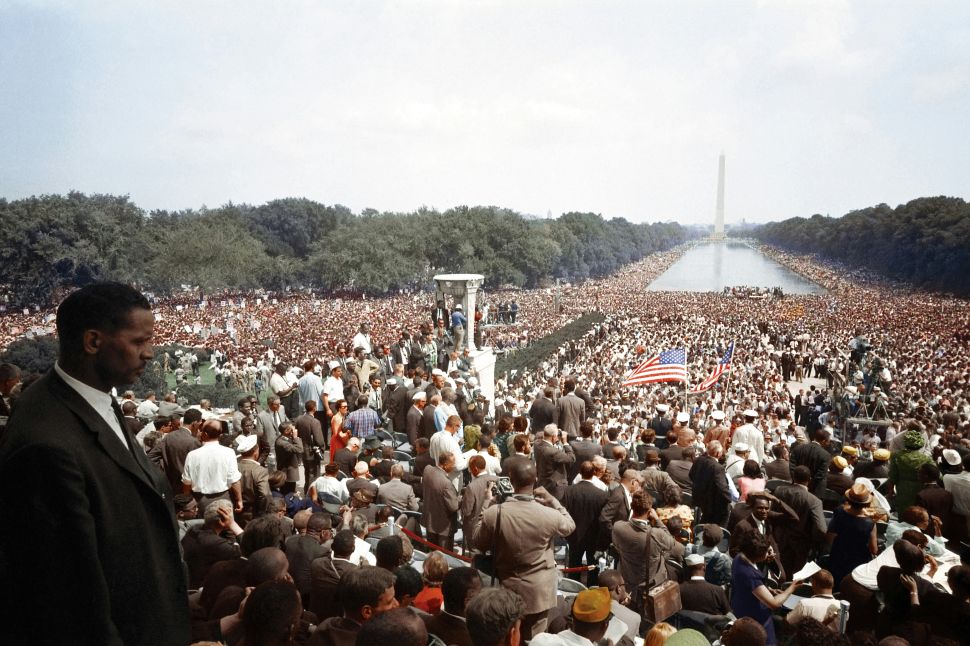
In the 1960s, Martin Luther King Jr. refused to fight on the country’s degraded terms. He read America its own promissory note and demanded it be honored. Ella Baker, Fannie Lou Hamer, Diane Nash and dozens more women organized the ground he stood on. President Lyndon Johnson found the courage to sign the Civil Rights Act and the Voting Rights Act, knowing it would cost his party the South for a generation. The women supplied the foundation, King supplied the voice and Johnson supplied the votes. All were heroes of renewal.
History also reminds us that progress is fragile. President Abraham Lincoln’s renewal of the 1860s is both a triumphant and cautionary tale. He gave the country the Gettysburg Address, the Thirteenth Amendment and unity over division. Then came the collapse of Reconstruction, the rise of the Ku Klux Klan and decades of Old and New Jim Crow.
Renewal’s two steps forward can trigger a step or two back. Every new generation inherits unfinished work. Nations do not renew by accident. They renew when they stick to their brand promise.
America’s brand promise, engraved on our currency, is E Pluribus Unum. Out of many, one. Every immigrant, every grandchild of the enslaved, every farm kid and every Pell Grant recipient like me has been told this country belongs to them. When we break that promise, we pay for it in trust, productivity and the approximately half a trillion dollars that disengaged workers drain from the American economy every year.
Which brings us back to Ready and Truelove’s model for collective ambition. Our purpose is union, not division. Our vision is liberty, justice and prosperity for all. Our values are honesty, hard work, mercy and service. Our targets are quality jobs, schools that teach reading and thinking, neighbors who know each other’s names and a planet our grandchildren can breathe on. Our priorities are choices. Every dollar spent, every hire made, every child raised, every tax dollar paid, every act of kindness is a step toward a more perfect Union. The last element is behavior. In a democracy, that is all of us. No spectators.
The late businessman and philanthropist Charlie Munger once told a group of students at Stanford Law School that you cannot guilt or shame people into doing the right thing. “Appeal to their sense of greatness,” he said. He could have been talking about a nation’s people. Patriotism is the daily work of renewal, perfecting toward that greatness. It’s the belief that America’s highest ideals remain worth pursuing. We can all be patriots.
I wanted to be a doctor so I could be paid to help others. Nature’s God routed me to law school instead, and eventually to the Ford Foundation. Along the way, I came to see that finance, guided by Adam Smith’s impartial spectator, is medicine, too. Patriotic capitalism is the discipline of investing capital in ways that strengthen the masses of people who make capitalism possible.
I refuse to accept the proposition that America cannot renew its founders’ vows. Nature’s God keeps writing the same future. Pain precedes prosperity. Captivity precedes freedom. Crucifixion precedes resurrection.
Two hundred and fifty years in, the brand still works. The promise still holds, and neuroscience now proves what the Founding Fathers knew: our brains evolved for cooperation as much as competition. Lifting each other lifts the whole.
Collective ambition built the brand. Collective ambition will renew it. Our move.
