
In January, Canadian Prime Minister Mark Carney addressed Davos and said what many business leaders were already feeling but hadn’t yet named. “Let me be direct,” he told the room. “We are in the midst of a rupture, not a transition.” He called it the end of a pleasant fiction—decades of deepening global integration built on the assumption of mutual benefit—and the beginning of something harsher, less predictable and significantly more consequential.
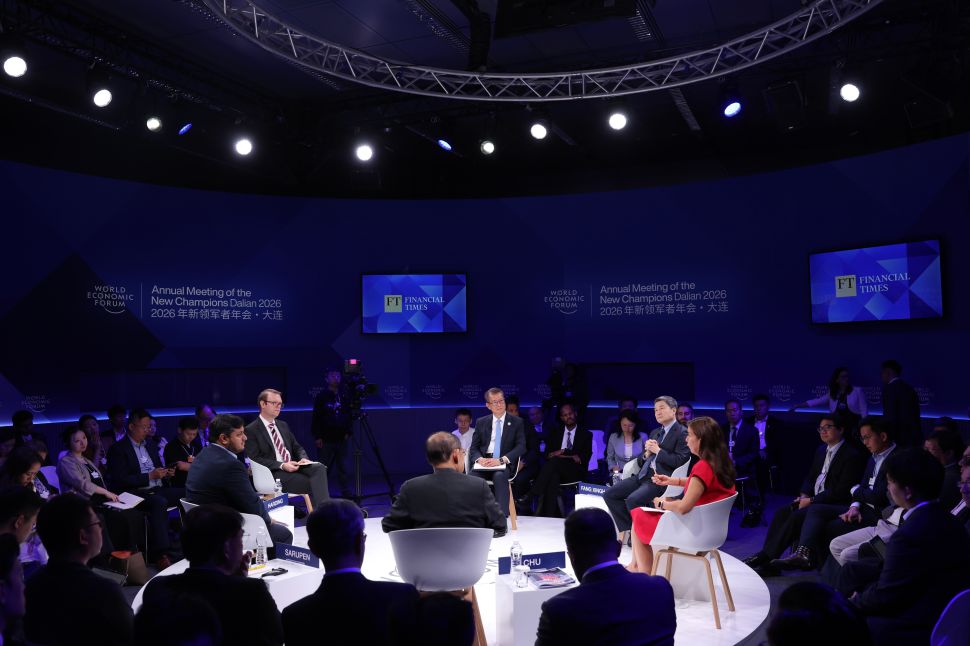
This week, as leaders gather again for Summer Davos in Dalian, China, under the theme “Innovating at Scale,” Carney’s framing has only sharpened in relevance. The agenda reflects a world being redrawn in real time: shifting trade and industrial realities, energy markets unsettled by conflict in the Middle East, A.I. restructuring the nature of knowledge work faster than organizations can adapt. The question being asked across those sessions—how do you build and scale in an environment this volatile?—is one most leaders are answering with the wrong tools.
The instinct in rupture is to reach for more: more scenario planning, more technology, more agility frameworks. What gets overlooked, consistently, is the one thing that makes all of that actually work: a clear, activated sense of organizational purpose. Not a purpose statement. An activated purpose. The difference is everything.
When the map dissolves, purpose is the compass
The business world has invested heavily in purpose over the past decade. Most large organizations now have one—a carefully crafted statement of why they exist, unveiled at an offsite, printed in the annual report and then quietly outpaced by the urgency of the next quarter.
The research is unambiguous about the cost of that gap. Companies that genuinely align their business practices with their stated purpose grew median pre-tax profit by 31 percent in 2024. Companies with purpose statements but no meaningful activation: 3 percent. That 28-point difference is not explained by strategy sophistication, technology investment or talent. It is explained by the discipline to follow through.
In stable conditions, organizations can afford the gap between stated values and actual decisions. Stakeholders are forgiving, markets are predictable and the performance cost of misalignment is slow and diffuse. In rupture, it accelerates. When trade relationships break down overnight, when A.I. makes last year’s competitive advantages obsolete, when geopolitical shocks force rapid strategic pivots, the organizations that know precisely what they exist to do are the ones that can move fast and coherently. Everyone else risks accelerating in multiple directions simultaneously: impressive in motion, incoherent in effect.
This is exactly what Summer Davos is grappling with in Dalian. The question of how to harness technology for real-economy outcomes—one of the meeting’s five central themes—cannot be answered by technology alone. A.I. can generate strategy options, model scenarios and identify opportunities faster than any leadership team can process them. What it cannot do is tell a leader what the organization should actually pursue. That requires a clarity of purpose that most organizations claim to have, but very few have genuinely activated.
The activation gap
In our work with boards and executive teams across multiple sectors and continents, we have mapped the journey from purpose stated to purpose lived as a six-phase lifecycle: awaken, act, articulate, align, amplify and assure. Most organizations complete the first three and call it done. The last three—where the real competitive advantage is built—are where momentum stalls.
The align phase is the most consequential and most frequently skipped. It is where purpose becomes an active decision-making filter: which investments get funded, which get stopped, who gets hired, how performance is evaluated. One of our clients, a government organization, conducted a full inventory of all in-flight projects at this stage, mapping them against purpose alignment. Over the following year, they wound down 30 percent of those projects. It was not a cost-cutting exercise. It was a clarity exercise—and it created the organizational focus that made everything else faster and more effective.
In an era of rupture, that kind of clarity is not a nice-to-have. It is the mechanism by which organizations avoid the paralysis that volatile conditions produce.
What it looks like when it works
Kiwibank, the New Zealand state-owned bank, built its purpose activation around three externally-focused pillars with clear, time-bound commitments. Since 2021, its balance sheet has grown consistently ahead of the market, with lending and deposit growth outperforming competitors through some of New Zealand’s most challenging economic conditions. CEO Steve Jurkovich has been direct about the mechanism: “We get performance through purpose. Once we worked out what purpose really meant to us, it became a win-win—not a trade-off.”
Places for People, a U.K. social enterprise operating across housing and community development, united 20 businesses under a single purpose—Because Community Matters—and then did the harder structural work: aligning every major decision to it. Their 2024 engagement survey achieved a 94.9 percent completion rate. Their impact framework reported £334 million in social value generated in fiscal year 2024. These results did not come from a purpose statement. They came from the years of disciplined work that followed it.
The leadership question Dalian should be asking
The Summer Davos agenda asks how organizations can find prosperity amid shifting trade and industrial realities, how they can harness technology for real-economy outcomes and how they can create jobs and opportunity in the next phase of growth. These are the right questions. But they all have a precondition that rarely appears on the agenda: leaders need to know what they exist to do before they can answer any of them well.
Carney’s rupture framing is useful precisely because it removes the comfort of incremental thinking. In a transition, you adapt. In a rupture, you reconstruct. And reconstruction—of strategy, of operating models, of relationships with employees and communities—requires a foundation that will hold when everything else shifts.
That foundation is activated purpose. Not as an aspiration, but as an operating system. Not as something to be communicated, but as something to be lived—one decision, one trade-off, one honest accountability conversation at a time.
The organizations that leave Dalian with a clearer answer to that foundational question will not just be better positioned to innovate at scale. They will be the ones still standing when the next rupture arrives.
Jennie McLaughlin is Founder and Chief Purpose Officer of Purpose Led Transformation and former EY Partner. Sarah Rozenthuler is a chartered psychologist, leadership consultant, and author of books including Powered by Purpose. Together, they work with boards and executive teams globally on purpose activation.
