
The country is hard to read at a distance right now, politically caricatured from afar by algorithm bubbles. The 250th arrives this summer and the official run-up has been mostly conferences and merchandise. Meanwhile, the people who do the actual work of American history—preservationists, archaeologists, descendants and at least one Pulitzer winner—have spent the last two years substantially rebuilding what the country gets to look at. Add all this together, and you’ve got a strong argument for getting in a car—by any honest measure, it is a banner year to drive.
The American road trip is older than the interstate that supposedly invented it; older than the Beats who wrote it down—the form Whitman caught walking, Steinbeck caught driving, Didion caught at a hotel pool in Death Valley. None of them got the country at a remove. The 12 routes below run from the founding to the present, each one anchored by something genuinely new on the ground in 2026—a freshly excavated battlefield, a museum addition, a national monument that did not exist three years ago, a book that rewrites the official version—and each drivable, in whole or in partial segments, in two weeks or less.
A note on logistics. Gas is hovering above $4.50 a gallon on average, and rental cars are not exactly a bargain right now either—both real factors worth planning around. One workable strategy: fly into one of the hub cities and consider renting an EV, since charging infrastructure has expanded substantially since the 2021 infrastructure law: Tesla Superchargers, Electrify America, ChargePoint and EVgo now cover most of the interstate corridors below. Here are 12 itineraries built around what those people have made worth seeing.
The Best American Road Trips
Boston, MA to Yorktown, VA
The Revolutionary War road trip, 8-10 days
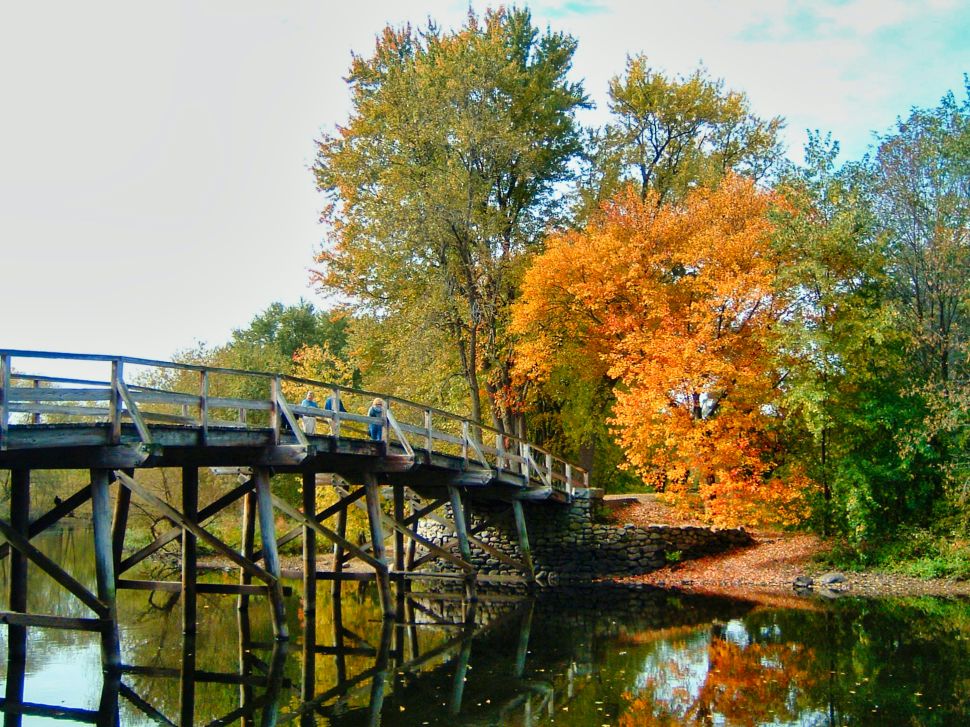
The Revolutionary War survives mostly as marble and metaphor. Drive its battlefields in 2026, and it becomes evidence. Park Service archaeologists confirmed in July 2024 that musket balls recovered at Concord’s North Bridge were, in fact, fired by colonial militia—the first physical evidence of the shot heard round the world. Rick Atkinson’s The Fate of the Day, volume two of his Revolution trilogy, debuted at number one on the New York Times bestseller list last April. Ken Burns’ six-part American Revolution begins streaming free on PBS May 25 through July 12. And the Museum of the American Revolution is running The Declaration’s Journey through January 3, 2027, with 120 artifacts, including Jefferson’s writing chair and a bench from MLK’s Birmingham jail cell. Drive Lexington through Saratoga, Trenton, Valley Forge and Mount Vernon—which has a new permanent Washington gallery opening in June, with a dedicated room on the 317 enslaved people at his farms—and finish at Yorktown.
Old North Bridge.
Christopher Ryan
Cambridge, MD to St. Catharines, Ontario, Canada
Following Harriet Tubman, 6-7 Days
Most of the Underground Railroad is gone. What survives runs from a tidal marsh on Maryland’s Eastern Shore to a stone chapel in southern Ontario, and Tubman scholarship has been completely rewritten in the two years since you last looked at it. Edda L. Fields-Black’s Combee won the 2025 Pulitzer for History by establishing Tubman as the Civil War spymaster who commanded the June 1863 Combahee River Raid, freeing 756 enslaved people in a single night. Tiya Miles’ Night Flyer reframed her as an ecologist and mystic. Maryland made it official on Veterans Day 2024, commissioning Tubman a brigadier general roughly 160 years late. Drive Cambridge and Bucktown on the Eastern Shore—flat tidal marshland, oystermen at the dock, very few tourists—through Wilmington and Harpers Ferry to Tubman’s late-in-life home in Auburn, New York. Then cross to St. Catharines to see her actual congregation, Salem Chapel, which, in 2023, became the first international listing in the National Park Service’s Network to Freedom. The Park Service added 33 more sites to the network in 2024 alone. Bring waders for the Eastern Shore stretch.
Harpers Ferry.
Joshua Hummell
Gettysburg, PA to Fort Monroe, VA
Bondage to Surrender, 5-7 days
Most Civil War driving tours end at the Appomattox surrender field. The longer story begins 246 years earlier, on a beach in Hampton, Virginia, and 2026 is the year both ends of it are being substantially rebuilt. In April 2025, the Park Service dedicated two new trails at Appomattox for the surrender’s 160th, centered on Hannah Reynolds—an enslaved woman who was the only fatality of April 9, 1865—and the roughly 4,600 enslaved people freed on the spot when Robert E. Lee handed over his sword. At Fort Monroe, sculptor Brian Owens began installing the African Landing Memorial this year, the first stone phase commemorating the Tucker family and the 32 Angolans landed at Point Comfort in August 1619. Between those endpoints, drive Antietam (mid-$6.8 million visitor-center rehab, with Save Historic Antietam restoring the 1862 sightlines around Harpers Ferry Road), then D.C., Manassas, Fredericksburg, Richmond and Petersburg. Allow time for a slow read at Cold Harbor and the High Water Mark.
Fort Monroe.
Georgi Guruli
Atlanta, GA to Memphis, TN
The civil rights pilgrimage, 6 days
From the King Birth Home in Atlanta to the Lorraine Motel balcony in Memphis, this is the pilgrimage for travelers who want to walk the actual ground of the movement—the church basements, bridges and motel parking lots where the country was forced to look at itself. It is also a route that has been substantially rebuilt since the last time anyone wrote a guide to it. Bryan Stevenson’s Equal Justice Initiative opened the Freedom Monument Sculpture Park in Montgomery on March 27, 2024: 17 acres along the Alabama River, anchored by a 43-by-155-foot National Monument to Freedom inscribed with 122,000 surnames adopted by formerly enslaved people in the 1870 Census, with commissioned works by Kehinde Wiley, Simone Leigh, Alison Saar and Hank Willis Thomas. The New York Times named Montgomery one of “52 Places to Go” the same year. Allow a full day. The route then runs from Birmingham to Selma—where the 60th anniversary of Bloody Sunday in March 2025 drew thousands across the Edmund Pettus Bridge—to Jackson, ending in Memphis, where the National Civil Rights Museum reopens the Legacy Building this spring after a $9.6 million expansion that extends the story past 1968 into present-day galleries on poverty, housing and criminal justice.
Lorraine Motel.
Thomas Konings
Vicksburg, MS to Detroit, MI
The Great Migration, 7-10 days
Isabel Wilkerson chronicled it in The Warmth of Other Suns: six million Black Southerners moved north between 1916 and 1970, and the blues went with them. Highway 61, the road they took, is having an unusually loud moment in 2026. Ryan Coogler and Ludwig Göransson toured the Mississippi Blues Trail through Cleveland and Clarksdale while making Sinners, the highest-grossing original horror film of 2025; Coogler hosted hometown screenings in Clarksdale that May because the city has no movie theater. Morgan Freeman launched the Symphonic Blues Experience the same month, pairing Delta musicians with full orchestras on a 20-city tour that runs through 2026. The drive: Vicksburg, Greenville, Indianola (B.B. King’s hometown and grave, fresh with a Blues Trail marker dedicated in September 2025), Cleveland and Dockery Farms, Clarksdale, then up Highway 61 to Memphis (Stax, Sun, the Four Way) and on to Chicago and Detroit. One calendar note: Motown Museum tours paused in January for the final phase of a $75 million expansion, reopening in October 2026.
Beale Street, Memphis, TN.
Heidi Kaden
Bismarck, ND to Great Falls, MT
The expeditions of Lewis and Clark, 5-7 days
The Upper Missouri Breaks still look exactly as Meriwether Lewis described them in 1805. The 220-year-old narrative around them is being substantially rewritten by the Mandan, Hidatsa, Arikara and Ponca nations who fed and sheltered the Corps of Discovery in the first place. The Park Service signed funding agreements in summer 2025 with the MHA Nation, the Ponca Tribe of Nebraska and AIANTA for Indigenous place-names research along the corridor. The York Project, restoring the legacy of York, an enslaved man who was the only Black Corps member, was officially renamed Big Medicine in 2024. The drive runs Bismarck and Fort Mandan to Knife River Indian Villages (Sacagawea’s home village; free, year-round) to Fort Union and Fort Benton, ending in the Upper Missouri Breaks, the 149-mile stretch Lewis called “scenes of visionary enchantment” and which today looks identical. Outfitters run multi-day canoes May 24 through June 13 to mirror the original 1805 dates. Pair the route with Ned Blackhawk’s Rediscovery of America and Kathleen DuVal’s Native Nations, the latter the 2025 Pulitzer for History.
Knife River Indian Villages.
Victoria Stauffenberg
Albuquerque, NM to Bears Ears, UT
Tracking Indigenous America out west, 5-7 days
Acoma Sky City has been continuously inhabited since around 1150 AD, older than every European cathedral except a handful, and still a working pueblo today rather than a ruin. The drive treats Indigenous America as a present-tense subject—19 New Mexico Pueblos and five Bears Ears tribes still actively co-managing their ancestral homelands. The 2026 centerpiece is the Indian Pueblo Cultural Center in Albuquerque, which marks its 50th anniversary while hosting Grounded in Clay: The Spirit of Pueblo Pottery through February 21, 2027—entirely Pueblo-curated, in partnership with the Met and the Vilcek Foundation. From there, the loop hits Acoma Sky City (guided tours only and worth every minute) and on to Chaco Culture, Bandelier and Taos Pueblo. The northern extension brings Bears Ears into reach: in January 2025, the Bureau of Land Management and the Forest Service finalized the first-ever tribal-federal collaborative management plan for a U.S. national monument, co-written by the five Bears Ears tribes. Few drives in the country are as actively being authored by the traditional owners of the land.
Acoma Pueblo, New Mexico.
Los Angeles Times via Getty Imag
Lowell, MA to Detroit, MI
Resurrection in the Rust Belt, 10-14 days
For 40 years, photographing Detroit’s abandoned Michigan Central Station was an entry-level photography rite. In June 2024, Ford reopened the building after a $950 million, six-year restoration, and the cliché died on the spot. The Mezz members’ workspace opened in April 2025; Hilton’s NoMad will add 180 luxury rooms; ticketed guided tours now replace last summer’s free access. The full drive begins at Lowell National Historical Park (the 1820s mill town that gave America the textile industry; the Boott Cotton Mills Museum’s working 88-loom weave room hands you earplugs at the door for good reason). Then down the Erie Canal corridor, where the replica packet boat Seneca Chief runs its “Back to Buffalo” tour June 6-27, the post-bicentennial homecoming voyage. Then Pittsburgh (Carrie Blast Furnaces, retired steelworkers as docents) and Cleveland, before the long final leg to Michigan Central.
Michigan Central Station.
Ulrich Kaiser
Tulsa, OK to Albuquerque, NM
The Mother Road’s Centennial Lap, 5-7 days
The best-preserved 750 miles of the original Route 66 alignment run through Oklahoma, the Texas Panhandle and northern New Mexico. The official centennial calendar opened last April in Springfield, Missouri (the city that calls itself the road’s birthplace) with a Little Big Town concert, followed by a USPS commemorative stamp released in Phoenix on May 5 and an eight-state Main Street of America Caravan running June 5-25 from Santa Monica to Chicago. The literal centennial day is in Tulsa: a Veterans Day Parade and Birthday Bash ending at Cain’s Ballroom. The route threads Cyrus Avery’s hometown, Oklahoma City’s restored 1937 Tower Theatre, the Conoco Tower at Shamrock, Texas, Cadillac Ranch, Tucumcari’s Blue Swallow Motel and on into Albuquerque, where the KiMo Theater premieres the Route 66: Main Street of America documentary on October 1.
Downtown Tulsa.
Mick Haupt
Cape Canaveral, FL to Houston, TX
Moon Shots and Mission Control, 8-10 days
For the first time since Apollo 17 in December 1972, the American space program is a present-tense subject again. Artemis II rolled out from the Vehicle Assembly Building on March 20, 2026, launched April 1 and splashed down April 10—the first crewed lunar flyby in 53 years, roughly 694,000 miles flown. Start at Kennedy Space Center, where The Gantry at LC-39—a four-level observation tower with full-scale rocket-engine simulated static fire—opened in July 2025 as the first new bus-tour stop in years. Then Huntsville’s U.S. Space and Rocket Center, where Marshall built the SLS core stage that just flew Artemis II, and which resumed Friday-Saturday Marshall bus tours in summer 2025. End at Space Center Houston, where the Apollo-era Mission Operations Control Room MOCR-2 was meticulously restored to its July 1969 state. The same restored consoles narrated Artemis II live in April 2026.
Kennedy Space Center.
AK via Unsplash
Los Angeles, CA to Amache, CO
The Camps Road, 8-10 days
The newest unit in the National Park System is Amache, a WWII Japanese American incarceration camp on the high plains of southeastern Colorado, established in February 2024 as the 429th NPS site. This drive ends there, by way of the four other camps on the route. Amache National Historic Site, in Granada, Colorado, honors the 10,000-plus Japanese Americans incarcerated there between 1942 and 1945. The annual pilgrimage in mid-May draws survivors, descendants and historians; this year’s 2026 pilgrimage marked the new park’s first full-year homecoming. Drive Los Angeles (Japanese American National Museum, Little Tokyo) to Manzanar—the most-visited of the camp sites, with reconstructed barracks and a guard tower—to Tule Lake, Minidoka and Heart Mountain (whose Mineta-Simpson Institute opened in 2023, housing the Estelle Ishigo collection), arriving at Amache. Three datable hooks converge in 2026: the 80th anniversary of camp closures, the 50th anniversary of Ford rescinding Executive Order 9066 on February 19, 1976, and Amache’s first full year. The Ireichō, a national memorial book naming every person held in the WRA system, continues its traveling tour with stamping ceremonies.
Amache National Historic Site.
National Park Service
New York, NY to Orlando, FL
Out on the road, 6-7 days
Pulse turns 10 on June 12. Stonewall turns 57 on June 28. Between them runs the geography of American queer history—and as of 2024, the first LGBTQ visitor center in the National Park System. The Stonewall National Monument Visitor Center at 51 Christopher Street opened on the 55th anniversary of the uprising in June 2024; the subway station was renamed Christopher Street-Stonewall the same day, and Chicago-born Black trans DJ Honey Dijon curated the jukebox. Drive south to D.C.—where the Furies Collective House was added to the National Register in 2016 as the first site recognized for lesbian history, and Frank Kameny’s home on Cathedral Avenue NW anchors the federal-employment fight—then on through Richmond, where Diversity Richmond and the lesbian and gay archives at Virginia Commonwealth University hold one of the South’s longest-running queer collections. Continue to Durham, where the Pauli Murray Center for History and Social Justice opened September 7, 2024 in Murray’s restored 1898 family home—the only National Historic Landmark dedicated to a Black queer legal feminist who shaped both Brown v. Board and Title VII. End in Orlando: June 12, 2026 is the 10th anniversary of the Pulse shooting, with a remembrance ceremony at First United Methodist Church downtown. Demolition of the nightclub began in February to make way for the permanent National Memorial, scheduled to break ground later this year. Orlando’s Pride on October 7th promises to celebrate and remember loudly.
Stonewall National Monument.
Brittany Petronella
