
Scoring a reservation for a tasting menu at five-star restaurants like Alinea or The French Laundry comes with expectations of extravagance. These traditional fine-dining experiences are often set in intimate, pin-drop-quiet dining rooms, with meticulous service and gastronomic innovation. Simply securing the actual reservation can feel akin to The Hunger Games, with foodies from all over the world vying for a single coveted time slot. For the average diner, this chef-driven ceremony is reserved for special occasions, and though a level of overindulgence is at the center of these multi-course meals, tasting menus can also be marked by a sense of rigid and disconnected formality. But what if that’s changing?
From eco-friendly resorts claiming to reduce their carbon footprint to seasonally driven restaurants prioritizing local sourcing, businesses have long catered (or, if we’re being realistic, feigned a bare minimum level of attention) to a more purposeful ideology, as opposed to straightforward consumerism. As mindful consumption continues to dominate every sector of hospitality, people are seeking experiences that carry more value. Thanks to the constant presence of smartphones and unlimited access to information and data, today’s customers are more informed than ever, and for better or worse, it’s influencing what they eat and how they spend.
Moreover, with affordability heavy on everyone’s minds, pricing is an obvious factor. Higher costs mean that customers expect a higher return on investment. However, a desire for connection also seems to be at play.
As the satirical 2022 film The Menu makes clear in the most absurd of ways, good food is best without pretension and excessive embellishment. Breaking bread with one another has long served as a foundation for relationship building, and though there is something to be said for the finesse of fine dining, its almost militaristic methodology can create a somewhat suffocating strictness.
During a recent trip to Napa Valley, I partook in an eight-course tasting menu that reinforced this unfortunate perspective. The chef was lovely, and though he came out a few times to explain certain dishes, I didn’t feel any personality or passion when tasting his food. From a caviar-topped pasta with a pine-needle gel to a raw tuna course covered in white chocolate, each dish felt overly complex purely for the sake of shock value and novelty, distracting from the quality of the farm-fresh ingredients. On top of that, the up to 25-minute lag between courses left me wondering if my time could be better spent elsewhere.
Nothing against a leisurely meal, but in an era of burnout, a certain kind of four-hour dinner can, at times, feel simultaneously superfluous and mediocre. While I enjoy spending that much time on a dinner that leaves me speechless (in a good way), this dinner felt disconnected, leaving me wishing I had invested my energy elsewhere.
To clarify, I don’t think fine dining is on its way out. I love the artistry of an over-the-top tasting menu that takes you through 20-plus dishes and 10 different wine pairings. I don’t think those special once-in-a-lifetime dinners will ever get old; however, as the hospitality landscape continues to evolve, establishments across the country are embracing a more interactive and less buttoned-up approach. We want to be wise about how and where we spend our money, while also leaving experiences with memories that last longer than a full stomach.
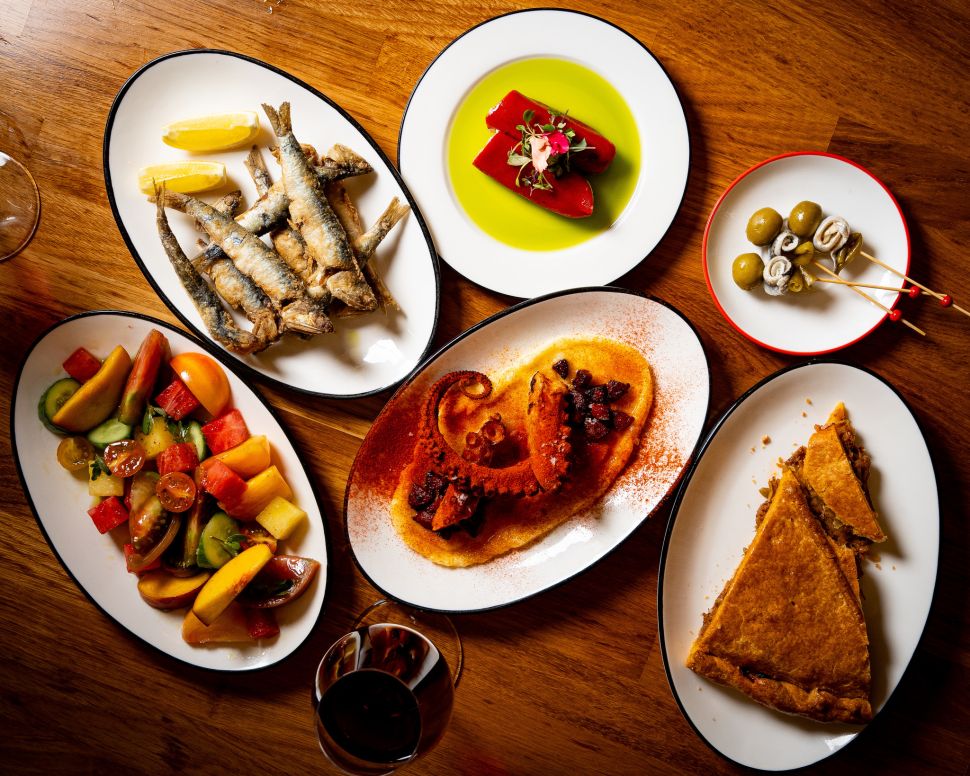
One of the most unique and satisfying tasting menus I’ve had in L.A. recently was at chef Sandra Cordero’s Spanish eatery, Xuntos. “We are really trying to bring this Spanish coastal experience to Los Angeles,” Cordero tells Observer of the Santa Monica restaurant. “But over the last few years, I started noticing that customers weren’t ordering the way I wanted them to, and they were missing out on so many dishes that were perhaps just unfamiliar to them.”
Cordero decided to curate a $75-per-person culinary experience that takes guests on a journey through Northern Spain, showcasing how tapas-style dining is rooted in camaraderie and connection with comforting bites like stuffed piquillo peppers and Catalan pan con tomate. “I love the intricacies of fine dining and molecular gastronomy; I find it so fascinating,” Cordero says. “But at Xuntos, we want people to relax and have fun. Eating and drinking shouldn’t be that serious; we’re not doing brain surgery.” Cordero makes a point of visiting each table, chatting with diners and getting feedback on each dish. It makes diners feel like part of the experience, rather than on the other side of a closed curtain. While traditional wine pairings at Michelin-starred restaurants can cost anywhere from $150 to $400, Xuntos’ $50 pairing is a reasonable price without pretentious pours.
In New York City, Indian fine-dining destination Junoon highlights narrative-led meals that go beyond good food to share stories that convey a sense of place, perhaps most apparent across its $165 “Journey Through India” tasting menu. After sitting down, a wooden puzzle map of India guides guests through various states as they indulge in bites inspired by that particular region. The interactive concept, a collaboration between owner Rajesh Bhardwaj and his son, executive chef Akshay Bhardwaj, adds a layer of engagement between the staff and customers while educating diners on India’s lesser-known cultural traditions.
Nestled between the Meatpacking District and West Village, chef Max Wittawat’s Bangkok Supper Club has mastered this concept of cultural storytelling with a $150 tasting menu of comforting Thai dishes, served at a four-seat kitchen counter. “The idea for this tasting menu actually came to me about six months ago while testing new dishes with my staff,” Wittawat tells Observer. “There would be so much food leftover, and the servers would be so full, so I started making smaller versions of each item, and thought, ‘huh, this is kind of cute.’” Several diners also told Wittawat that they wished they could try more dishes during their visits, but the larger portion sizes made it nearly impossible. Though about 90 percent of orders still come from the à la carte menu, the Kitchen Counter Tasting lets customers enjoy a little bit of everything while paying homage to Bangkok’s vibrant late-night food scene.
It includes the restaurant’s most celebrated dishes, with standouts like the uni and crab tartlet, tiger prawn satay and Thai beef tartare. The star of the show—and chef Wittawat’s personal favorite—is the pork jowl with baked garlic rice. “My dad used to make this dish for me growing up, so it just feels and tastes like my childhood,” Wittawat explains. In addition to sharing these nostalgic recipes with customers, Wittawat also finds that getting one-on-one time with patrons is the best part of working the counter. “I love that my kitchen team gets to observe the guests while they take a bite of food,” Wittawat says. “Watching the customer’s reaction when they love a dish fills them with a sense of pride, and it’s amazing to see.”
These more relaxed tasting menus are gaining traction across the country, beyond New York and L.A. In Dover, New Hampshire, James Beard Award-nominated Evan Hennessey spotlights a six-course version of his usual nine-course menu every Thursday at Stages at One Washington. Even Chicago’s Michelin-starred Esmé has branched out with a more accessible $75 tasting at Bar Esmé, extending its mission-driven philosophy to reach more people who might otherwise be intimidated by a lengthy, theatrical experience.
While I hope to encounter many Alinea-level dinners throughout my career (should I be so lucky), I’m thoroughly impressed by these shorter, more interactive tasting menus that are offering a new path back to community and connection. Though I don’t expect extravagant fine dining to die (and it shouldn’t), less formal experiences open more accessible doors for foodies, reminding us that not every multi-course meal needs to be a five-hour spectacle. Whether you’re trying to save time, energy or money, this era of approachability feels far more personal than performative.
