
The United States turns 250 on July 4. In that time, countless men and women have recorded their experiences of being, or becoming, an American. Often these portraits are novels, classics like Adventures of Huckleberry Finn and The Great Gatsby, rendering riveting portraits about the pursuit of freedom or the search for the elusive American Dream that have defined the country’s history.
But there are also real stories that capture this same experience from the coalface of the “American experiment,” and below, we turn our attention to some of this country’s greatest memoirists and their noble tales of becoming, struggling or looking for more. There are grand personal histories from politicians and acclaimed writers as well as quiet self-studies of what it means to be a man, have friendship or even lose out in life. Each delivers a message that has stayed with readers years after the book’s first release and is more than deserving of its ongoing acclaim.
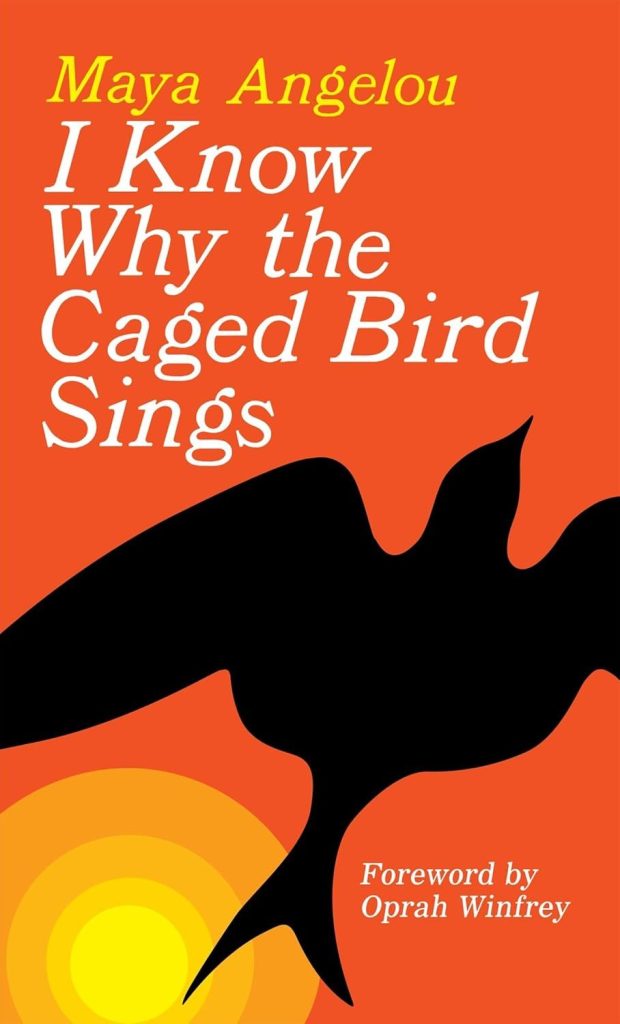
‘I Know Why the Caged Bird Sings’ by Maya Angelou
Writer and poet Maya Angelou writes of her formative years in her powerful coming-of-age book I Know Why the Caged Bird Sings. Since its release in 1969, the memoir has become a classic—and, sadly, often banned—text of American autobiography, one documenting the real violence wrought in the Jim Crow South against people of color but also acknowledging the liberation possible when autonomy and self-understanding is achieved. While there is deep pain from childhood sexual abuse and her mother’s abandonment, there is also much hope here, especially sourced from those who can inspire us to “sing.” I Know Why the Caged Bird Sings, in both its beauty and simplicity, underscores the power that artistic expression can hold in challenging and overcoming society’s prejudices and cruelties.
‘I Know Why the Caged Bird Sings’ by Maya Angelou.
Ballantine Books
‘The Crack-Up’ by F. Scott Fitzgerald
Less a discrete memoir and more a series of interconnected autobiographical essays, The Crack-Up shows the lauded Great Gatsby novelist at a sad nadir. His mental collapse (not to mention wife Zelda’s own) and battles with writer’s block haunt the pages of these short works, capturing a man interrogating his private despair but also making a bold shift in genre with personal essays reflecting a confessional practice that precede the literary movement by decades. The metaphor of a cracked plate, with its unseen hairline fracture, reflects how Fitzgerald’s mental health had long been unraveling as alcoholism consumed him while writing these pieces. (He would die young at 40 years old.) The Crack-Up may be plaintive, and even a touch obscure, but it gives potent insight into one of America’s greatest novelists from deep within his tortured psyche.
‘The Crack-Up’ by F. Scott Fitzgerald.
New Directions
‘The Liars’ Club’ by Mary Karr
Mary Karr’s memoir The Liars’ Club is as revered for its vulnerability as it is for its levity. The Texan writer charts a childhood where violence, abuse and addiction were in endless supply, but self-reliance and a fighting spirit were born in the aftermath. Against the backdrop of the Vietnam War, a homegrown conflict of warring parents and familial grief take center stage in this darkly funny personal history of a destructive but tough-making American childhood. Some say that Karr’s book helped spark a “modern memoir revolution” in America and it isn’t an unreasonable claim, especially given the boom of autobiographies wrestling with trauma and abuse since this 1995 entry.
‘The Liars’ Club’ by Mary Karr.
Penguin Books
‘Palimpsest’ by Gore Vidal
Gore Vidal’s memoir Palimpsest is firstly a poetic tribute to a bygone romance from the writer’s youth. But it also acts as a vehicle for the acclaimed novelist and intellectual to skewer many of his enemies—both real and perceived—long after they have died. Indeed, the bitchy Vidal dishes gossip and sharp barbs with disarming wit against a colorful history of America’s 1950s and 1960s political, literary and high-society scenes. The Kennedys, Anaïs Nin and old adversary Truman Capote are all taken to task by Vidal, with the latter simply described as a “round pale fetus face.” Caustic and cutting, sincere and sometimes sentimental too, Palimpsest reveals a giant of letters resisting any neat narratives to reappraise his life from a gilded vantage point in American society. While he settles many scores, what gives Palimpsest its heft is the grief still burning alive in the usually unemotional Vidal for his long-lost lover.
‘Palimpsest’ by Gore Vidal.
Penguin Group USA
‘Just Kids’ by Patti Smith
Lovers, friends, confidantes, muses and much more, Patti Smith and Robert Mapplethorpe together straddled many categories in a relationship spread across two decades trying to be artists in downtown New York. The punk-rock poet and iconoclastic photographer first met in 1967 and soon became inseparable soul mates, bonding together in their shared poverty to survive and their drive to succeed in their respective artistic projects. Smith would later find success with album Horses, while Mapplethorpe would gain wider attention for his infamous black-and-white BDSM images. Just Kids reflects a vow Smith made to Mapplethorpe on his deathbed to honor their artistic pact. It stands as an elegiac memento mori to a genius artist lost too soon and a bygone time and place where all one needed was passion—and a friend who believed in you.
‘Just Kids’ by Patti Smith.
Ecco
‘Dreams from My Father’ by Barack Obama
“I was trying to raise myself to be a Black man in America,” writes Barack Obama in Dreams from My Father, “and beyond the given of my appearance, no one around me seemed to know what that meant.” His memoir is as much a story of understanding an enigmatic father (who died when Obama was 21) as it is about realizing what it means to be Black as a biracial man in America. The years documented, from the painful high school years punctuated by racism to the long struggle wrestling with the “double consciousness” of being inside and outside the Black experience, all lead Obama to one historic legal and political path. It’s a journey that reflects the truly American practice of finding one’s own path to walk. Dreams from My Father, with its poetic prose and pensiveness, remains a resonant read on dreaming for something unattainable and finding life’s purpose during the search.
‘Dreams from My Father’ by Barack Obama.
Crown
‘Wild’ by Cheryl Strayed
Not many of us seek out journeys to totally rediscover ourselves, and those that do are enviable for the bravery they display in doing so. Cheryl Strayed’s Wild records her attempts to push past grief and self-destruction by setting herself an arduous physical and psychological challenge: three months hiking along the Pacific Crest Trail alone. Bruises, broken toenails and the threat of wildlife are the physical dangers. The journey, however, forces her to confront many psychological hazards too: the loss of her mother, the dissolution of her marriage and her descent into heroin addiction. By journey’s end, Strayed conveys how pilgrimages like hers can foster a quiet but radical transformation in the self, born from knowing that sometimes you can only rely on yourself to survive.
‘Wild’ by Cheryl Strayed.
Knopf
‘This Boy’s Life’ by Tobias Wolff
Not all attempts at gaining a slice of the figurative “American pie” are successful or straightforward, as Tobias Wolff’s masterful This Boy’s Life demonstrates. The memoir, which retraces the author’s difficult boyhood in the 1950s (one he later mined for much of his fiction) where he and his mother made a dash to the northwest for opportunity and stability. Life, however, would prove just as torturous as one abusive patriarch is traded for another more tyrannical one. From his mother’s many personal failures (relationships and schemes alike) to Wolff’s own struggles with self-invention, the memoir limns the sorrow and wonder of male adolescence—the cruelty of adults and the messiness of male friendships—to deliver a superb portrait of American masculinity. Blunt and unsentimental, there’s a reason why This Boy’s Life remains a classroom classic.
‘This Boy’s Life’ by Tobias Wolff.
Grove Press
‘The Year of Magical Thinking’ by Joan Didion
Joan Didion, one of America’s sharpest observers of American life and society, turns her attention to a year mired by grief and sorrow following the death of her husband and near-death of her daughter. The Year of Magical Thinking is an emotionally laden exercise in self-observation, one where Didion tracks her stages of grief against the textbook symptoms during a year spent pursuing “magical thinking”: the vain denial of loss despite reality’s cruel reminders. Like her past reportage, she leverages research and others’ stories to defer experiencing her own acute pain and savor in denial for one day longer. Didion’s prose, at once exacting and lyrical, produces an affecting account of the attempt to overcome, one that has rightly since become one of the writer’s most lauded books.
‘The Year of Magical Thinking’ by Joan Didion.
Vintage
‘Kitchen Confidential’ by Anthony Bourdain
In his biting Kitchen Confidential, the late Anthony Bourdain gives a delightful, no-holds-barred personal history of thriving—and surviving—the restaurant industry from behind its swinging door. A passion for food is paired with a passion for takedowns, not least of which Bourdain includes himself in, as he recounts the battle scars and heavy bruising he suffered to become one of this country’s foremost chefs. The memoir acknowledges his battles with addiction and penchant for adrenaline while also dishing sage advice: for patrons, a reminder to inspect the bathroom of any restaurant you visit; and for aspiring cooks, to never make excuses and practice your Spanish. Kitchen Confidential meanwhile reminds the reader of how contradictory a space the kitchen can be: a safe refuge for misfits and eccentrics as well as a hidden bastion of chaos from the order of the dining area.
‘Kitchen Confidential’ by Anthony Bourdain.
Ecco
‘Personal History’ by Katharine Graham
Katharine Graham, the scion of the Graham press dynasty and the formidable former publisher of the Washington Post, delivers a self-critical and exacting portrait of one American media institution and her time attempting to steer it past dangerous headwinds. The Pentagon Papers, Watergate and even the lesser known “Koreagate” were political scandals and scoops the paper presented to the public that would test the inexperienced Graham via episodes of major corporate crisis and personal self-doubt. Against events of unimaginable social and political scale, Personal History is a striking self-portrait from an underappreciated American woman who helped shape a major moment in American history.
‘Personal History’ by Katharine Graham.
Vintage
