
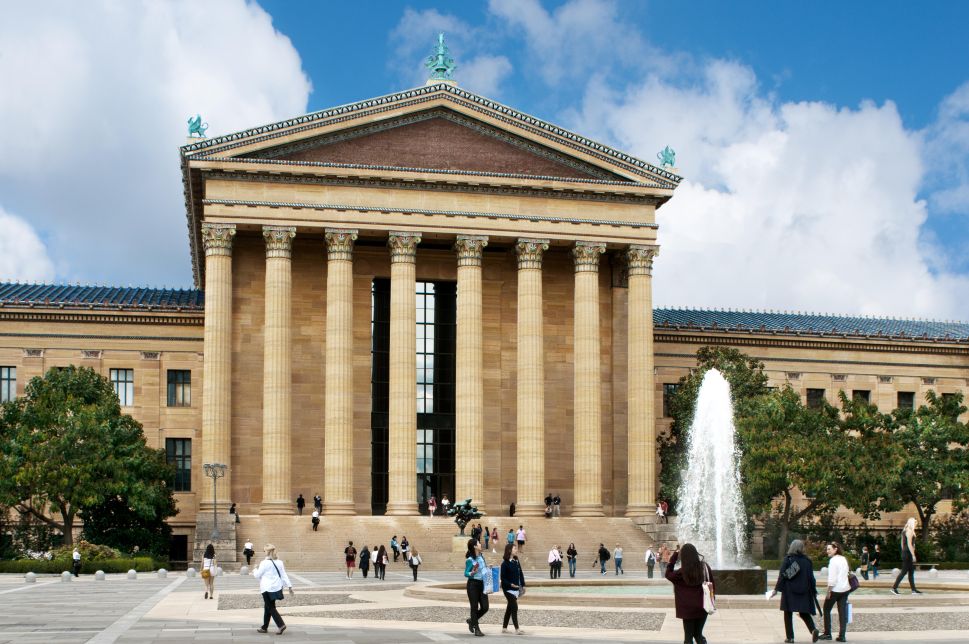
As rebrands go, it was a short-lived one. Less than four months after the Philadelphia Museum of Art revealed its new identity, trustees announced it was rolling it back. The new name was widely mocked as the “PhArt Museum,” the director was fired and the institution was left with a reported $6 million deficit. Many cultural organizations will now think twice before touching their own brand, but the lesson for the sector that a rebrand is dangerous is the wrong one to draw.
The Philadelphia Museum of Art’s rebrand did not fail because it was a rebrand. It failed because of how the change was handled. Without stakeholder alignment or community buy-in—and with a name that appeared to erase a decades-old civic identity overnight—it was always going to struggle.
The sector’s hesitation is understandable, but it is in fact missing a far greater risk: that of failing to rebrand at the right moment. When rebranding is handled well, it can support audience growth and help institutions compete in an increasingly crowded leisure market.
London’s Tate Modern in 2000 is the exemplar; it undertook a rebrand that transformed not only the gallery’s fortunes but also reshaped the public’s understanding of what a gallery can be. We can look more recently at successful rebrands at the Guggenheim and Brooklyn Museums, which form part of broader efforts to reach new audiences. Equally, if cultural institutions do not evolve their messaging or identity, they risk slipping imperceptibly into irrelevance.
Rather than pausing brand evolution indefinitely, the sector would do better to understand what actually went wrong and how to avoid repeating it.
What happened in Philadelphia
Despite the backlash, it is worth noting that much of the work itself had real merit. It brought energy, with the potential to engage younger audiences. It was primarily the name change from Philadelphia Museum of Art to Philadelphia Art Museum that was met with derision. Beyond reverting the name, much of the wider identity program remains in use. It was not a total failure, but the reaction treated it as one.
Other recent cultural rebrands, including the Getty’s, have received mixed reviews without becoming sector-wide cautionary tales. What set Philadelphia apart was less the quality of the work than the combination of the name change, the director’s firing and the deficit.
That said, it was a significant shift, and it does not appear to have been supported by the kind of process needed to bring stakeholders along. Compromising on certain elements in order to build broader buy-in could have been a worthwhile trade-off. The name change, in particular, may not have been necessary.
Attempts to shorten or reframe institutional names rarely succeed without strong buy-in. In 2017, the National Gallery of Ireland adopted the acronym “NGI” as part of a rebrand, but it was widely criticized and never gained traction, and the institution eventually reverted to fuller use of its name in practice.
Hesitation can be just as dangerous
The rapid, largely unmerited condemnation of this work, and the resulting enthusiasm to hit the brakes on other rebranding work, highlights a particular hesitancy the cultural sector has toward brand. Many believe that the institution’s own identity should recede, and it should act as a blank canvas for the work itself.
Yet, before the art on the walls can speak, the institution has to speak: it has to get people’s attention and get you through the door. Today, museums are competing in a much broader marketplace, against cinemas, streaming platforms, restaurants and even the beach. For a long time, many operated from an ivory tower, but that is no longer an option.
Brand sets expectations, communicates experience, differentiates an institution from other choices and builds a relationship that brings people back. Museums can be entertaining, informative and eye-opening social spaces, but they have to communicate that. Standing still is not the safe option it appears to be. If a current identity is holding an organization back, a rebrand—executed with the right process and investment—can actually be less risky than doing nothing.
What getting a rebrand right looks like
A rebrand can be handled in very different ways. The Guggenheim’s 2024 identity refresh, for example, did not attempt to reinvent the institution. Instead, it drew on its existing visual language—geometric typography, a recognizable architectural heritage—and clarified it. The tone of voice was deliberately inclusive, connecting its global group of museums, and it felt like an evolution. In 2025, the Guggenheim Bilbao was among the world’s most visited museums, attracting 1.3 million visitors.
In 2013, the Rijksmuseum in Amsterdam launched a renewed brand identity, built around a bespoke typeface and a clearer, more contemporary visual language. Introduced in advance of its reopening, the identity helped build momentum, with visitor numbers more than doubling to nearly 2.5 million within a year, which it has since maintained.
Creative ambition often pushes towards dramatic transformation. In many cases, the more effective solution lies somewhere between a complete overhaul and doing nothing at all.
Making the case for rebranding
Furthermore, the most critical work happens before any design begins. Internal teams and staff across the organization, as well as board members and donors, need to be heard. This requires listening and asking the right questions. This can take time. Member surveys are often valuable, and where budget allows, broader community engagement can help identify the audiences that institutions are trying to reach. As strategy takes shape in design, a smaller group of decision-makers should refine the direction. Before anything is finalized, it must be brought back to internal stakeholders. It’s important to build buy-in and enthusiasm before the work is made public.
Working on the San Diego Children’s Discovery Museum, we found it faced practical challenges: a confusing name—it was not actually in San Diego—and an identity that did not work well in digital environments. Earlier attempts by others to solve this through more radical change stalled, in part because stakeholders were not aligned.
Our eventual solution was more incremental: adjusting the name to the Children’s Museum of Discovery (CMoD) and then refining the identity rather than replacing it outright. It allowed the organization to move forward without forcing change that key stakeholders were not ready to support.
The importance of clarity of purpose
Organizations need to be able to articulate what is not working and why change is necessary. Without agreement on the problem, there will never be agreement on the solution. Alignment comes through conversation, and ultimately requires leadership. This is not simply a marketing exercise. It needs to be led at the executive director/CEO level, with clear accountability. The agency acts as a partner in that process: alongside the creative work, they surface the real issues and build alignment with everyone.
When a cultural institution gets its brand wrong, the impact is wide: it affects trust, leadership stability, relationships with donors and audiences and even the numbers that come through the door. But the response should not be to avoid change altogether. Standing still and failing to tackle issues with the brand can be an even bigger risk.
Instead, the lesson from Philadelphia is that change needs to be handled with care, rooted in strategy, supported by stakeholders and clearly understood before it is made public.
