
A truly great story can move an audience to tears, fill them with laughter or make them examine their own lived experience from a new perspective. And so it’s no wonder that when a great story captures public attention, studios are often keen to reproduce it for the big screen. The results, however, can be mixed, with readers and moviegoers often debating which medium told the story best. Some adaptations don’t stay true to the original text; others fail to capture the magic of the written word. On the other hand, some movies take their source material to a whole new level, turning a feast for the imagination into one for the eyes, and winning hearts and minds along the way.
Movies can also bring new attention to a book that may have been forgotten or overlooked, and novels generally see renewed interest when pushed onto the screen and showcased on the red carpet—a win for authors and publishers. A great tale retold on screen may even prompt people who rarely pick up a book to give reading a go and shine a light on an author’s backlist. In other words, love them or loathe them, movie adaptations bring stories into the mainstream and spark debate around the written word, which can only be a good thing.
The following tales began as some of the best books across genres, which made it to the big screen with great success. Whether you read, watch or do both is entirely up to you.
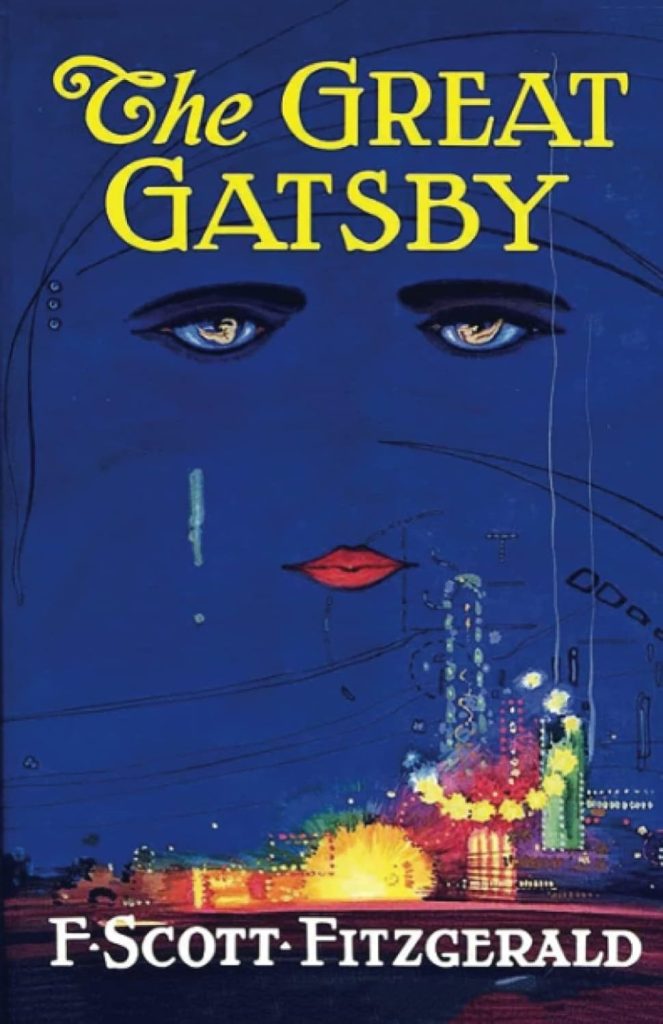
‘The Great Gatsby’ by F. Scott Fitzgerald
The Great Gatsby tells the story of the secretive Jay Gatsby, his extravagant lifestyle, penchant for a good party and his love for the glamorous Daisy Buchanan. Set in 1920s New York, the lavish tale was released in 1925 to mixed reviews, much to Fitzgerald’s disappointment. The book was revived in the 1940s, gained new fans and eventually became a classic.
It wasn’t until 2013, 88 years after its first publication, that the book was adapted for the screen by Baz Luhrmann. The result was a visual feast starring Leonardo DiCaprio as the infamous Gatsby. The movie, like the novel before it, drew a mixed reaction from reviewers—some felt it had embraced style over substance. But audiences loved it, and the film was a huge commercial success.
‘The Great Gatsby’ by F. Scott Fitzgerald.
Decameron Books
‘Wuthering Heights’ by Emily Brontë
Most people have heard of, if not read, Brontë’s romantic and rather disturbing novel, first released in 1847 under a pseudonym. Some readers at the time found the tale immoral and its romantic lead, Heathcliff, too wild and cruel. An edited version, released in 1850, garnered more interest, and the harrowing, compelling novel is now considered a masterpiece.
The recent Warner Bros. Pictures adaptation has drawn considerable attention. Many loyal Brontë fans were critical of the film, which turned a tale of obsessive love, abuse and revenge into something more palatable and glossy for theatergoers. Despite this, the movie was a huge box-office hit, with some speculating on its potential for an Oscar or two come 2027.
‘Wuthering Heights’ by Emily Brontë.
Penguin Books
‘The Lost Daughter’ by Elena Ferrante
This story of Leda, a middle-aged English teacher who, free from both childcare and work, decides to holiday alone in a small Italian town, received great critical acclaim for its depiction of the darker sides of a woman’s identity—as an individual and as a mother. Leda’s quiet holiday is interrupted by a loud, chaotic family who descend on the same resort; the tale takes a darker turn as Leda’s behavior grows increasingly odd.
The movie of the same name, released in 2021, is largely faithful to the original story, though some of Leda’s interior musings have had to be translated into conversation or monologue to suit the format. Both film and book are gently unsettling and leave you with a great deal to mull over afterward.
‘The Lost Daughter’ by Elena Ferrante.
Europa Editions
‘The Green Mile’ by Stephen King
This 1996 novel tells the tale of Paul Edgecombe, a death-row supervisor who becomes fascinated by wrongly convicted inmate John Coffey, a man with healing powers and deep empathy. The book was an enormous commercial and critical success, winning several awards, including the Bram Stoker Award for Best Novel.
The movie, released three years later, also became an instant classic. Faithful to the novel and starring Tom Hanks and Michael Clarke Duncan, it received enormous critical acclaim, four Academy Award nominations and was a box-office smash. If you’ve yet to experience this deeply resonant tale, you’re in for a treat.
‘The Green Mile’ by Stephen King.
Scribner
‘The Notebook’ by Nicholas Sparks
The novel, released in 1996, tells the story of Noah and his enduring love for Allie Nelson, the girl he lost more than ten years earlier—and of Allie, who, despite being about to marry, cannot stop thinking of him. Will they find their way back to each other? And can their love survive the worst that life can throw at them?
The movie of the same name was a slow-burning success that became a cult classic. Released in 2004 to mixed reviews, it went on to gross over 100 million dollars and earn several awards and nominations for its lead actors. If you’re looking for a story that will make you laugh, cry and fall in love, this is the one for you.
‘The Notebook’ by Nicholas Sparks.
Grand Central Publishing
‘Atonement’ by Ian McEwan
Atonement tells the story of how a childish misunderstanding can have lasting, life-ruining consequences. The novel opens in 1935, when 13-year-old Briony witnesses an encounter between her older sister, Cecilia and the servant’s son, Robbie. Her confusion leads her to tell a lie that will send Robbie to prison and tear the couple apart.
Against a backdrop of war, Atonement explores the adult Briony’s anguish over her actions and the lives of both Cecilia and Robbie in the wake of that lie. But is there anything she can do to repair what she broke all those years ago? The movie version was released in 2007 to high acclaim, dubbed a “modern classic” and awarded the Golden Globe for Best Drama. Faithful to the novel, it translates the story’s emotional depth onto screen with stunning results.
‘Atonement’ by Ian McEwan.
Anchor Books
‘Hamnet’ by Maggie O’Farrell
Whether you pick up the novel or watch the movie, you’ll want tissues handy for Hamnet, Maggie O’Farrell’s tale of the ill-fated son of William Shakespeare and Agnes Hathaway. The story explores a family’s grief in the wake of tragedy and how loss haunts and alters both parents’ lives.
The movie, released in 2025, saw Jessie Buckley win a Best Actress Oscar for her portrayal of Agnes and also took the Golden Globe for Best Drama. Considered faithful to the novel, the film’s main departure is structural: where O’Farrell’s narrative moves back and forth in time, the movie depicts events chronologically.
‘Hamnet’ by Maggie O’Farrell.
Knopf
‘The Devil Wears Prada’ by Lauren Weisberger
The Devil Wears Prada, released in 2006, was a box-office hit whose appeal has endured for two decades. It tells the story of Andy Sachs, who takes a job as assistant to the formidable fashion editor Miranda Priestly and finds herself in a cutthroat new world. Readers picking up Weisberger’s source novel, published in 2003, will find some key differences—chiefly in Andy’s fate and the overall tone. Where the movie is light-hearted, the novel is considerably darker. Both are more than worth your time.
Notably, Revenge Wears Prada, Weisberger’s 2013 sequel, just arrived on screens, picking up Andy’s story a decade on and in a brand new life. Can she shake the past? Or is the devil going to cross her path again?
‘The Devil Wears Prada’ by Lauren Weisberger.
Random House
‘Bridget Jones: Mad About the Boy’ by Helen Fielding
This installment of Helen Fielding’s beloved Bridget Jones series strikes a more melancholy note than its predecessors. Now widowed and a mother of two, Bridget is navigating an entirely new landscape in her 50s and tentatively entertaining the idea of finding love again, though she may be looking in all the wrong places.
The movie drew crowds of devoted fans eager to catch up with their favorite heroine, though reviews were mixed. Rather than the breezy rom-com of earlier installments, the story is more nuanced, grappling with aging, grief and romance. Hugh Grant reprised his role as Daniel Cleaver, but Bridget wasn’t the only one feeling the absence of Colin Firth’s Mark Darcy. A box-office hit nonetheless—just bring tissues.
‘Bridget Jones: Mad About the Boy’ by Helen Fielding.
Knopf
‘The Fellowship of the Ring’ by J.R.R. Tolkien
When the first installment of Tolkien’s classic trilogy was published in 1954, it performed modestly, but it was the 1960s when it truly took flight, gaining legions of fans and cementing its status as a classic for generations to come. Anyone who has grappled with a print copy of this mighty tome will be astonished to learn that the trilogy was originally intended as a single book, split into three volumes only to make it more accessible.
The first movie, released in 2001, became an instant classic, praised for its spectacular visuals and faithful rendering of Tolkien’s world. It introduced Frodo and company to an entirely new audience—those perhaps unwilling or unable to work through a 500-page book but happy to spare two or three hours in a cinema or on the couch. Lord of the Rings fans will be thrilled to learn that another film is in the pipeline, set in the years between The Hobbit and The Fellowship of the Ring, and due for release sometime next year.
‘The Fellowship of the Ring’ by J.R.R. Tolkien.
William Morrow Paperbacks
