
This spring, the president of the United States posted a picture depicting himself as Jesus Christ. That bizarre exercise in self-hagiography was only the latest in Trump’s decade-long campaign of anti-democratic actions and statements, including but not limited to blatant efforts to use the government to silence press critics, efforts to prosecute those the president sees as personal enemies, armed masked agents of the state kidnapping people off the street, and, of course, an attempted coup.
In this environment, people have turned to a small collection of dystopian anti-totalitarian novels to try to understand our current circumstances. George Orwell’s 1984, Margaret Atwood’s The Handmaid’s Tale, Octavia Butler’s Parable duology, Suzanne Collins’ Hunger Games series, Philip Roth’s The Plot Against America and Philip K. Dick’s The Man in the High Castle offer insights into how liberty falls to tyranny, and how people resist, or (often, alas) don’t.
I’d certainly recommend reading all of the texts above. They do, though, have some limitations. Most are written by white men, who are not generally the first people targeted by totalitarian regimes. And their canonical status and ubiquity can prevent readers from seeking out other, equally worthy, and sometimes maybe even more insightful texts. Below are 10 anti-totalitarian novels that are often passed over but shouldn’t be.
Must-read anti-totalitarian fiction
James Hogg’s ‘Confessions of a Justified Sinner’
James Weldon Johnson’s ‘Autobiography of an Ex-Colored Man’
John Christopher’s ‘The City of Gold and Lead’
Joanna Russ’s ‘We Who Are About To…’
Yoko Ogawa’s ‘The Memory Police’
Abdulrazak Gurnah’s ‘Paradise’
Jason Heroux’s ‘We Wish You a Happy Killday’
N.K. Jemisin’s ‘The Broken Earth’ Trilogy
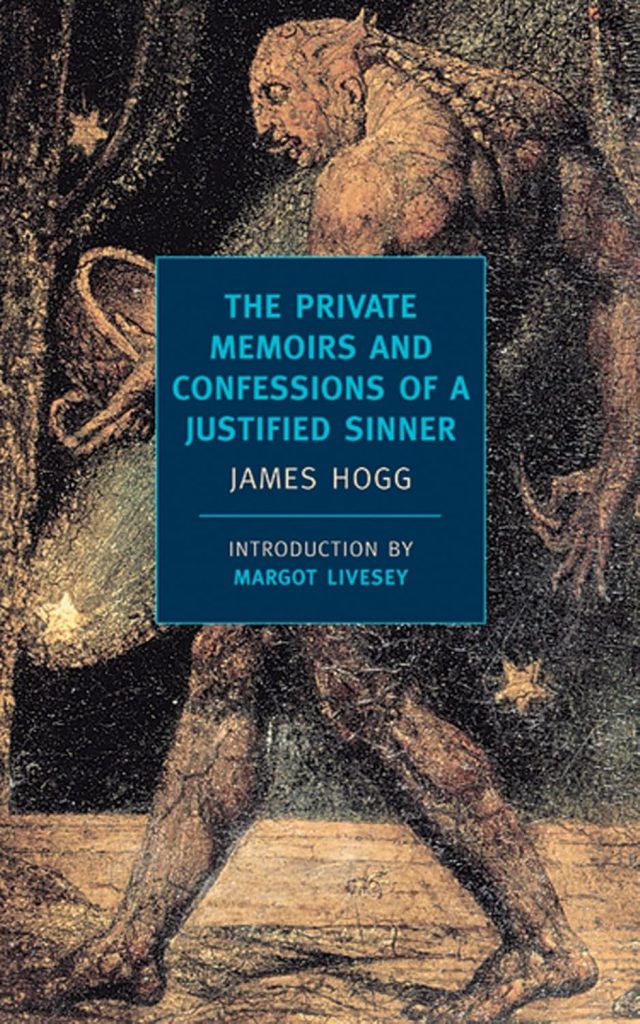
James Hogg’s ‘Confessions of a Justified Sinner’
Hogg’s classic tale about a Christian corrupted by the devil isn’t usually considered an example of dystopian totalitarian literature, but it is certainly about abuse of power and grasping tyranny. The corruption in question is achieved through the Christian’s conviction of his own righteousness. He steals, murders, assaults and tyrannizes the countryside because he knows he can do no wrong and because he knows his enemies are the enemies of God. Hogg provides a cold-eyed, merciless dissection of Christofascist self-deceit and horror which is chillingly relevant 200 years later.
James Hogg’s ‘Confessions of a Justified Sinner’
NYRB Classics
James Weldon Johnson’s ‘Autobiography of an Ex-Colored Man’
In another famous novel not usually classified as a dystopia, Johnson’s narrator is a Black musician light enough to pass in the Jim Crow era. The book is disturbing not because it depicts an omnipresent Big Brother, but because the Big Brother it depicts is so easy to forget and avoid. The narrator moves in and out of Black community, experiencing more or less racism depending on where he lives (North, South, Europe) and how open he is about his background. Yet, violence and hate are never far off the page, and even when he appears to avoid them, he only does so by withdrawing solidarity, first from others, and then from himself. A quiet story about how totalitarianism can be most insidious when it feels like it affects us least.
James Weldon Johnson’s ‘Autobiography of an Ex-Colored Man’
Penguin Classics
John Christopher’s ‘The City of Gold and Lead’
The second novel of John Christopher’s YA, Wells-esque alien invasion Tripods series features British members of the human resistance infiltrating the invader’s redoubt, pretending to be mind-controlled slaves in order to gather information. The Tripods come from a higher gravity world, and the scenes of the protagonists creeping through the alien city, crushed by their own weight, breathing poisonous air, is relentlessly bleak. Even more so is the discussion of the political differences among the Tripods; a conservative faction sees humans as worthless, while a “liberal” faction wants to preserve some embalmed, dead humans for pleasurable viewing. Few science-fiction novels so succinctly and clearly summarize the contempt and indifference of those that rule to those they colonize and control.
John Christopher’s ‘The City of Gold and Lead’
Simon Pulse
Joanna Russ’s ‘We Who Are About To…’
A human spacecraft crashlands on an alien planet, and the handful of survivors decide to build a new society, which means sexually assaulting any woman who doesn’t want to bear children. Theirs is a tiny totalitarianism, built on science denial (there is no realistic prospect for long-term survival on the planet), the pettiest of power fantasies, and blandly unexamined gendered scripts. Resistance is small too—but desperate, violent, and heartfelt. The long, lyrical, stream-of-consciousness conclusion suggests that part of defying authoritarianism is finding our way to new ways of telling, as well as better ways of living.
Joanna Russ’s ‘We Who Are About To…’
Wesleyan University Press
Yoko Ogawa’s ‘The Memory Police’
Ogawa nods to Orwell and Kafka before wandering off into her own particular cul-de-sac of despair. The novel is set on an island controlled by a mysterious authoritarian government. At random times, certain objects—birds, hats, novels, arms—are declared to no longer exist. Most people simply forget them and all associations with them; those who don’t are investigated and seized by the memory police. Internal and external forces—the police and one’s own brain—conspire in the diminishment of the world, as beauty, change, difference and existence itself slip away as if they never were. A film version starring Lily Gladstone is reportedly in development; one wonders if it will ever make it to the big screen, or whether, in our current climate, it will be deemed too pointed, and so forgotten.
Yoko Ogawa’s ‘The Memory Police’
Pantheon
Abdulrazak Gurnah’s ‘Paradise’
In this historical novel set in early 20th-century Tanzania, the protagonist becomes a debt slave as a child to an Arab merchant, who functions as both benefactor and oppressor. This is a tale, not of one vicious system, but of overlapping totalitarianisms—capitalist, colonialist, militarist—and of the difficulty of imagining freedom, much less achieving it, beneath their weight. Paradise‘s realistic setting makes it feel at once more open-ended than speculative dystopias and more inescapable. It is a bitter novel indeed in which service in the First World War looks like a relatively hopeful life compared to the traditional alternatives on offer.
Abdulrazak Gurnah’s ‘Paradise’
The New Press
Jason Heroux’s ‘We Wish You a Happy Killday’
Heroux’s short, surreal novel is little known, which is a shame. It’s set in a world where once a year everybody sets out to murder each other—without malice, because murder is the heartwarming ritual that draws everyone together. It’s a cheerful version of the Purge, and it evokes, not just U.S. gun violence, but the determinedly vacuous response to climate change, to COVID, to fascism, and more. Heroux is a Canadian, and perhaps for that reason he is able to capture a smiling bloody-mindedness that is, of course, not restricted to his southern neighbors, but which has become something of a hallmark of them. No central totalitarian government is needed when, on Killday and every day, we are so willing to terrorize each other.
Jason Heroux’s ‘We Wish You a Happy Killday’
Burning Bulb Publishing
N.K. Jemisin’s ‘The Broken Earth’ Trilogy
Jemisin’s award-winning epic trilogy is already considered a classic in fantasy genre circles, but it hasn’t entered the totalitarian literature canon quite yet. Set on a volcanically active world, the protagonists are powerful Orogones, enslaved for their ability to control the earth and the weather. The world’s rulers believe that they must control the Orogones to keep the world stable and safe—but Jemisin suggests that safety obtained at the price of slavery is not a safety worth having. A series about oppression, about revolution and about who has the power to shake the earth if they are willing to seize it.
N.K. Jemisin’s ‘The Broken Earth’ Trilogy
Orbit
Safiya Sinclair’s ‘How to Say Babylon’
How to Say Babylon is a memoir, but its depiction of totalitarian dynamics are searing and unrelenting. Sinclair grew up in Jamaica, raised by a strict Rastafarian father who was physically and emotionally abusive. She describes a childhood of arbitrary and stifling rules, constant surveillance and constant punishment. Her father’s religion and the persecution he himself faces and perceives become pretexts for his own obsessive control and violence, which is directed at his daughter because she is a child and because she is a girl. Her struggle to free herself through modeling, poetry and travel show how totalitarianism starts in the family, and how resistance must start there as well.
Safiya Sinclair’s ‘How to Say Babylon’
37 Ink
Tasha Suri’s ‘The Isle of the Silver Sea’
The isle of the title is an alternate fantasy Britain, ruled by a terrifying, all-powerful, all-capricious and, not-incidentally, white Queen. Said Queen maintains her magical hold on the world through stories, large and small, which inhabit people and force them to act out narratives of sorrow, cruelty and dominance. To defeat her requires telling new stories—ones which put queer people, non-white people and immigrants at the center of what it means to be British and what it means to be a nation. A strange, lovely story about how stories oppress us and about how they can free us too.
Tasha Suri’s ‘The Isle of the Silver Sea’
Orbit
