
From 2023 through 2024, trophy scarcity was the secondary market’s defining challenge, with a sharp contraction at the top tier. Last fall saw the reemergence of trophy masterpieces that materially contributed to the revenue growth auction houses reported in 2025: up 9 percent to $20.7 billion, driven largely by stronger activity in the second half of the year and a series of record prices. The value of works sold for $1 million or more increased 21 percent year-on-year, while the ultra-high tier above $10 million rose 30 percent. The Modern segment reversed its three-year decline, rising 9 percent to $2.4 billion, while Impressionist and Post-Impressionist art showed the strongest growth, with values surging 47 percent to $1.8 billion.
Crucially, this resurgence at the top end was not simply a matter of renewed demand but of supply—specifically, the return of estate-driven material. Major single-owner collections have long underpinned the highest auction totals and, at pivotal moments, have reset price benchmarks across categories, reestablishing confidence and recalibrating value at the top of the market. According to the recent Contemporary Art Market Confidence Report by ArtTactic, single-owner collections in New York auctions totaled $730.9 million, a 89.9 percent increase from Q1 2025. Their reappearance is injecting both volume and credibility into a segment that had thinned out, giving auction houses not just inventory but narrative: fresh-to-market works with institutional-quality provenance and compelling stories.
Contributing to this—as many had predicted and hoped—is the highly anticipated generational wealth transfer, with an estimated $84 trillion expected to change hands over the next two decades. This is bringing to market masterpieces not only from legendary collectors but also from the estates of influential dealers who helped shape recent art history. Last year’s spring marquee sales featured an $18.5 million selection from the collection of legendary dealer Barbara Gladstone and a $40.4 million trove from dealer Daniella Luxembourg. This May, the $130 million Robert E. Mnuchin collection leads Sotheby’s evening sales, while the personal collection of gallerist Marian Goodman will headline Christie’s 21st Century Evening Sale. Here are some of the top collections auction houses have secured this season, which are likely to sustain momentum, particularly at the very top end of the market.
The auction lots to watch this May
Masterworks from Agnes Gund’s collection
The David and Shoshanna Wingate Collection
Lorinda Payson de Roulet’s Impressionist gems
Henry ‘Hank’ S. McNeil’s Minimalist masterworks
Enrico Donati, “The Last Surrealist”
Kermit Oswald’s Keith Haring works
Anna Condo’s ex-husband’s works
S. I. Newhouse’s Collection
Masterpieces: The Private Collection of S.I. Newhouse, May 18
Combined estimate: in the region of $450 million
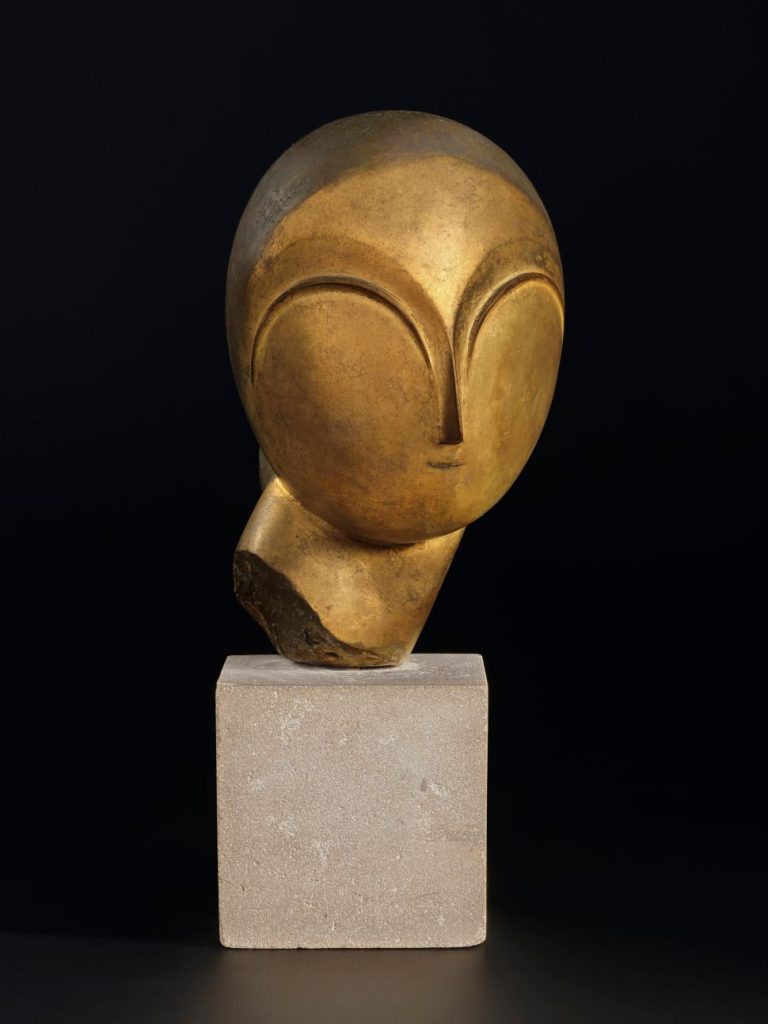
Headlining Christie’s May marquee sales is a tightly curated group of 16 trophy works from media mogul S.I. Newhouse’s collection, expected to generate around $450 million at the low end. Anchoring the sale is Jackson Pollock’s Number 7A (1948), enamel on canvas, a monumental 131.5-inch-wide composition executed in his signature drip technique, among the largest of its kind still in private hands and not seen publicly since 1977, offered with an estimate in the $100 million range. The other top lot is Constantin Brancusi’s rare gilded bronze Danaïde (1913)—the only example of its kind in private hands, as four of the six casts are held in major institutions—coming to auction with an estimate also around $100 million, underscoring its rarity and art-historical weight.
The selection spans key movements and breakthroughs of 20th and 21st-century art, including Pablo Picasso’s sculptural Tête de femme (1909), bronze, estimated at $40-60 million, paired with a Cubist painting of the same subject estimated at $6-7 million, as well as Homme à la guitare (1913), a seminal Cubist work once owned by Gertrude Stein and the Museum of Modern Art, offered at $35-55 million. Another Picasso highlight, La femme enceinte, 1er état (1950s), bronze, is estimated at $18-25 million. The group also features Piet Mondrian’s Composition (1921), oil on canvas, at $35-65 million, Joan Miró’s 1924 oil on canvas at $25-35 million, Henri Matisse’s 1938 Nice-period painting at $30-50 million and Francis Bacon’s Study for Portrait I (after the Life Mask of William Blake) (1955), oil on canvas, estimated at $4-6 million. Neo-Dada is represented by three career-defining Jasper Johns works from the 1950s: Figure 2, an encaustic on canvas estimated at $10-15 million; Halley Op at $6-8 million; and the iconic Grey Target at $20-30 million, all joined by Robert Rauschenberg’s Leave (1955) at $7-10 million. Pop art is represented by Roy Lichtenstein’s Voodoo Lily, at $6-8 million and Andy Warhol’s Do It Yourself (1962), estimated at $20-30 million. Together, the group traces the evolution of modern art from Cubism to Pop, attesting to the breadth and exceptional quality of Newhouse’s collection. Christie’s has handled several additional auctions for the Newhouse estate, most notably Jeff Koons’s mirror-polished Rabbit (1986), which sold for $91 million in 2019, becoming the most expensive work by a living artist ever sold at auction, while a group of 16 works from the collection brought $178 million in a dedicated sale in May 2023.
Constantin Brancusi, Danaïde, 1913. Estimate on request.
CHRISTIE’S IMAGES LTD. 2026
Masterworks from Agnes Gund’s collection
Christie’s New York
20th Century Evening Sale, May 18
Combined estimate: $145 million
When Agnes Gund passed away last September, her death marked the end of an era of artist patronage. Over decades, she played a defining role in nurturing the New York art ecosystem and beyond, joining the Museum of Modern Art’s international council in 1967 and later serving as its president for 11 years. Had she chosen to retain the vast body of works she assembled over a lifetime, her collection might have rivaled—if not surpassed—the $1.6 billion estate of Paul Allen, sold by Christie’s in 2022 as the highest-priced estate ever auctioned. Instead, Gund donated more than 1,500 works to museums and sold others to fund causes such as criminal justice reform and reproductive rights, consistently converting cultural capital into social impact. Headlining Christie’s New York Evening Sale on May 18 are three masterpieces that hung in her apartment until the end, expected to fetch $145 million. The top lot is Mark Rothko’s No. 15 (Two Greens and Red Stripe), a monumental late canvas where cold greens, blacks and deep indigo are pierced by a single red band, creating an atmospheric, shifting horizon suggestive of forest or northern sea. Painted six years after his turn toward darker tones, it is among the largest works from this period still in private hands and one of the few acquired directly from the artist—purchased by Gund during a 1967 studio visit and held ever since. Estimated at around $80 million, it may approach or surpass the current record. Alongside it is Cy Twombly’s Untitled (1961), a key work from his Rome period in which his gestural, graffiti-like language reached a new intensity, shaped by the myths and energies absorbed in the city. With its unrestrained swirls and bursts of color, the painting channels a raw immediacy of expression, pushing toward the subconscious through the physical trace of the artist’s hand, and is estimated at $40-60 million.
The third highlight is Joseph Cornell’s Untitled (Medici Princess) (1948), from his celebrated Medici series: a box assemblage centered on the image of Bronzino’s Portrait of Bia de’ Medici, the beloved daughter of Cosimo I, set within a blue painted box with glass shelves and map-lined compartments. The piece exemplifies his ability to merge Surrealism, abstraction and personal memory into a suspended, poetic world where historical time and private imagination converge and is estimated at $3-5 million, expected to exceed its previous auction high.
As reported by the New York Times, Christie’s secured the estate with a financial guarantee, underscoring the high-stakes competition for consignments that continues to define the market’s upper tier. This is not the first time Gund’s collection has come to market: in 2017, she sold a Roy Lichtenstein masterpiece to Steven Cohen for $165 million, using the proceeds to launch Art for Justice, which distributed more than $127 million before sunsetting in 2023, while a 2023 Lichtenstein sale directed over $2 million to the Groundswell Fund in support of reproductive rights.
Rothko, No. 15 (Two Greens and Red Stripe), 1964; Estimate in the region of $80 million.
CHRISTIE’S IMAGES LTD. 2026
The David and Shoshanna Wingate Collection
Sotheby’s New York
Modern Evening Auction, May 19
A New Vista: The David and Shoshanna Wingate Collection Day Auction, May 20
Important Design, June 11
Combined estimate: $37-53 million
One of the top consignments in Sotheby’s New York sales is a group of 50 masterpieces from the David and Shoshanna Wingate collection, to be offered in the Modern Evening Auction on May 19 alongside a dedicated two-lot single-owner sale ahead of the Modern Day Auction on May 20, with additional works appearing in the Important Design auction on June 11. The Wingates, who met in Israel before settling on Long Island in 1953, built a collection rooted in shared curiosity and deep engagement with art as lived experience—they bought art to live with it, not to lock it away, as David used to say. Introduced early to American modernism through dealer Edith Halpert, they developed a particular sensitivity to the human figure—David’s central preoccupation—while Shoshanna’s work as a sculptor sharpened their attention to form in space. Their son Ealan later expanded the collection’s scope, particularly toward abstraction and Pop.
Leading the group is a museum-grade sculpture by Alberto Giacometti, La Clairière (Composition avec neuf figures), one of the most important multi-figural works from his postwar period (conceived in 1950, cast in 1960), estimated at $18-25 million. The sculpture belongs to a trio that marked a turning point in Giacometti’s practice, introducing the elongated, totemic figures that came to define his meditation on the fragility of postwar humanity. The group also includes another significant Giacometti, Buste d’homme (New York I), modeled after his brother Diego in 1965 and cast in 1972 (est. $2-3 million). Additional highlights include a luminous red-ground composition by Mark Rothko, painted in 1959 at the height of his career following the Seagram Murals commission. Estimated at $5-7 million, the painting was acquired by David Wingate at Sotheby’s Parke-Bernet in London in 1976 and has remained in the collection for nearly 50 years, later included in the first exhibition dedicated to Rothko’s works on paper—the landmark 1984-1986 traveling show that originated at the National Gallery of Art in Washington and toured major institutions including the Guggenheim Museum in New York and the San Francisco Museum of Modern Art.
One of the most historically significant works in the group is Varvara Stepanova’s Two Figures (1921), where the Russian avant-garde artist deploys a Cubist-Futurist vocabulary to fuse form and ideology in service of the Socialist Revolution. Using interlocking angular shapes, Stepanova constructs bodies that suggest motion rather than describe it, translating human movement into a fully geometric language; works from this series were included in the landmark 1921 Moscow exhibition 5×5=25, a defining moment for Constructivism. The collection also features a lyrical Wassily Kandinsky, Zwei schwarze Streifen (Two Black Stripes) (1930), from the final and most refined phase of his Bauhaus years (est. $2-3 million), as well as two works by Roy Lichtenstein—Entablature (1974) and Still Life with Coffee Pot and Flower Pot (Study) (1973)—part of a series reflecting the artist’s sustained engagement with art history, drawing on neoclassical architectural ornament in one and the tradition of vanitas and still life in the other, both reframed through the lens of American everyday life. Completing the selection are a circular, hypnotic Tab by Kenneth Noland (est. $400,000-600,000) and a Tiffany Studios Wisteria table lamp—one of the studio’s most celebrated designs—to be offered in the June design sale with an estimate of $600,000-800,000.
Alberto Giacometti, La Clairière (Composition avec neuf figures), Conceived in 1950 and cast in 1960. Estimate $18-25 million.
Courtesy Sotheby’s
Lorinda Payson de Roulet’s Impressionist gems
Christie’s New York
20th Century Evening Sale, May 18
Impressionist and Modern Art Day Sale, May 19
Coming from a true dynasty of art patrons, Lorinda Payson de Roulet carried forward a family legacy that stands among the pillars of New York patronage and philanthropy over the past century. As Max Carter, Christie’s global chairman of 20th- and 21st-century art, told the New York Post, they were “one of the greatest, if not the greatest, American collecting families of the 20th century.” A member of the Whitney family—whose legacy includes Gilded Age-defining patron Gertrude Vanderbilt Whitney, founder of the Whitney Museum of American Art—de Roulet also carried forward the philanthropic tradition of her mother, Joan Whitney Payson, the pioneering co-founder of the New York Mets. The family’s engagement with art traces back to her grandmother, Helen Hay Whitney—Gertrude Vanderbilt Whitney’s sister-in-law—who instilled a love of collecting early on, purchasing Edgar Degas’ Enfants et poneys dans un parc as an 18th-birthday gift for her daughter Joan.
Leading the collection is one of the most important Renoirs to come to market in decades, La femme aux lilas (Portrait de Nini Lopez) (1876-77), which has been in the family for 87 years. Acquired in 1929 by Joan Whitney Payson and her husband Charles Payson for $100,000, it now carries an estimate of $25-35 million. That same year, de Roulet’s uncle John Hay Whitney purchased another Renoir masterwork, Au Moulin de la Galette (1876), for $165,000; when it came to auction in 1990, it sold for a then-unprecedented $78.1 million (nearly $195 million in today’s dollars), a record for the artist that remains unbroken 36 years later. Further works span Impressionism and American painting, with works by Edgar Degas, Marc Chagall and Alfred Sisley, as well as Winslow Homer and Andrew Wyeth, all going on the block during the Spring Marquee Week sales. An additional selection of jewelry from de Roulet’s collection will be presented during Luxury Week in June.
Pierre-Auguste Renoir, La femme aux lilas (Portrait de Nini Lopez), 1876-1877, Estimate: $25-35 million.
CHRISTIE’S IMAGES LTD. 2026
Robert Mnuchin’s
collection
collection
Sotheby’s New York
Robert Mnuchin: Collector at Heart Evening Auction, May 14
Combined estimate: $130 million
Robert Mnuchin is set to be one of the defining figures of this New York auction week, even posthumously. His collection will take center stage at Sotheby’s with five top lots featured in the single-owner evening sale, Robert Mnuchin: Collector at Heart, on May 14, which precedes the Now and Contemporary Evening Sale and, this year, aligns with Frieze and the surrounding fair calendar. Across 24 works, the collection is expected to bring in more than $130 million. Anchoring the dedicated sale is Mark Rothko’s Brown and Blacks in Reds (1957), a monumental, vibrant red canvas carrying a $100 million high estimate. With its three floating bands—a deep black above a glowing red center and a darker lower register—the work exemplifies Rothko’s ability to channel spiritual intensity through color, turning painting into a contemplative space. Held in Mnuchin’s collection for over two decades, it has appeared in major institutional exhibitions and is one of just 15 large-scale canvases Rothko produced in 1957, most of which are now in museum collections; the painting has been featured in several major exhibitions, including the 1978-79 traveling retrospective organized by the Solomon R. Guggenheim Museum, “Rothko” at Tate London in 1987 and the recent Fondation Louis Vuitton exhibition in Paris.
Other highlights of the single-owner sale reflect Mnuchin’s deep commitment to Abstract Expressionism, which he championed throughout his career. Among them is Willem de Kooning’s Untitled XLII (1983), where sweeping lines of blue, red, pink and violet move across a luminous white ground (est. $9-12 million). De Kooning was a lifelong touchstone for Mnuchin—”the Chairman of the Board,” as he called him—and a focus of multiple exhibitions at his gallery, including the museum-grade survey “de Kooning: Five Decades” in 2019. The sale also includes a monumental Franz Kline abstraction, Harleman, from the 1960s, offered with an estimate of $12-18 million, as well as a bust of Louis XIV by Jeff Koons (1986), an artist whom Mnuchin supported early in his career. The sale closes with an earlier yellow-and-orange Rothko No. 1, estimated at $15-20 million. Executed in 1949, the vibrant canvas marks a critical transition in the artist’s style, as he shifts from the nebulous multiforms of the late 1940s to the iconic stacked bands of color that would define his mature output from the early 1950s onward. A passionate collector, Mnuchin shared his devotion to art with his wife, Adriana. After three decades at Goldman Sachs, he founded L&M Arts with Dominique Lévy in 1992 and later Mnuchin Gallery, known for its scholarly presentations of postwar masters. As their daughter Valerie recalled, collecting for them was a “passionate and almost obsessive way of life,” guided by the pursuit of ‘A’ paintings—works they wanted to live with, not simply own. Additional works from the Mnuchin collection will be offered in the Modern and Contemporary sales.
Mark Rothko, Brown and Blacks in Reds, 1957.
Courtesy of Sotheby’s
Henry ‘Hank’ S. McNeil’s Minimalist masterworks
Christie’s New York
Defined Space: The Collection of Henry S. McNeil, Jr., May 20
Combined estimate: $30 million
Another highlight of the season is the museum-grade trove of Minimalist works from the collection of Henry S. McNeil Jr., a Philadelphia-based collector and early supporter of the movement. Installed throughout his five-story residence in Rittenhouse Square, the works challenged the notion of Minimalism as austere or rigid. Leading the group is one of the most coveted Judd stacks to appear at auction, a copper and red Plexiglas work that anchored the living room. Composed of 10 cantilevered rectangular units rising in a vertical column, it combines two of Judd’s most prized materials—glowing copper and translucent red Plexiglas—creating shifting visual effects that lend a rare sensuality to his otherwise austere geometry. One of only two stacks in this material combination and the only example in private hands, it is offered with an estimate of $10-15 million and is expected to rank among the highest prices ever achieved for the artist and the movement. Another highlight is Dan Flavin’s first neon sculpture, dedicated to Brancusi, the diagonal of May 25, 1963 (to Constantin Brancusi)—a single gold fluorescent lamp set at a 45-degree angle that Flavin called “the diagonal of personal ecstasy.” Its radiant glow was inspired in part by his encounter with the luminous grounds of Russian icons, as he sought to recreate with industrial materials the same spiritual aura, blending mysticism with optical intensity. Flavin soon recognized its kinship with Brancusi’s Endless Column, as he aimed to achieve with readymade industrial materials the same distilled visual unity that gestures toward boundlessness.
The collection also includes key works by Sol LeWitt, including a painted wood hanging structure and two exemplary wall drawings and is complemented by a remarkable selection of design objects—including pieces by the now highly sought-after Japanese American designer George Nakashima—that completed McNeil’s rigorously curated domestic environment in a unique blend of mathematical precision, sensory engagement and lived-in delight. A first selection of top lots will be presented in a dedicated sale on May 20, with additional highlights from the collection offered across Post-War and Contemporary Art and Design sales in May and further auctions continuing through 2026. The sale comes at a moment of renewed attention for the movement, particularly following the new readings prompted by the recent landmark show at La Bourse—Fondation Pinault during Art Basel Paris. Curated by Dia director Jessica Morgan and featuring over 100 works, the exhibition traced for the first time the movement’s diversity, global reach and contemporary resonance in an age of digital disembodiment.
The Collection of Henry S. McNeil, Jr. comes to Christie’s with an expected total value of $30 million.
CHRISTIE’S IMAGES LTD. 2026
Marian Goodman’s Richters
Christie’s New York
Marian’s Richters & 21st Century Evening Sale, May 20
Post-War and Contemporary Art Day Sale, May 21.
Breaking Ground: The Private Collection of Marian Goodman Part I, May 8-22 (Online)
Combined estimate: in excess of $65 million
When Sotheby’s secured Mnuchin, Christie’s landed the personal collection of era-defining gallerist Marian Goodman, following her passing last January. Leading the trove is a group of museum-grade works by Gerhard Richter, one of the defining figures of contemporary art whom Goodman championed early. The works will be offered in a dedicated single-owner session opening the 21st Century Evening Sale on May 20—a sale Christie’s has named in her honor—featuring an exceptional selection of works from the 1980s to the present, a period she actively helped shape. The top lot is Richter’s Kerze (Candle) (1982), a photorealistic image of a solitary flame rendered with his signature blur, transforming a traditional vanitas into a meditation on time and transience (est. $35-50 million).
The group also includes three major works from his sought-after Abstraktes Bild series from the mid-to-late 1990s, when Richter pushed abstraction toward new levels of tonal complexity and instability. Among them is Mohn (1995), first shown in his landmark 1996 exhibition in Nîmes before entering Goodman’s collection, where it has remained ever since. The selection reflects a relationship built over decades: Goodman was the first to present and sell Richter in New York, mounting more than a dozen exhibitions of his work between 1985 and 2020. Coming to market amid renewed momentum for the artist—driven by recent institutional surveys and strong auction results—the group anchors a broader offering from her collection expected to exceed $65 million, dispersed across evening, day and online sales.
Gerald Richter, Kerze (Candle), 1982. Estimate: $35-50 million.
Photo by Max Touhey. Courtesy Christie’s
Enrico Donati, “The Last Surrealist”
Sotheby’s New York
Modern Evening Auction, May 19
Modern Day Auction, May 20
Contemporary Day Auction, May 15
Art of Africa, Oceania and the Americas, June 18
Combined estimate: $50-80 million
Among the standout consignments this season at Sotheby’s is the collection of Adele and Enrico Donati, a deeply personal trove assembled from within the inner circle of Surrealism. Donati—often described as “the last Surrealist”—was first and foremost an artist and close confidant to figures such as André Breton, Marcel Duchamp, Max Ernst and Yves Tanguy, relationships that informed a collection built largely through direct exchanges, gifts and studio acquisitions. Leading the group is Pablo Picasso’s Arlequin (Buste) (1909), estimated at over $40 million, a pivotal early Cubist work in which the artist’s recurring harlequin motif is fractured into a dense, earthy-toned composition. Discovered by Donati in Paris and acquired through dealer Daniel-Henry Kahnweiler, it remained in his collection for more than six decades.
Another highlight is Wassily Kandinsky’s Rote Tiefe (1925) (est. $12-18 million), painted at the height of his Bauhaus period, where geometry and color achieve a near-musical equilibrium. Also featured are a 1950 Alexander Calder mobile acquired in exchange for one of Donati’s own works and Yves Tanguy’s Aux aguets le jour, a haunting, otherworldly landscape gifted directly to him by the artist. Expected to sell for $50-80 million, works from the collection will be offered across multiple sales, starting with the Contemporary Day Auction on May 15 and the Modern Evening Auction on May 19, continuing with the Modern Day Auction on May 20; additional lots including African and Oceanic masks and artifacts will be offered in the Art of Africa, Oceania and the Americas sale on June 18. Donati’s collection stands as both a record of Surrealism’s transatlantic migration and a reflection of his lifelong commitment to its principles, which he pursued in his practice until late in life, developing a unique experimental material and cosmological imagery.
Wassily Kandinsky, Rote Tiefe (Red Depth), 1925.
Estimate $12-18 million.
Sotheby’s
Kermit Oswald’s Keith Haring works
Sotheby’s New York
The Now & Contemporary Evening Auction, May 14
Contemporary Day Sale, May 15
This May, Sotheby’s will also offer a deeply personal group of works by Keith Haring from the collection of his lifelong friend Kermit Oswald, bringing to market a trove that has remained largely unseen for decades and offers an intimate lens into the artist’s practice between 1977 and 1989. Best friends since childhood and an artist himself, Oswald and Haring were united by a shared love of art from an early age, drawing together from around age six or seven, delivering their paper routes as kids and, as teenagers, catching a $10 bus to Manhattan to spend entire days visiting museums before returning home to paint late into the night. Throughout their adult lives, they continued exchanging letters between Pennsylvania and New York, sharing ideas and working together.
The trove is anchored by the exceptionally rare Self-Portrait (1985), acrylic on canvas, one of just six known examples the artist ever produced, offered with a $3-5 million estimate and included in recent surveys at Palazzo Civiltà del Lavoro and Galerie Nadeau in Philadelphia, both in 1990, and a show at Fondazione La Triennale di Milano in 2006. Other highlights include a carved wood Untitled (1983), estimated at $600,000-800,000, from the pivotal body of work first shown at Tony Shafrazi Gallery, as well as The Blueprint Drawings (1990), a complete set of 17 screenprints created in the final months of the artist’s life, estimated at $300,000-500,000. Equally emblematic of Haring’s personal iconography applied across objects are a hand-painted crib and dresser—each estimated at $250,000-350,000—created as a gift for Oswald’s first child and bearing the artist’s signature imagery, alongside additional works on paper such as Untitled (1980s), estimated at $150,000-200,000, reflecting his engagement with media, language and urban visual culture. The auction coincides with major surveys of Haring’s work, including Keith Haring at the Brant Foundation, New York; Keith Haring: In The Street at Free Parking, New York; and the upcoming Keith Haring in 3D at the Crystal Bridges Museum of American Art in Bentonville, Arkansas. An additional selection of 41 works—on paper, collages, sculptures and ephemera —also from the Oswald collection will be offered in a dedicated online auction in October.
Keith Haring, Self-Portrait, 1985. Estimate: $3-5 million
Courtesy Sotheby’s
Anna Condo’s ex-husband’s works
Christie’s New York
“Between Madness and Beauty: Selections from the Anna Condo Collection,” part of the Post-War and Contemporary Art Day Sale, May 21.
The rule of the three Ds—debt, divorce and death—remains a defining driver of the auction business. This season, Anna Condo, the multidisciplinary artist who was married to George Condo for 30 years, is bringing 27 works from her personal collection to market following their 2017 divorce. Christie’s is presenting them in a dedicated single-owner sale, “Between Madness and Beauty: Selections from the Anna Condo Collection,” within the Post-War and Contemporary Art Day Sale on May 21, capitalizing on sustained demand for the artist. Spanning multiple periods, the selection offers a compelling overview of Condo’s artistic evolution and his sustained engagement with the visual history of styles and archetypes—an inquiry also foregrounded in his recent survey at the Musée d’Art Moderne de Paris, one of the highlights of Art Basel Paris week.
Among the highlights are key works from the late 1990s and early 2000s, when Condo began defining his grotesque figures and signature Cubist-inflected fragmentation: two untitled canvases from 2001 and 1998 carry estimates of $500,000-700,000 and $300,000-500,000, respectively. The group also includes works on paper ranging from $50,000-70,000 to $400,000-600,000 for a 2013 female portrait in acrylic and charcoal on cardboard executed in two parts, with a bronze sculpture, Rodrigo and the Maid (2008), from an edition of four, completing the offering with an estimate of $200,000-300,000. Each work also carries a personal dimension for Anna Condo, who met George Condo in Paris in 1988—first at a café in the spring and later that year at a nightclub—before their relationship intensified and led them to Montauk to visit Julian Schnabel, then staying on Andy Warhol’s compound. What followed was a partnership that lasted nearly three decades. “Sharing a life with another artist can’t help but shape you. It would be impossible otherwise. There are shared sensibilities, a certain way of seeing things, and an appreciation for similar art,” Anna Condo said in a statement, reflecting on how George’s relentless curiosity and drive to experiment continually inspired her.
George Condo, Untitled.
Acrylic and pastel on paper, estimate: $50,000-70,000.
CHRISTIE’S IMAGES LTD. 2026
Rabb Goldberg’s Modern works
Christie’s New York
20th Century Evening Sale, May 18
20th Century Day Sale, May 19
First Open and Contemporary Edition sales, July
Old Master Drawings sale, February 2027
For its 20th-century sale, Christie’s has secured the collection of Boston-based Rabb Goldbergs. Rooted in the 1960s acquisitions of Sidney and Esther Rabb, who focused on French Impressionist and Post-Impressionist masters, and later expanded by Carol and Avram Goldberg with a strong emphasis on contemporary art, the multigenerational ensemble reflects a sustained dialogue across generations and movements. Leading the group is Edgar Degas’s Quatre danseuses, pastel on paper, an exquisite large-scale composition of dancers backstage at the Paris Opéra, estimated at $5-7 million and long exhibited at the Museum of Fine Arts, Boston. Additional highlights include Pierre-Auguste Renoir’s Jeune fille assise tenant une rose (1907), oil on canvas, at $1-1.5 million; Edouard Vuillard’s La Grand-mère (1898), oil on board, at $400,000-600,000; and Wilhelm Lehmbruck’s Büste der Knienden (Geneigter Frauenkopf), cast stone, conceived in 1911, at $150,000-250,000. On the postwar side, highlights include Louise Nevelson’s large-scale painted wood construction Ode to Antiquity (1959), offered at $100,000-200,000 and paired with Milton Avery’s Rushing Stream, oil on panel (est. $40,000-60,000) and Hans Hofmann’s Head of a Weeping Young Man, pen and ink drawing (est. $500,000-700,000). The Rabb and Goldberg families’ longstanding commitment to cultural patronage and public life had a particular impact on the Boston art scene, where their legacy remains closely tied to major institutions.
Edgar Degas, Quatre danseuses, 1905.
Estimate: $5-7 million.
CHRISTIE’S IMAGES LTD. 2026
The Saul and Ellys Dennis collection
Sotheby’s New York
Contemporary Day Sale, May 15
In its Contemporary Day Sale, Sotheby’s will also present works from the Saul and Ellyn Dennison Collection. Assembled over four decades, the collection is rooted in the couple’s early engagement with the downtown New York scene of the 1980s, championing figures such as Ross Bleckner, Francesco Clemente, Jenny Holzer and David Salle. The couple built close working relationships with some of the most influential dealers of the period, among them Marianne Boesky, Mary Boone, Barbara Gladstone, Curt Marcus, Andrea Rosen, Jack Shainman and Donald Young. “Saul and Ellyn were the kind of collectors every gallerist wanted for their artists,” said gallerist Marianne Boesky in a statement, recalling how, since opening her gallery in 1996, the Dennisons had been a dedicated and consistent presence, genuinely engaging with the art and asking questions about the artists. Leading highlights include Richard Serra’s Walking the Dog (1997), paintstick on paper from his Rounds series, estimated at $500,000-700,000, a work defined by its dense surface and sculptural weight; Mark Tansey’s Study for “Forward Retreat” (1986), estimated at $250,000-350,000, a rare preparatory work for the monumental painting now in the collection of the Broad, revealing the artist’s conceptual rigor through its annotated monochromatic surface; and Félix González-Torres’s Untitled (1989), estimated at $100,000-150,000, a refined example of his puzzle works that transforms familiar imagery into a meditation on perception and shared visual language.
Richard Serra, Walkin’ the Dog, 1986. Estimate: $250,000-350,000.
Courtesy Sotheby’s
Diane Keaton’s Architecture of an Icon
Bonhams New York and Los Angeles
The Diane Keaton Collection: Architecture of an Icon, June 8
Tailored & Timeless, May 31 – June 9 (online)
The Diane Keaton Collection: At Home with Diane and The Diane Keaton Collection: Chapters of an Edited Life, June 1-10.
The collection of the late Diane Keaton—Academy Award-winning actress, style icon and longtime cultural tastemaker—comes to market in a curated series of sales at Bonhams this June, offering a rare glimpse into a life shaped as much by aesthetics as by performance. The core live sale, The Diane Keaton Collection: Architecture of an Icon, will take place on June 8 in New York, bringing together 50 lots spanning fashion, art and personal objects. Among the highlights is the original untitled script for Annie Hall (1977) (est. $2,000-3,000), alongside key elements of her signature wardrobe, including a Ralph Lauren houndstooth suit and overcoat worn to the 2020 Academy Awards (est. $2,000-3,000), a Gucci sequin suit and beret worn to the LACMA Gala (est. $2,000-3,000), a black bowler hat (est. $400-600) and a Ralph Lauren polka dot tie (est. $100-200). A curated cabinet of curiosities from her personal office (est. $5,000-7,000) and a selection from “The Wall,” her large-scale bulletin board of images and fragments (est. $8,000-12,000), further reveal the visual language behind her creative process. On the art side, highlights include David Wojnarowicz’s Buffalos (est. $25,000-35,000), alongside Western landscapes by Maynard Dixon—Train on the Desert Arizona (1941) (est. $20,000-40,000)—and Ed Mell’s Light in the Valley (1992) (est. $10,000-15,000). Glimpses of Keaton’s own artistic practice are represented by a pair of 1970s collages (est. $600-800). The collection extends across three additional sales, including Tailored & Timeless, an online offering of more than 200 fashion pieces (estimates from $300 to $2,000), At Home with Diane, featuring her furniture and decorative objects (est. $1,000-4,000) and Chapters of an Edited Life, presenting photography, books and archival materials (est. $800-2,000). Together, the sales reveal how Keaton edited her life, creating her own style and voice where cinema, design and personal mythology converge.
Bonhams is offering art, fashion and ephemera from Diane Keaton’s collection across four sales in New York and Los Angeles.
Photo by Ruvén Afanador.
