
Growing up in Greenwich, Connecticut during the 1980s, I was no stranger to the venomous way wealth was portrayed in fiction and in films. Spouses who detested one another, siblings who’d stopped speaking, substance abuse issues a-go-go, nannies groomed for second wifedom, status symbol pets. Writers assigned to me in high school like Updike and Roth explored wealth and privilege with bleakness and depression—if there was any fun, it was alcoholic or philandering. Usually, it was both.
It’s not that I didn’t appreciate this upper crust fiction, it just didn’t leave room for the joy and absurdism that I saw all around me. I was 13 when I attended a holiday party where the hostess flooded the first floor of her mansion so that the attending children could ice skate through the rooms. Another party in the same gated development saw giraffes in the backyard during a fundraiser for some zoological concern.
Once I graduated high school, I started looking for writers who wrote about the rich in a funny way that nevertheless managed some compassion. “Funny but not mean” became a north star: it’s how I wanted to one day write and be received, and something I still thought about when writing my new novel, Alan Opts Out. Here’s a list—in the order that I read them—of the novels I devoured as a young person that inform the way I write today.
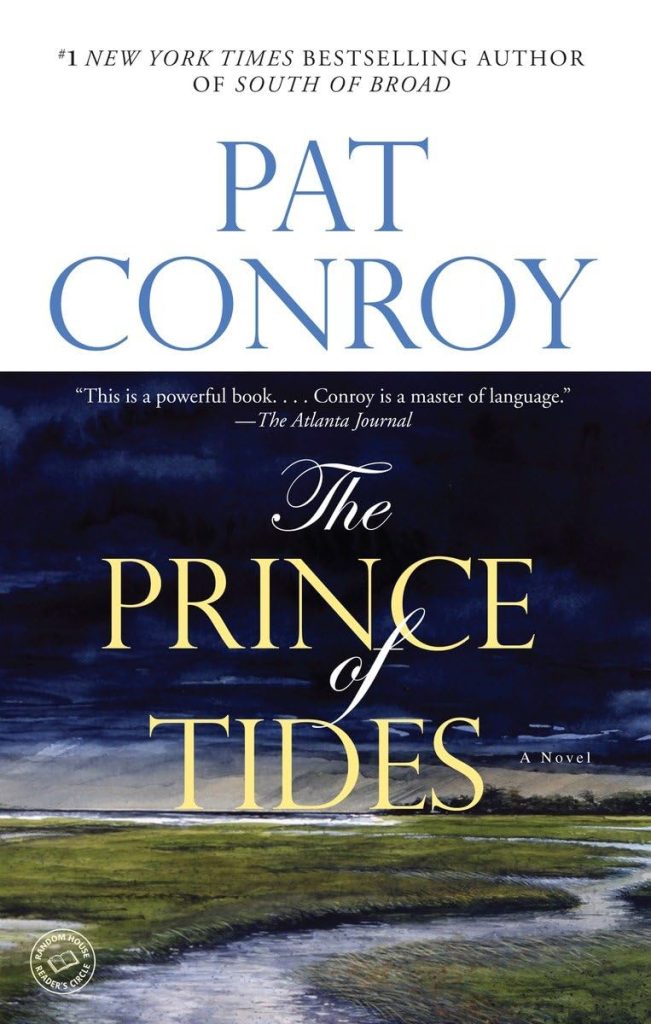
The Prince of Tides by Pat Conroy
Because of the physical and emotional violence in this book, it’s not commonly held up as an example of comic fiction, but Conroy was the first writer who showed me that laugh-out-loud humor, a generosity of spirit, deep emotionality and trauma could live inside of the same book.
The Prince of Tides by Pat Conroy
Dial Press Trade Paperback
The Elementary Particles by Michel Houellebecq
I was studying abroad in France when Houellebecq’s seminal novel Elementary Particles came out, and good little comparative literature major that I was, I read it in French. At the time, I had never read social satire like this: blasé, pathetic, lonely, full of sex. In the decades since that novel’s publication, Houellebecq has taken a drastic turn to the right, but I still credit this novel with showing me how to explore men’s vulnerability while also cracking jokes.
The Elementary Particles by Michel Houellebecq
Vintage
The Corrections by Jonathan Franzen
Given that I come from a functionally dysfunctional family, I loved the flailing members of the Lambert family’s attempts at forgiveness, even love. After reading The Corrections, I was left with the overwhelming conviction that I, too, wanted to pull off empathy, humor and resentment in an engrossing read.
The Corrections by Jonathan Franzen.
Picador
The Information by Martin Amis
I read this as a 20-year-old and it took me three tries to get into it, because I was so dazzled by the deftness of Amis’ prose, how skillfully he handled cruelty. Amis taught me that if I was going to make a character despicable, there needed to be a reason for the character’s abject baseness: either for the plotline or the satirical concern of the larger work, as he did so gruesomely in The Zone of Interest.
The Information by Martin Amis.
Knopf Doubleday Publishing Group
Skinny Dip by Carl Hiaasen
Reading Martin Amis and Carl Hiaasen back-to-back in my early twenties was extremely formative. Not only did Hiaasen show me that you could graft intellectual rigor and environmental concerns onto a commercial plotline, but his books are bursting at the seams with love. Love for women, love for nature, love for the insanity of Florida, love for the act of writing, love for his fellow humans. I wanted, desperately, for readers of my own work to one day feel as joyful reading Courtney Maum as I did reading Carl Hiaasen.
Skinny Dip by Carl Hiaasen.
Knopf
This Book Will Save Your Life by A.M. Homes
From my mid-twenties on, I made a concerted effort to read the work of funny women. I was drawn to this novel because of its title and startling cover design, but stayed for Homes’ emotional generosity. I loved how inclusive and celebratory of life this book was, and also that it incorporated surrealism into its realism, which I aim for, as well.
This Book Will Save Your Life by A.M. Homes.
Penguin Publishing Group
Speedboat by Renata Adler
For every time a review has said my work is “gimlet-eyed,” I raise a glass to Speedboat, which taught me how to criticize cultural and political moments with subjectiveness, but not spitefulness: a hard balance to pull off.
Speedboat by Renata Adler.
NYRB Classics
Riders by Jilly Cooper
This book, which I took down off my French mother-in-law’s shelf in my early thirties, enforced my conviction that you could write about the wealthy without making everyone detestable, but more importantly, it taught me how to incorporate serious and believable sex scenes into a funny book.
Riders by Jilly Cooper.
Atria Books
Vacation by Deb Olin Unferth
My fiction explores how men bumble their lives, so this novel about a man who starts following his wife’s mysterious outings only to learn that she herself is tracking a stranger was right up my reading alley. Vacation taught me how to put air into my writing so that the humor was funny, but not overbearing and bombastic, because overbearing and bombastic can often lead to mean.
Vacation by Deb Olin Unferth.
Grove Press
To Rise Again at a Decent Hour by Joshua Ferris
My own novel’s titular character, Alan, whose life as an advertising executive falls apart when he botches a campaign bid for U.S. Dairy, was inspired by the mental breakdown of the larger-than-life dentist in Ferris’ third book. Via To Rise Again at a Decent Hour, I learned how to write an arc where someone starts off unlikable until we start to understand the deeper reasons his life’s falling apart. Dr. O’Rourke starts off mean, but ends up meaningful. Which meant a lot to me.
To Rise Again at a Decent Hour by Joshua Ferris.
Little, Brown and Company
