
Last year, the Ashmolean Museum in Oxford, England, staged “This Is What You Get,” an exhibition of artwork by artist Stanley Donwood and Thom Yorke, the lead singer of Radiohead. Critics’ reactions were mixed. The Guardian said of the artwork, “Does it stand up to scrutiny when removed from the context of the records and merchandise it was designed for? It’s a nice dream, but nope,” while The Independent called the exhibition “…fascinating, and not just for Radiohead fans but for anyone intrigued by the interweaving of sonic and visual art forms.” The show largely consisted of paintings and prints created by Yorke and Donwood for Radiohead’s album and singles covers, interspersed with a healthy dose of merchandise. All this was catnip for Radiohead fans, and demand for tickets was so high that the exhibition was extended to cope with the numbers.
Radiohead is one of the biggest bands on the planet right now, and the clamor around Yorke’s exhibition illustrates how acclaimed musicians occupy a unique position when they enter the world of fine art. Full-time fine artists need to build a following—especially in the social media age—and wangle their way into curators’ affections. But, for someone like Yorke, the audience for their artwork is readymade: diehard fans make for willing collectors. Plus, having a devoted following means that the power of art critics’ opinions is negligible. Who needs a thumbs-up from the art press when musicians have a mass of supporters keenly anticipating their next move? But sales of artwork to fans aside, can a musician’s artwork really be worth exploring for the less partisan collector?
Broadly, the more famous the musician, the more collectable their artwork. Take Bob Dylan, the musician/artist mash-up OG. Although he started making art in the 1960s, Dylan waited until 2008 to put his work up for sale, and collectors tend to favor his early pieces. In 2022, his Abstract Nude oil painting from the 1960s realized $100,000 at auction, while in 2025 another oil, Amusement Park Alleyway (painted in 2016), sold for $73,000. Ex-Ealing College of Art student Ronnie Wood uses his paintings to document his life as a member of the Rolling Stones. In 2023, the company he set up to sell his art reported sales of just under $2 million in the previous year. In 2013, Yorke and Donwood’s painting Business School for the Dead sold at a Bonhams auction for $7,500, but by 2025, Yorke’s standalone paintings were fetching upwards of $10,000.
White Stripes co-founder and solo rocker Jack White has also thrown his hat into the fine art ring, making 3D printed figures and sculptures from found objects. As with Yorke, he collaborates with an established artist—Damien Hirst—to bring his artwork to the masses and navigate the art world. Hirst hosted White’s first-ever exhibition at his Newport Street Gallery in London, and the pair have collaborated on SUPERNOVA, a painted Eames chair (White was an upholsterer before the White Stripes took off). The piece is currently unpriced, but Hirst sells similar spin-painted chairs for $19,000.
Ex-Sonic Youth member and Otis Art Institute graduate Kim Gordon understands that creating limited edition multiples offers cheaper alternatives to collectors than original artwork, and her signed prints typically sell for between $1,000 and $3,000. Bob Dylan and Ronnie Wood also sell signed prints of their work, with prices ranging from $700 for a print signed by Wood to $8,000 for a signed Dylan. And, while the high ticket, one-off artworks are usually only available from auction houses and gallery dealers, these multiples are often for sale via the artists’ websites and online stores. In 2024, Museum Voorlinden in the Netherlands hosted “The Devil: A Life,” an exhibition of 17 ceramic figures created by goth rock figurehead and trained ceramicist Nick Cave. The figures were never intended as a commercial venture, and the museum acquired the entire set. However, Cave Things, the website Cave set up in 2020, was built specifically to sell affordable versions of his art and design work. Inside, Cave’s doodles, photos and whimsical articles from his own collection are converted into collectable editions and ephemera.
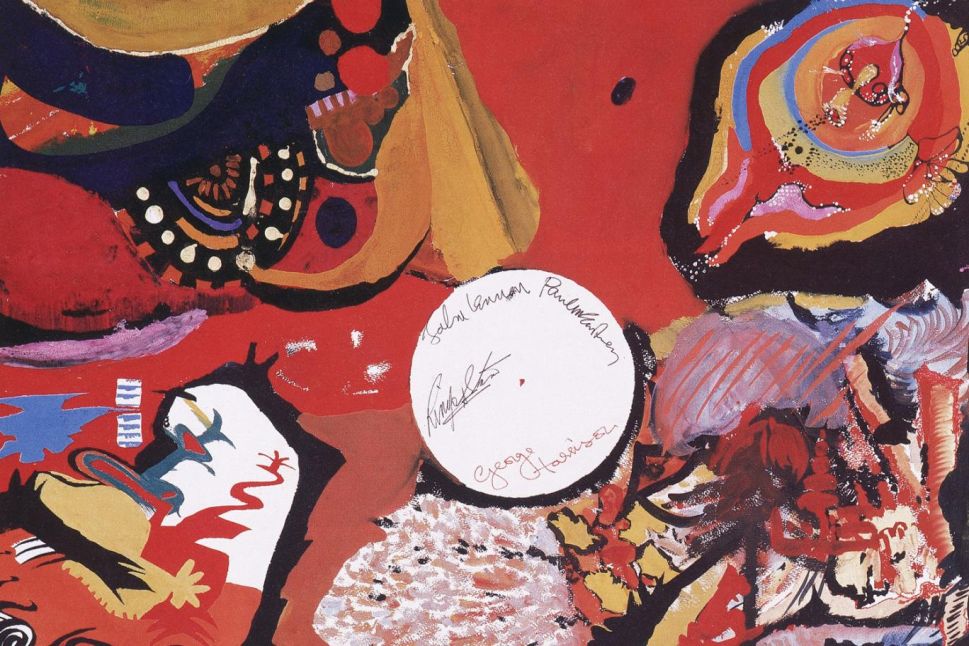
As for other musical big names, erstwhile bass player with The Clash, Paul Simonon, has largely left his day job behind to become a full-time artist, and electronic music pioneer Brian Eno’s investigations into digital possibilities extend to abstract printworks. Prices for Eno’s prints hover around the $2,000 mark, and Simonon’s oil paintings cost up to $13,000. Paul McCartney started painting in the 1980s and his artwork rarely comes to market, although Images of a Woman, painted by all four members of The Beatles in 1966, sold for $1.2 million at auction in 2024. An avid art collector himself, David Bowie made paintings that paid tribute to the kind of European abstract expressionism evinced by Frank Auerbach and David Bomberg. As with McCartney, original Bowie artworks are scarce—especially since his death in 2016—although in 2021, a fortunate shopper who bought a painting from his DHead series for $4 from a charity shop went on to sell it for $87,000 at auction.
Unalloyed luck aside, there are two levels of entry when it comes to acquiring original artwork by rock musicians: the auction house and gallery route, and buying direct from a performer’s website or online store. The former is, of course, more expensive, as totals factor in administrative and dealer costs on top of the sale price. This acquisition process works for a collector looking to buy a piece that will increase in value over time—a Bob Dylan original, for example. Taking the latter option means cutting out the middleman, and offers access to less expensive pieces. Overall, the advice from the late British artist Norman Ackroyd will always ring true. When the Royal Academy asked him for his thoughts on collecting art, he replied, “When it goes on the wall, can you live with it? Sometimes, of course, the question is, could you live without it—and if it’s no, that’s when you really go for something.”
