
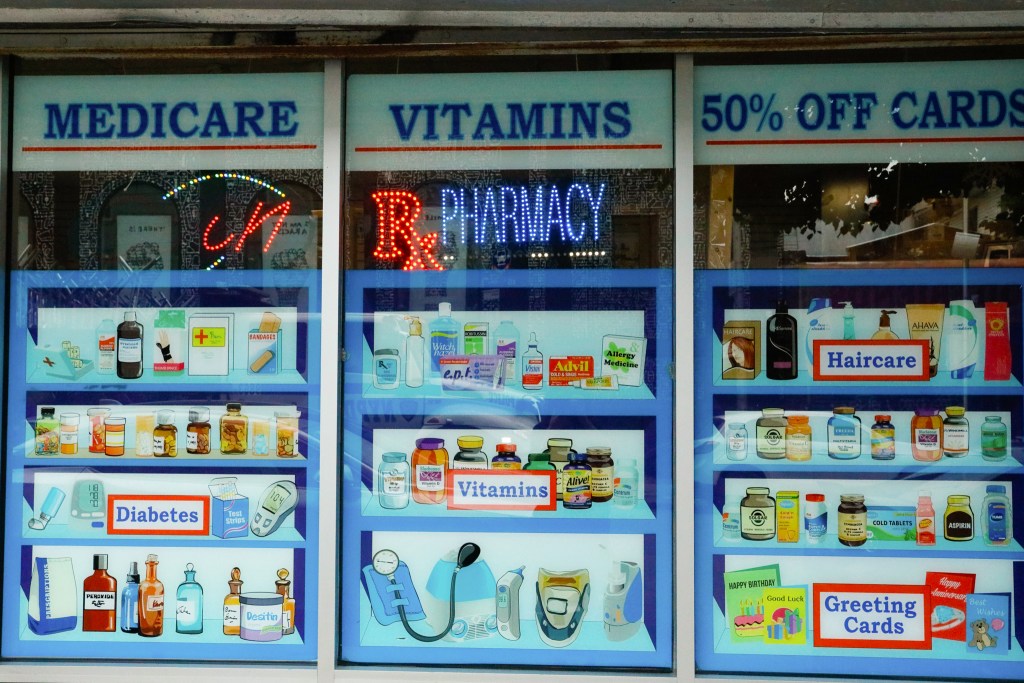
New York should not stop at city-owned grocery stores when the need for a robust city-owned pharmacy network is even more compelling, argues a new proposal from a progressive policy group that will test the Mamdani administration’s appetite for challenging for-profit sectors of the economy.
But in a twist designed to broaden the plan’s appeal, the Vanderbilt Policy Accelerator says the city should combine that effort with ways to bolster independent pharmacies, who have remained a more robust presence in New York than in other major cities.
“Big chains are leaving the city, making large holes in the health care infrastructure in neighborhoods,” said Joel Dodge, director of industrial policy and economic security at the group, which is a project of the Vanderbilt University law school.
The idea may be not as far-fetched as it sounds. The city already runs a major pharmacy operation through its public health system, New York City Health + Hospitals, which could be expanded, the proposal says. And the plan is anchored in a growing progressive movement to find new ways to make health care cheaper and more accessible.
The Vanderbilt proposal would leverage the buying power of the NYC Health + Hospitals to lower drug prices for New Yorkers on Medicaid and Medicare. Credit: Alex Krales/THE CITY
“We have seen over and over as we try to regulate health insurance or try to regulate pharmaceutical companies that it is hard to rein these companies in when their highest obligation is to shareholders,” said Christopher Melton, an associate professor at the NYU law school and a key academic in the effort. “We might be able to do better by allowing the public sector to compete with these companies — and government can out-compete them.”
Chain Pharmacies Cutting Back
The number of pharmacy stores in the five boroughs has declined by 45% since 2019, according to the annual report on chain stores released late last year by the Center for an Urban Future. An analysis by the city comptroller issued earlier this month showed that 9% of spaces previously occupied by essential retailers including grocery stores and pharmacies remain vacant. Many of the stores abandoned by the chains are covered by long term leases giving the landlords little incentive to release them.
As a result, says Dodge, many residents have long trips to pharmacies and the lack of competition leads to higher prices as well as inconvenience. Melton adds that many pharmacies don’t stock a wide range of drugs resulting in long delays in filling prescriptions.
The Vanderbilt Accelerator plan envisions three steps to improve access to drugs and claims New York City is uniquely positioned to implement them.
“New York has independent pharmacies that exist throughout neighborhoods and it has this existing Health + Hospitals pharmacies which gives it internal expertise which it can draw on and leverage,” Dodge says.
Big Purchasing Power
The first step would be to launch a delivery service that expands the one Health + Hospitals uses to stock community health centers. It should make the service available to all residents and use its purchasing power to demand lower prices from manufacturers, the plan says.
But since a delivery system won’t meet everyone’s needs, Health + Hospital should make its pharmacies available to anyone on Medicare, Medicaid or with private insurance. That would be followed by opening satellite locations — starting with the city-owned grocery precedent of one in each borough.
The final step would be to create a CityRx alliance of independent pharmacies that qualify by committing to minimum standards of scale and service and use its clout from the health plan for city workers and Health + Hospitals to win big discounts on drugs for its members.
Independent pharmacies need help, says Abby Mouzakitis-Fazio, who just relocated her Chelsea-based New London Pharmacy around the corner to 23rd Street to reduce her rent. The $12 million a year operation, which serves about 1,200 patients, earns so little in iinsurance reimbursements that Mouzakitis-Fazio keeps the operation running by selling high-end fragrances, skin and nutritional products.
A city-backed network of independent pharmacies could help, she thinks.
“The benefit to me by joining this would be if it reduced my wholesale price so I would be able to get more profit to cover the staff I need to hire so that it would reflect the work we need to do to advise patients about their medicines,” she said.
“We proved ourselves during the pandemic when we provided vaccines,” she added.
Under the proposal, NYC Health + Hospitals would expand the service it currently uses to deliver medication to community health centers like this one on Dyckman Street in Upper Manhattan.
Efforts are underway around the country to involve governments more directly in the pharmaceutical business.
California has established CalRx to help nonprofit manufacturers produce low-cost insulin and is being pushed to expand the initiative to other drugs. Massachusetts Biologics develops and distributes vaccines. A bill to create a state-owned drug manufacturing operation passed the New York Senate but wasn’t acted on by the Assembly.
A spokesperson for the Mamdani administration says it doesn’t know enough about the proposal to comment. Proponents see the report as the first step.
“These ideas are starting to get attention,” said Tahir Amin, founder and CEO at the Initiative for Medicines, Access, and Knowledge and a member of the Mamdani health transition team. “The foundation could be laid over the next year and the idea is gaining momentum.”
Our nonprofit newsroom relies on donations from readers to sustain our local reporting and keep it free for all New Yorkers. Donate to THE CITY today.
The post Mamdani Meds? Think Tank Pitches City-Owned Pharmacies to Lower Drug Prices appeared first on The City Reporter.
