
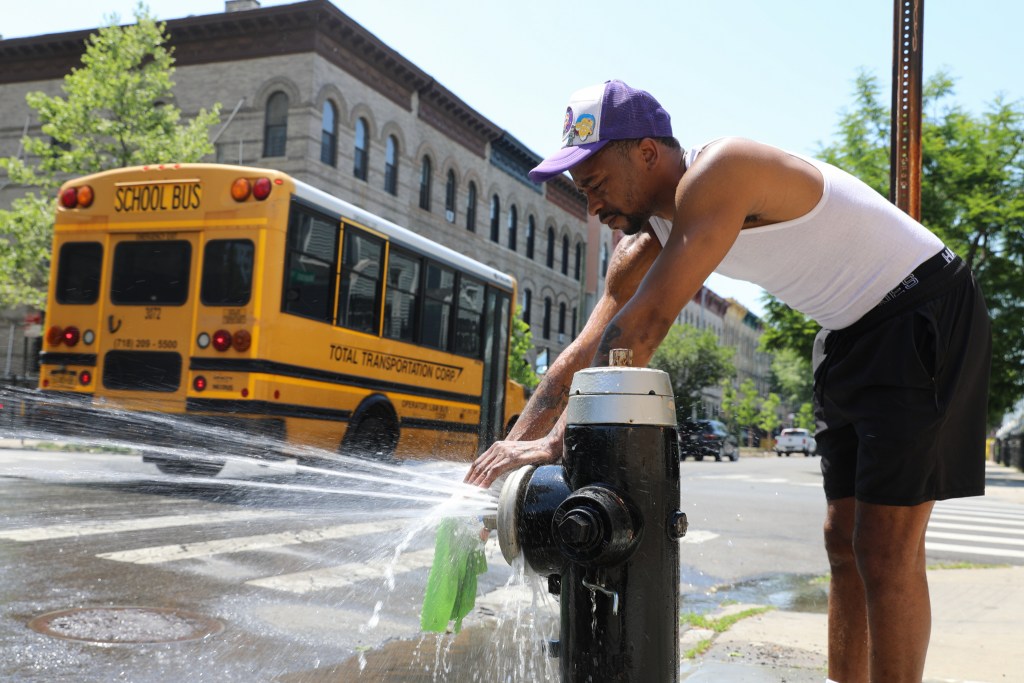
Twenty-one New Yorkers died last year as a direct result of heat — the highest number of such fatalities in a decade.
And nearly 500 New Yorkers on average die annually from causes related to heat, with the vast majority occurring on days that may not raise alarms for city dwellers: hot, but not sweltering, when the temperatures are between 82 and 94 degrees.
That’s according to the latest report on heat-related mortality from the city’s Department of Health and Mental Hygiene.
In 2025, there were 21 heat-stress deaths, including 19 as a result of a four-day heat wave in June that included the mayoral primary election. In those cases, New Yorkers died from heat-related illnesses like hyperthermia or heat exhaustion.
The 21 deaths last year — which could change as mortality records become finalized — marks the highest number of heat-stress deaths in more than a decade of health department data.
Poll workers used a fan at Bronx Supreme Court to cool off during a heat wave during the Democratic primary, June 24, 2025. Credit: Alex Krales/THE CITY
Due to the high number of deaths last year, the average number of heat-related deaths in the city has now climbed to seven per year over the past 10-year period, up from an average of five per year as of last year’s report.
“All of these deaths are preventable,” said Kathryn Lane, a senior environmental epidemiologist at the health department. “This just underscores the urgency and importance of adapting to climate change and mitigating climate change.”
The people most vulnerable to heat-stress deaths were those who are 60 or older as well as Black or Latino New Yorkers. Households with higher poverty rates were more at risk. And men were about four times as likely to have died from heat-stress than women.
Unlike weather-related deaths this winter — in which a majority of New Yorkers died outdoors during the historic cold snap — most of the deaths from heat stress last year occurred at home. In all of those cases for which there was data available, no one had an air conditioning running. About half of the people who died did not have an air conditioner at all, while the other half were not using it or it was broken.
An additional 490 New Yorkers die per year on average because of heat making underlying conditions worse, such as heart disease and asthma, the data shows. That’s down from a 10-year average of 520 in 2025.
Of those 490 deaths, about 80% of them occurred on days that were below 95 degrees, which is the city’s threshold for an extreme heat day.
Those scorchers above 95 degrees happen less frequently than the days below, but they create much more risk to people, Lane said.
Climate Change Danger
Heat waves are expected to become more frequent and last longer in New York City as a result of climate change. Across the most recent five decades, the average number of days over 86 degrees more than doubled, from an average of 14 days each summer to 32 days.
Climate change made the four-day June 2025 heat wave that killed 19 New Yorkers at least four times more likely, according to Climate Central’s Climate Shift Index.
One day of that heat wave, June 25, saw 141 people visiting city emergency rooms for heat-related illnesses — the highest number since at least 2017, according to health department figures. In all, more than 1,100 people went to the ER with heat-related illnesses in the summer of 2025.
“Heat can be deadly, but it can also result in visits to the [emergency department], or even hospital admissions, which is a much more severe outcome,” Lane said.
In 2026 so far, there have already been four days with maximum temperatures of at least 95 degrees. On Friday, when the mercury hit 100 degrees, 35 people visited the ER, the most so far this summer.
To stay safe, New Yorkers can seek out Cooling Centers throughout the city, and find other ways to cool down — from basking in the shade to getting misted at a sprayground — to stay cool. If your apartment is too hot, here’s what you can do to cool down, talk to your landlord or seek medical help.
High Cost of Air Conditioning
Lane pointed to air conditioning as the best protection during hot weather. More than 90% of New York City households have an AC at home, but being able to afford to run it is another story. The cost of electricity is a major factor in whether or not people decide to turn on their machines.
“People have to make certain choices about what they’re going to spend their money on,” said Rona Taylor, executive director of the Central and South East Brooklyn Community Development Corporation, which engages in local climate work. “Sometimes air conditioning is not a thing that gets prioritized and, as a result, it impacts their health.”
More than 396,000 customers in the New York City area are more than two months behind on their Con Ed bills as of May, amounting to more than $890 million, according to the latest data provided by the company to the state. That’s about 20,000 more customers compared to the previous May.
Caleb Smith, New York City policy manager at WE ACT for Environmental Justice, said the group advises people to sign up for programs that can mitigate their utility bills.
“We’ve really been trying to make sure that folks who are eligible are aware of the Essential Plan Cooling Assistance Program, which it’s only in its second year,” Smith said.
That program allows eligible New Yorkers on the state health plan to receive an air conditioner, free of charge.
The Home Energy Assistance Program also provides free air conditioners to qualifying low-income households, but the program closed on June 5, a particularly early date. Last year, the program closed on June 23.
Our nonprofit newsroom relies on donations from readers to sustain our local reporting and keep it free for all New Yorkers. Donate to THE CITY today.
The post Heat Killed 21 New Yorkers Last Year. It’s the Highest Tally in a Decade. appeared first on The City Reporter.
