
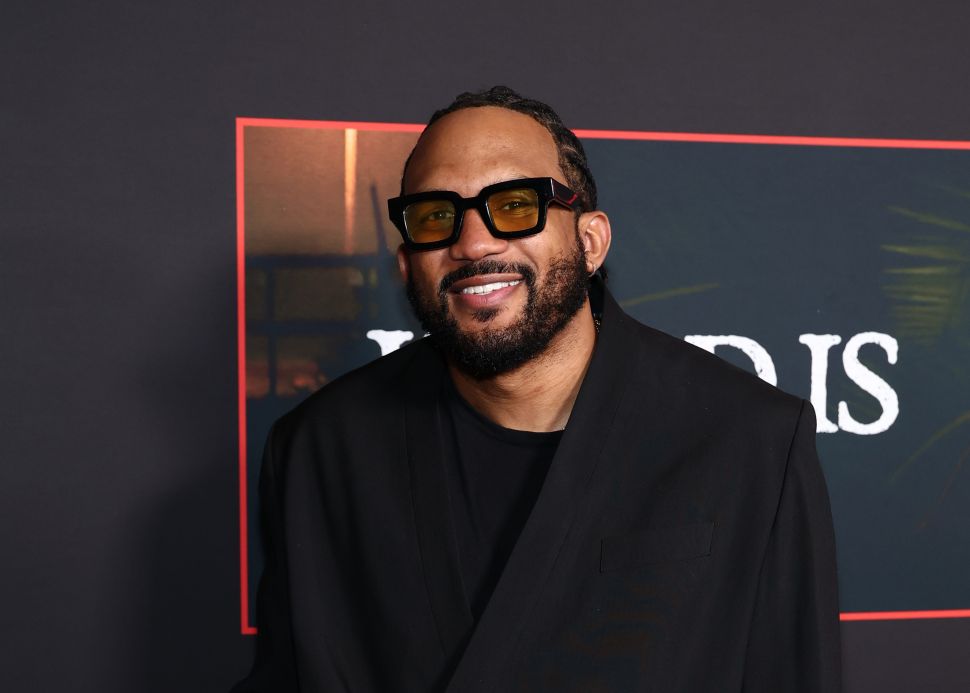
Growing up in inner-city Richmond, Va., Everette Taylor was surrounded by gang violence, prostitution and drug dealing, and little exposure to traditional markers of success. Wealth, to him, was an abstract idea, something he understood primarily as a way out. But he struggled to see himself reflected in the archetypes of success of his generation.
“I was a young Black kid from the inner city, and I didn’t feel like I had anything in common with a Steve Jobs or a Mark Zuckerberg,” Taylor told Observer in an interview in April.
But the urgency to change his circumstances took root early. He began working at 14, after his mother, a custodian, found drugs in his bedroom and forced him to get a job. During high school, he experienced homelessness, an experience that would deeply shape his worldview and entrepreneurial drive.
“It really showed me what it was like to have nothing, but it also added so much empathy in my life to also be around others that didn’t have anything,” he said. “It’s why I’m so passionate about creating opportunities. A lot of people who are homeless or living in poverty simply don’t have that chance.”
Eventually, he found inspiration in Shawn “Jay-Z” Carter, whose dual identity as both artist and entrepreneur resonated more closely.
“I remember seeing him on the cover of Black Enterprise, and I saw someone who was a creative and also shrewd businessman,” Taylor said. “To see him create music that I love and build himself into a billionaire was super inspiring.”
Taylor’s own path would follow that hybrid model. He dropped out of college during his sophomore year to launch his first company, EZ Event, a ticketing platform that grew out of a party promotion business he co-founded with two college friends. After selling the company a few years later, he briefly returned to school—only to leave again, this time for Silicon Valley.
By his mid-20s, Taylor had built a reputation as an executive who knows how to grow a fledgling business rapidly. At 25, he became head of marketing at Sticker Mule, followed by a stint as chief marketing officer at Qualaroo. He went on to co-found several startups, including PopSocial, which he sold at 28, marking his most successful exit.
In 2019, he launched ArtX, a platform designed to support emerging artists, and relocated to New York. That same year, he joined online art marketplace Artsy as chief marketing officer, his first role at an established company.
“I had these small wins with startups, but Artsy was the first really established company that gave me an opportunity to be a part of the C-suite at only 29 years old,” he said. “That was a huge game changer, because it gave me the credibility to build at scale and a true global international business.”
At Artsy, Taylor helped grow its revenue by 150 percent in one year. In April 2022, he was named one of Forbes’ top 50 most entrepreneurial CMOs. A subsequent Financial Times profile further elevated his visibility—and caught the attention of Kickstarter.
When Taylor was approached to lead the crowdfunding platform in 2022, the business was struggling. Revenue had been declining by roughly 20 percent annually, and Kickstarter was steadily losing ground to competitor Indiegogo.
Taylor’s strategy centered on refocusing Kickstarter around its core strength: community-driven discovery. Unlike traditional fundraising platforms, Kickstarter does not rely on equity financing. Instead, it allows creators to raise money directly from supporters. The platform makes money from a 5 percent commission on funds raised and payment processing fees.
Taylor leaned into what he describes as “matching niche projects with niche backers” by prioritizing quality, curation and creator storytelling over scale-at-all-costs growth. The overlap between creators and backers (many users participate as both) became a key advantage in rebuilding network effects. He also doubled down on Kickstarter’s identity as a creative ecosystem rather than a transactional marketplace, investing in tools and programming that help creators build audiences, not just raise funds.
Since Taylor took over, Kickstarter has regained dominance in its category, capturing an estimated 98 percent of Indiegogo’s market share, according to Taylor. In 2025, the company reported revenue growth of 50 percent year-over-year.
For Taylor, the mission is also deeply personal. Having built his own companies without venture capital, he remains acutely aware of the structural barriers facing underrepresented founders.
“I never tried to [raise venture capital]. I knew what it was like out there for me as a Black founder,” he said. “So I focused on building companies that I could get to profitability pretty fast. I didn’t go after the biggest ideas because I didn’t feel like I would get funded.”
“I started my first company almost 20 years ago. It doesn’t feel like things are much better than it was even back then,” he added. Black founders received only about 0.4 percent of U.S. venture capital in 2024, sharply down from its 1.3 percent peak in 2021.
Taylor sees Kickstarter as an alternative funding pathway less constrained by traditional gatekeepers. “We want to make sure that you know founders have the opportunity to be successful on our platform, no matter what their background,” he said.
That commitment also extends internally. Today, all six members of Kickstarter’s executive team are people of color, and half are women.
