
By the second week of a New York summer, the city splits into two kinds of people: the ones who’ve already plotted their Friday escape and the ones still pretending they haven’t. Both know that the city is most lovable from a distance of about two hours—far enough that the heat and the horns become someone else’s problem, close enough to be back by Monday. Blame it on your average July afternoon in the city—the office window framing a sky too good to waste, the group chat lighting up with somebody’s grainy photo of a porch and a body of water. This year, the restlessness has company: the World Cup has commandeered the five boroughs, flag capes on the L train and a Sunnyside dive gone briefly fluent in Croatian, and the whole place is throwing a party it can’t quite believe is real. Stay for a match or two. Then go.
Luckily, deliverance doesn’t require a boarding pass. Within five hours of Manhattan—by car when the LIE shows mercy, by rail when it doesn’t—lies a startling sweep of coastline and countryside, Gilded Age bombast and barefoot chill. A few of these places still feign undiscovered. Others have been laundering old money since before the Vanderbilts broke ground on their “cottages.” They’re arranged here on purpose, sleeper to stalwart, so the escape velocity is yours to choose. Let the city keep its World Cup. The 9:48 to anywhere is boarding, and the rest of the summer waits at the other end of the line.
Best Weekend Trips from NYC
Mystic, Connecticut
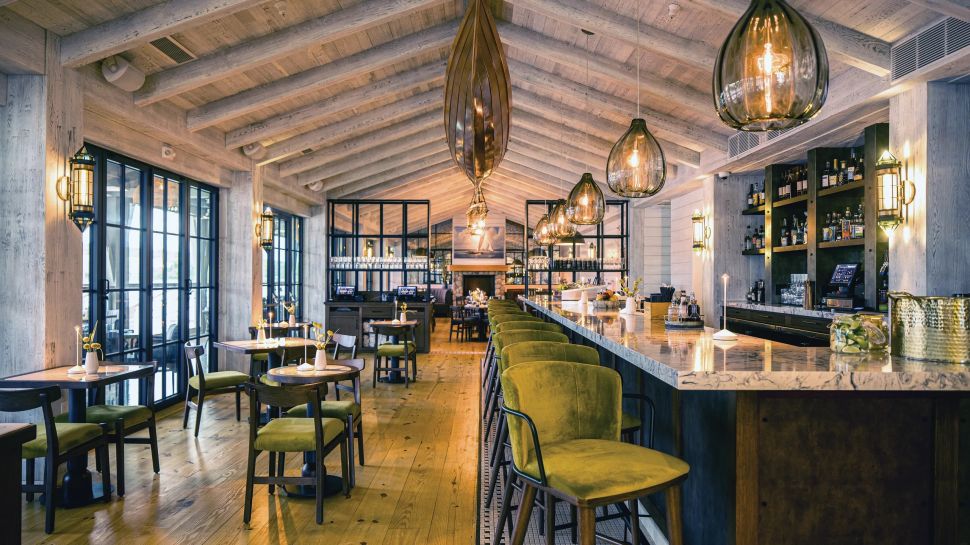
The Amtrak Northeast Regional sets you in Mystic in 2 hours and 43 minutes, a 10-minute walk from a downtown built around a working drawbridge. The seaport postcard still holds—schooners, chowder, a maritime museum where you can board a 19th-century whaling ship—but the 2026 story is the food. David Standridge, who cooks tide-to-table at the Shipwright’s Daughter, followed his 2024 James Beard win with a 2026 Outstanding Chef finalist nod, plating the sugar kelp and sea robin most kitchens throw back. The town caught up to him this year: the Mystic Outdoor Art Festival lines the riverbanks August 8 and 9, and the Seaport Museum is showing sunken ships rebuilt in LEGO through New Years. The Shipwright’s Daughter sits inside The Whaler’s Inn, the village’s surest bet, which folded in the Stanton House in 2025—10 suites with gas fireplaces and decks angled at the Bascule Bridge. Newer still is Delamar Mystic, with 31 rooms along the river hung with a shipping heir’s collection of marine paintings, its seafood room La Plage helmed by chef Frederic Kieffer.
Delamar Mystic.
Julie Bidwell
Catskill, New York
Everyone defects to Hudson. The antiques dealers, the gallerists, the weekenders pricing brownstones over natural wine—they all wash up on Warren Street, leaving the town directly across the river to mind its own business. That town is Catskill, the seat of Greene County, and it has spent the last few years turning its own neglect into the best contemporary-art address north of the city. The engine is Foreland, an 85,000-square-foot campus stitched from three 19th-century mill buildings on Catskill Creek—31 artist studios and four galleries where a paper mill used to grind, founded by the artist Stef Halmos, who bought the dormant brick piles in 2017 and let the work fill them.
This June, the international Gaa Gallery, until now a Provincetown-and-Cologne operation, opened a Catskill outpost there. The Empire Service reaches Hudson in about two hours, and Catskill sits eight miles across the Rip Van Winkle Bridge—a car earns its keep in the mountains, but the village walks. For the stay, point it toward Camptown in nearby Leeds, a 1968 motor lodge made over into 24 rooms and 26 log cabins across 22 wooded acres, with its Mexican kitchen, Casa Susanna, run by chef Efrén Hernández, a 2025 James Beard semifinalist. In town, dinner is Phos, the Greek-American room chef Stephanie Skiadas opened on Main Street last June, where the grilled octopus has been humbling the Hudson crowd that bothered to cross the bridge. Time it to Upstate Art Weekend, June 25 through 29, when the studios throw their doors open, and the village stops being a secret.
Camptown.
Lawrence Braun
The North Fork, New York
Long Island’s more sedate prong has spent two decades shrugging off the “un-Hamptons” label, a tag that grates right until you’re swirling sustainable rosé in a Macari Vineyards tasting room with not one rosé-branded yacht crowding the view. This is farm country that happens to brush up against the sea—oyster shacks, hand-lettered pie stands, the antique carousel still spinning in Greenport’s walkable harbor village. The wineries are the draw: Kontokosta perched over the Sound, Croteaux trafficking in pink and little else, Paumanok pouring a chenin blanc that embarrasses bottles twice its price. The LIRR reaches Greenport in under three hours, so you can skip the car, though one pays for itself across the vineyard sprawl. Silver Sands Motel leads the field, a 1957 roadside holdout remade across 45 waterfront acres, with 1,400 feet of private beach, a spa and three restaurants, its mid-century bones buffed rather than buried. The Menhaden counters with a more contemporary bent, thanks to its chic rooftop and Restoration Hardware sleekness steps from the Shelter Island ferry.
Silver Sands Motel.
John Musnicki
The Brandywine Valley, Pennsylvania
Call it the other du Pont country. New Yorkers know the family’s Gilded handiwork up in Newport; almost nobody clocks the gardens and farmhouse studios the same fortune scattered across the Pennsylvania-Delaware line, 90 minutes south of Philadelphia, where the Brandywine Creek wanders between Kennett Square and Chadds Ford. The whole valley reads as I-95 blur, a thing you pass at 70 on the way to Washington—which is precisely why it stays this good. The reason to commit in 2026 is Longwood Gardens, where a $250 million expansion called Longwood Reimagined unveiled 17 remade acres in late 2024, the centerpiece a 32,000-square-foot glass conservatory sheltering an entire Mediterranean garden, the most ambitious work in the place’s hundred-year history. Down the road in Chadds Ford, the Brandywine Museum of Art mounts By Design: The Worlds of Betsy James Wyeth, the first show to treat the Wyeth matriarch as the landscape designer she was, opening June 27 and running into the new year. It’s about a two-hour, 40-minute drive from Manhattan, or two hours by train to Wilmington with a car waiting. The arrival worth booking is The Quoin in Wilmington, 24 rooms inside an 1885 Frank Furness bank, with the city’s first rooftop bar and a cocktail lounge tucked into the old vault. For something closer to the gardens, the country inns ringing Kennett Square bundle Longwood tickets with the bed, steps from the gates. Dinner means Talula’s Table, the farmhouse market and prix-fixe table so coveted the reservation books months out. Come for the fountains—the illuminated summer shows still go off after dark—and stay for the rare valley that the highway taught everyone to ignore.
Longwood.
Larry Albee
Block Island, Rhode Island
Reputation files it under day-trip: a sandbar an hour offshore, mopeds and a midday beer, home by the last boat. The truth is deeper and stranger. Sometime in the 1970s a fight over a glacial cleft called Rodman’s Hollow hardened into a movement, and the island chose not to become the Hamptons—nearly half its 10 square miles is now conserved for good, a feat that landed it among the Nature Conservancy’s dozen “Last Great Places” in the western hemisphere. What that buys a visitor is 28 miles of Greenway trail through bayberry and beach rose, the 150-foot clay drop of Mohegan Bluffs with Montauk low on the horizon, and two 19th-century lighthouses keeping watch over a place that simply refused to get built. The Block Island Express catamaran crosses from New London in about 90 minutes, train-adjacent for the carless; Viking’s boat sails from Montauk all summer if you’re coming up the Island. Either way, leave the car—the island gets around on two wheels. Little here arrives new, by design, so the freshness is in the revival of its Victorian stock: the Spring House still lords over its promontory, an 1852 pile of mansard roof and wraparound veranda where Mark Twain once took the air, while its sibling Inn at Spring House has added 10 adults-only suites in New Harbor and the hilltop Atlantic Inn has refitted its rooms with the air-conditioning and private baths the island’s older inns long did without. Even ConserFest, the grassroots summer music festival, sends its proceeds to the land trust.
Block Island.
Brad Smith
The Western Catskills, New York
Forget the Woodstock cliché; the deep Catskills of Sullivan County are where the trout rivers stay cold and the crowds don’t follow. Livingston Manor and Callicoon have become a haven of design-forward inns and farm-driven kitchens, the Willowemoc curling past it all. The 2026 reason to go is edible: the area has turned into one of the state’s best small food scenes, from Alsatian bistro La Cigogne in Narrowsburg to the Scandinavian Navor Koken in Callicoon, with a string of farm distilleries—Catskill Provisions, Rock Valley, Do Good—pouring along the way. It’s roughly two and a half hours up, defiantly rural, and a car is mandatory to access the off-grid appeal. Accommodations-wise, The DeBruce skews refined—a 13-room retreat above the Willowemoc with 30 miles of private trails, foraging guides and a 14-course tasting menu that earned a James Beard semifinalist nod and pulls pilgrims north. The Arnold House is even more low-key, a 1900 farmhouse tavern on Shandelee Mountain with a pool, a barbecue barn and rooms that welcome pups, too.
The DeBruce.
The DeBruce
Bucks County, Pennsylvania
The Delaware River towns trade in a particular romance—covered bridges, a deep arts pedigree and the eccentric genius of Henry Mercer, who poured three concrete castles here a century ago and dared the landscape to ignore them. New Hope hums with galleries and live music; Doylestown plays the cultured, walkable foil, its Michener Art Museum showing the photographer Bruce Katsiff through August 2. It’s the closest escape on this list, 90 minutes by car, and a car is the only sane way to do it. The talk of the county is The Carversville Inn, an 1813 landmark reborn in 2025 as a Parisian jewel box—black walls, crystal chandeliers, six rooms above a 65-seat brasserie where chef Dara Tesser, late of Gramercy Tavern and Prune, commands the kitchen. For something more pastoral, The Inn at Barley Sheaf Farm sprawls across 30 preserved acres once owned by playwright George S. Kaufman, its suites now paired with a reinvented dining room, Kaufman’s, where chef Greg Vassos flies in far-flung ingredients like Hokkaido scallops. Either way, you’re 20 minutes from a Mercer castle and a riverbank that hasn’t changed in a century.
The Inn at Barley Sheaf Farm.
Emily Wren
The Delaware Beaches
At the far edge of the radius—roughly four hours by car, longer when Route 1 clots—lie the Delaware shores, terra incognita to most New Yorkers and all the better for it. Rehoboth brings the boardwalk-and-bandstand nostalgia and a famously warm, welcoming scene; historic Lewes next door offers maritime calm and tax-free everything. You’ll want a car, and you’ll want to clear out before the Saturday crush rolls in. Hotel Rehoboth is the town’s lemon-yellow charmer, with breakfast at the coastal-Italian Lupo Italian Kitchen and a shuttle to the sand. In Lewes, the Dogfish Inn—a craft-beer ode from the Dogfish Head Brewery—keeps things characterful, with e-bike packages and a block of good restaurants at the door. It’s the longest haul on this list, and the one your fellow New Yorkers are least likely to have beaten you to.
Dogfish Head Brewery.
Litchfield County, Connecticut
Litchfield is where editors and architects go to be left alone—a discreet patchwork of town greens, dairy farms turned vineyards and trout streams too pristine to fake. The wealth performs nonchalance here: seven-figure farmhouses costumed as humble retreats, Barbour jackets standing in for status. It’s a car county, roughly two hours up, with no train worth the transfer. The reward is silence, the costly kind. The opening worth planning around is Belden House & Mews, the Litchfield debut from the team behind Amenia’s Troutbeck—31 rooms split between an 1888 mansion and a 1959 modernist wing, Champalimaud interiors throughout and a seafood-leaning dining room from chef Tyler Heckman. The woodsier option is Lost Fox Inn, which occupies a 1745 tavern just outside the village green, 15 fireplace-warmed rooms and a restaurant built on a tip-free wage from chef CJ Barroso. The resort-caliber establishment still reigns from Washington, where the Mayflower Inn & Spa—sold to DoveHill this spring but still in Auberge’s hands—remains the county’s gold standard, all English-manor calm on 58 manicured acres.
Lost Fox Inn.
Lost Fox Inn
The Berkshires, Massachusetts
In this part of the Commonwealth of Massachusetts, summer culture capital offers a simple bargain: world-class art and music staged against hills that look retouched. Tanglewood anchors the season—the Boston Symphony’s leafy outpost, where James Taylor reliably colonizes the Fourth of July—but the daylight wattage is just as absurd for a region this bucolic, from the Clark in Williamstown to MASS MoCA’s cavernous mills in North Adams and Edith Wharton’s Mount in Lenox. The seasonal Berkshire Flyer takes the rails from Penn on summer weekends; otherwise it’s a three-hour drive, and a car once you’ve arrived. The buzz lately surrounds Prospect Berkshires, a Scandinavian fever dream on a lake in Egremont—49 cedar-clad cabins, four saunas, a swim club, and not a television in sight. At the county’s northern end, Tourists takes the opposite tack: a 1950s motor lodge razed and rebuilt in white oak on the banks of the Hoosic, 48 low-slung rooms with a suspension bridge out back that crosses the river into a forest preserve, MASS MoCA a few minutes’ walk and Wilco’s bassist among the owners.
Berkshires.
Hudson Valley, New York
Call it the downtown of upstate—a 100-mile ribbon of Hudson River School vistas, Brooklyn-priced antiques and farm-to-table cooking that stopped being a novelty around the time the first Manhattan gallerist defected north. Hudson’s Warren Street alone justifies the Amtrak fare: a half-mile of 19th-century storefronts crammed with dealers, galleries and provisions counters like Talbott & Arding, where the cheese case outclasses most wine lists. Rhinebeck supplies the genteel counterpoint, all clapboard and horse country, while the Gunks-adjacent hamlets of Gardiner and Accord have become the region’s design-hotel frontier. The Empire Service puts you in Hudson in under two hours, though the newer retreats reward anyone willing to drive. The Maker Hotel presides over Warren Street, a maximalist collector’s daydream of velvet and taxidermy, its café and restaurant alone worth the trip. Out in Gardiner, Wildflower Farms scatters 65 freestanding cabins across 140 acres at the foot of the Shawangunk Ridge, each with a fireplace and patio, plus the farm-to-table Clay and a spa fed by on-site botanicals. And the wave hasn’t crested: by 2028, Barry Sternlicht’s 1 Hotel & Homes will plant a 100-room eco-resort on a spring-fed lake near Kingston, with the valley’s high-design era only warming up.
The Maker Hotel.
Newport, Rhode Island
Newport turns up old-world glam to full volume—the Bellevue Avenue mansions still stagger, the Cliff Walk still threads between robber-baron palaces and a churning Atlantic, and the harbor bristles with masts at every hour. It’s a sailing town with a Gilded-Age hangover and a festival calendar to match, though plan ahead: the Newport Jazz Festival hits Fort Adams July 31 through August 2, headlined by Herbie Hancock and Jon Batiste, and has already sold out to the rafters. There’s no direct train—Amtrak to Kingston, then a shuttle—but the drive is about three and a half hours, and the town walks easily once you’ve parked. The newest face is Island House Newport, a 24-room boutique that opened in 2025 near Easton’s Beach, all crisp whites and maritime blues, its suites roomy enough to move into. In town, The Vanderbilt—an Auberge property carved from a 1909 mansion—trades the coastline for a rooftop and a spa, equal parts heritage and hedonism. The storied Castle Hill Inn, out on its private peninsula, is welcoming guests again after a February fire, though its mansion rooms won’t fully return until 2027—reason enough to book the beach cottages and let the Atlantic do the rest.
Newport.
The Hamptons, New York
Yes, the Hamptons. Roll your eyes if you must, but the East End earns its mythology the instant you hit Georgica Beach at golden hour, the dunes gone amber and the Atlantic putting on its million-dollar shimmer. The trick is knowing where to point the car. Montauk has curdled into a strobe-lit bachelorette set piece; leave it to them. Aim instead for Sag Harbor, the old whaling village where the money murmurs rather than shouts, and East Hampton, where Jackson Pollock once flung paint across a Springs barn floor and the galleries have dined out on it ever since. Getting there, the Friday “Cannonball” express on the LIRR makes the East End in 2 hours and 45 minutes nonstop—about what you’d burn idling on the LIE anyway. The Hampton Jitney remains the civilized middle ground, wine and wifi included; for those who treat time as the only real currency, Blade’s choppers and seaplanes lift off and touch down near East Hampton in about 40 minutes, turning the commute itself into the flex. This summer East Hampton reshuffles its old guard. The Hedges Inn reopens after a top-to-bottom David Netto redesign, its 12 rooms restored to social-set gloss and Swifty’s—the Manhattan-and-Palm-Beach institution—back in the dining room slinging popovers and crab cakes. Over in Sag Harbor, the beloved Baron’s Cove has resurfaced as Faraway Sag Harbor, a 67-room waterfront rebrand whose Amalfi-inspired restaurant, Zagara, comes courtesy of chef Jarad McCarroll. And the American Hotel, the 1846 landmark that lost its legendary owner-sommelier Ted Conklin this winter, carries on under his window with that 25,000-bottle cellar mercifully untouched; some institutions are built to outlast the people who made them.
Faraway.
Matt Kisiday
