
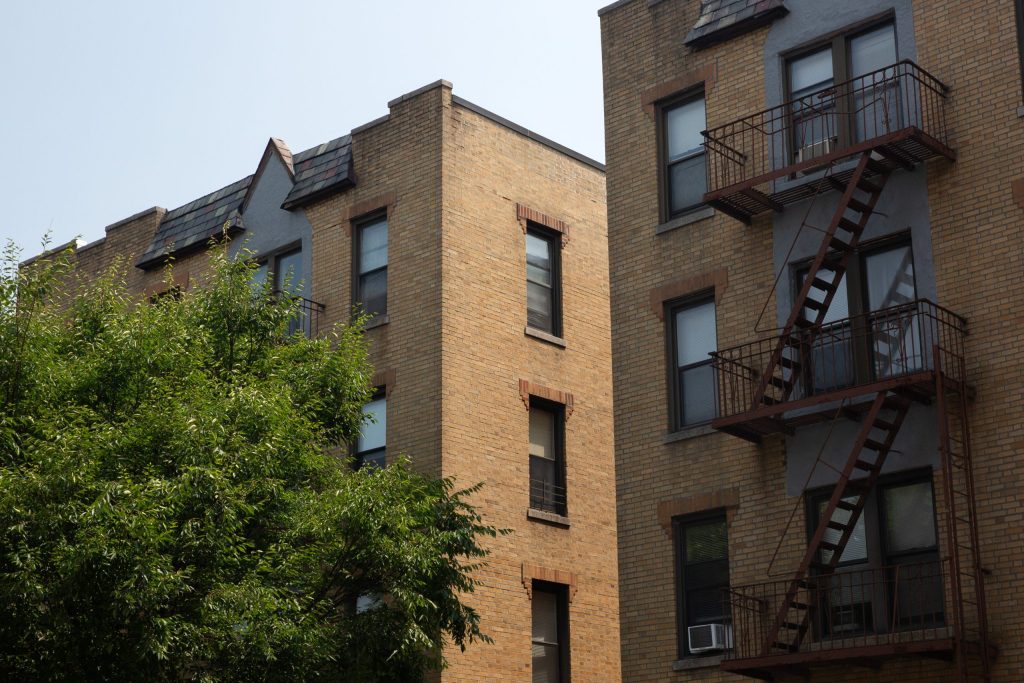
The number of empty, rent-stabilized apartments is on the rise across the city.
In 2025, there were about 57,000 vacant rent-stabilized apartments reported by landlords in the city, out of about a million, representing an approximate 5.6% vacancy rate. About a decade before, in 2016, the citywide vacancy rate was 3.7%.
That’s according to an analysis of borough-specific data showing counts of vacant, rent-stabilized apartments as of April of last year, obtained from the state through a Freedom of Information Law request by The City Reporter.
The data showed the share of vacant, rent-stabilized units citywide spiked in 2021, to a rate of about 7%. It was a year into the COVID pandemic, when the city’s population plummeted, especially in Manhattan and Brooklyn.
But the overall trend between 2016 and 2025 — the latest year for which data is available — shows rising vacancy rates in all boroughs but Manhattan, according to the rates reported to the Division of Homes and Community Renewal. The data is a snapshot that comes from reports landlords are required to submit to the state as of April 1 each year.
The count of vacant apartments does not include information about why the apartments are empty, or what level of repair or disrepair the apartments may have been in, making it impossible to know from the state data why vacancies happen.
“A vacant registration does not indicate the cause of vacancy, condition of units, or whether the units are transitioning between tenancies. Such units may also include newly constructed buildings that have not yet been fully leased,” said DCHR spokesperson Charni Sochet in a statement.
The vacant rent-stabilized apartments reported are a small percentage of the total rent-stabilized stock, which amounts to about a million apartments.
Oksana Mironova, a housing policy analyst with the Community Service Society, said the current vacancy rate is “pretty significant,” but not necessarily in context.
“If we’re talking about every single type of vacancy, that [number] seems actually pretty reasonable to me, where you have apartments that are either getting renovated, or in between moves, or the units are potentially being held off the market,” she said.
Brendan Mitchell, director of real estate and finance at the Bronx-based University Neighborhood Housing Program, surmised that the recent 2025 rise could be because of eviction cases resolving in Housing Court, after the year-long eviction moratorium ended.
“In 2021, we weren’t seeing any evictions. It wasn’t happening yet. It wasn’t until 2024 or 2025,” Mitchell said. “Some of it was people moving, but overwhelmingly it was housing court cases finally getting settled.”
The trend of rising vacancies comes as some landlords of rent-stabilized buildings have been sounding the alarm on rising costs and insolvency, especially in older properties outside Manhattan.
Jose Tur, who manages two fully rent-stabilized buildings in Washington Heights, said seven of his 45 apartments have been vacant for about two or three years on average, after tenants stayed for decades.
“They need work,” Tur said. “If I could, I would, but I simply can’t, and the main reason for that is that I am barely making it.”
Though he doesn’t have mortgages on the buildings, he said he has no reserves, and his checking account has just under $26,000 in it. He is waiting for another rent payment to come through before he pays his tax bill, which will gobble up most of his funds, he said. He also will need to pay the water bill, for repairs he owes tenants and other expenses.
“It is very, very, very tough, and simply put, the numbers don’t work in my favor at the moment,” Tur said.
If Tur were to make the repairs, he’d be limited in how much he could recoup through the rent. Plus, the Rent Guidelines Board on Thursday approved a rent freeze, meaning rent prices on stabilized units will not rise for at least two years.
A 2019 state law, the Housing Stability and Tenant Protection Act, limited landlords from hiking the rent on stabilized apartments when they become vacant at rates above what the Rent Guidelines Board sets. While the law was put in place in large part to prevent landlords from harassing tenants to get them to leave and then hiking the rents, some property owners have said that policy prevents them from fixing up decrepit apartments, since the allowable increases wouldn’t cover the costs of doing the work.
Jay Martin, executive vice president of the New York Apartment Association, which represents landlords of rent-stabilized properties, pointed to that 2019 law as a key driver of the rise in vacancies, though admitted it’s difficult to tell specific circumstances.
“It’s very hard to know why there are vacancies,” Martin said. “What is important, I think, is that we acknowledge that the vacancies exist, and then we collectively figure out how to fix it.”
Costs Climbing
The Rent Guidelines Board’s own research showed discrepancies in property owners’ costs and incomes depending on location, which could relate to the vacancies in each borough.
For instance, though net operating incomes citywide increased about 6% between 2023 and 2024, buildings in the middle of Manhattan — below West 110th Street and East 96th — saw their incomes increase by 10%, compared to about 7% up in Queens and 4% up in Brooklyn. Buildings in The Bronx saw a slight dip in incomes in that period.
Average rents in buildings containing stabilized apartments also varied, with rents collected in The Bronx averaging to about $1,200, compared to nearly $3,000 in Manhattan’s core.
Mark Willis, senior policy fellow at the New York University Furman Center, pointed out that the state’s vacancy data as a whole obscures the more granular picture.
“Rent-stabilized buildings include all rent-stabilized buildings: those with as few as one rent-stabilized unit and those buildings where the market-rate units are rent stabilized under 421-a,” he said, referring to a tax incentive program for developers.
Buildings with a mix of market-rate and apartments for lower-income earners, where higher rents yield landlords enough income to more comfortably cover expenses, generally fared better than older buildings that contain a majority of rent-stabilized apartments, according to research by Furman.
About half of buildings that are more than 50 years old where at least 90% of the apartments are stabilized have median rents of just over $1,300. Between 2019 and 2025, the inflation-adjusted incomes of those buildings dipped even as expenses rose, Furman found.
Some of the rent-stabilized stock that receives government subsidies also face climbing costs and declining incomes.
Patrick Boyle, senior policy director at Enterprise Community Partners, said there tend to be fewer vacancies in government-subsidized affordable housing in large part because of regulatory requirements and various pathways to turn around apartments that may need repairs.
“You can kind of look at broad trends, but every building’s a little different as to why a unit’s vacant, or for how long, or what the causes are,” Boyle said.
The New York City Housing and Vacancy Survey offers another picture of the number of vacant, rent-stabilized apartments. The 2023 survey, which extrapolated off of 10,000 interviews, found about 26,300 rent-stabilized apartments were “vacant but not available” for rent, compared to about 43,000 in 2021. In both cases, those counts are much smaller numbers than what landlords reported each year to the state.
Mitchell, of UNHP in The Bronx, said it could cost as much as $50,000 to renovate a four-bedroom apartment that rents for $800, and older, pre-war apartments have more square footage, which means more expense.
“It’s not unreasonable for someone to look at that and say, ‘We don’t have the money,” he said. “For us, we do. We use private, for-profit managers and they look at us like we’re crazy. For us, it’s part of our mission to make sure we don’t have units sitting empty.”
Mark Bourbeau, president at Sycamore Birch Management which oversees 50 properties in The Bronx, said what UNHP does is not typical.
“A lot of real estate professionals will say, ‘It just doesn’t pay to gut-renovate an apartment in the city because I can’t raise the rent,’” he said.
Our nonprofit newsroom relies on donations from readers to sustain our local reporting and keep it free for all New Yorkers. Donate to THE CITY today.
The post Rate of Vacant Stabilized Apartments on the Rise After Pandemic-Era Spike appeared first on The City Reporter.
