
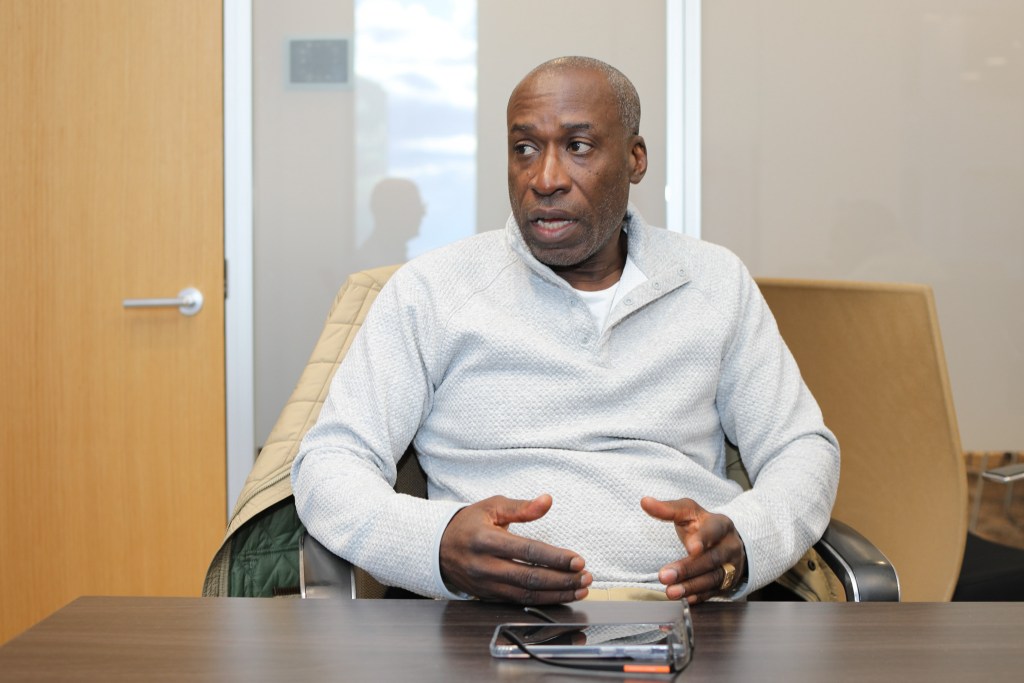
Brian Kendall was 16 when Brooklyn detectives arrested him for a fatal shooting outside a Flatbush video game parlor, despite eyewitnesses describing an older, heavier gunman and telling police the teenager wasn’t the shooter.
Twenty-five years later — after his murder conviction was overturned when prosecutors concluded he was “likely innocent” — Kendall is suing New York City, alleging detectives fabricated evidence, manipulated witnesses and hid exculpatory information that sent him to prison before he was deported to Guyana.
“The suit is for the NYPD and district attorney to be held accountable,” Kendall, 55, told The City Reporter. “Back in the ‘80s there was a lot of misconduct. This was a practice happening all over.”
About a week after the Feb. 24, 1988, shooting, police took Kendall from his parents’ Flatbush apartment in handcuffs. They said two eyewitnesses identified him as the gunman and charged him with the murder of 20-year-old Raphael Reyes, who was fatally shot inside the building on Cortelyou Road.
The lawsuit, filed in Brooklyn federal court, says detectives with the NYPD’s Brooklyn South Homicide Squad ignored eyewitness accounts that contradicted their theory of the case. Instead, they built a murder prosecution around manipulated witness statements and unreliable identifications, according to the suit.
From Guyana, Brian Kendall, 55, joined a court hearing in Brooklyn where a judge vacated his homicide conviction in 2025. Credit: Rita Dave
“We’ll review the case and respond in the litigation,” said city Law Department spokesperson Nicholas Paolucci.
Kendall is seeking damages from the city, a former detective, and the estates of two case detectives who have since passed away. The lawsuit does not seek a specific dollar amount.
According to the lawsuit, witnesses consistently described the shooter as a short, heavyset man in his mid-20s. Kendall was a skinny 16-year-old. One witness told police the gunman remained inside the Game Room while Kendall had been playing video games.
The lawsuit also alleges detectives used suggestive photo arrays until witnesses identified Kendall, withheld exculpatory witness statements from prosecutors and defense lawyers, relied on testimony that changed repeatedly after police interviews and pressured Kendall into falsely confessing by telling him he could go home if he admitted involvement.
“I thought it was a big mistake that they would correct,” Kendall told The City Reporter.
In 2022, the Brooklyn District Attorney’s Conviction Review Unit reopened the case after reinvestigating the evidence. Prosecutors ultimately concluded Kendall was “likely innocent,” citing eyewitness accounts that had been overlooked, unreliable witness testimony and evidence that had never been disclosed to the defense.
A judge vacated his conviction and dismissed the indictment.
Kendall and his legal team argued that he was never given a fair chance by detectives and the prosecutor handling the case.
Inside the police precinct, officers put him in a lineup and refused to let him call a lawyer, according to his account.
His family hired a private attorney, Harry Dusenberry, who interviewed at least five people inside the game room at the time. They all said Kendall had nothing to do with the murder, according to the 35-page CRU report.
Many of the same people spoke to prosecutors at the time, the report said.
The case was before a judge, Francis Egitto, who had a reputation of doling out maximum sentences.
Dusenberry, in turn, told the family that it would be “suicide” for Kendall to proceed to trial where he would almost surely be convicted and sentenced to 25 years to life, according to the CRU report.
“I had no choice,” Kendall remembered, adding that he was never told he’d be deported at the end of his sentence.
Brian Kendall was 17 when, facing a possible life sentence, he pleaded guilty to a fatal 1988 shooting. He was freed in 2004 after more than 16 years in prison, and exonerated in 2025.
Kendall, who had been a legal permanent U.S. resident, served 16 years and eight months in prison before he was released in 2004. He was deported to Guyana, where he was born, the following year.
During his time in prison, Kendall’s mother and older sister both passed away.
The lawsuit says the detectives’ conduct reflected broader NYPD customs and practices that tolerated coercive interrogations, suggestive eyewitness identification procedures and failures to disclose exculpatory evidence.
“Brian Kendall lost decades of his life because law enforcement built a case against him instead of following the evidence,” said Julia P. Kuan, a partner at Emery Celli Brinckerhoff Abady Ward & Maazel LLP. “He spent years in prison, was deported from the country he called home and separated from his family. This lawsuit is about holding those responsible accountable.”
Our nonprofit newsroom relies on donations from readers to sustain our local reporting and keep it free for all New Yorkers. Donate to THE CITY today.
The post Brooklyn Man Exonerated After 25 Years Says NYPD Framed Him for Murder appeared first on The City Reporter.
