
Now in its 65th year, Toronto Outdoor Art Fair (TOAF) offers a different model that merges the accessibility of a public fair with nonprofit initiatives designed to sustain artists beyond a single weekend of sales. This year, under the thematic umbrella of “The Elegance of Longevity,” the fair addressed ageism, taking its cue from its anniversary year, 65 being an age commonly associated with retirement. In the art world, age often becomes a categorical metric shaping whether an artist is considered emerging, mid-career or late-career, and for artists from historically marginalized communities, these categories can create additional barriers to resources and recognition. Arbitrary markers rarely reflect how artists actually live and work, yet they shape funding opportunities, institutional recognition and market visibility. “A lot of artists don’t have the luxury of retiring,” TOAF executive and creative director Anahita Azrahimi told Observer. “Artists are constantly adapting, transforming, reconfiguring things and regenerating.”
Over the years, more than 20,000 artists have launched their careers at TOAF—Canada’s largest and longest-running contemporary art event—which was co-founded by former Director of the National Gallery of Canada Alan Jarvis, artist Jack Pollock and philanthropists Murray and Marvelle Koffler. It has expanded significantly, putting $2 million (excluding $65,000 in awards) directly into artists’ pockets. Under the decade-long leadership of Azrahimi, herself a practicing artist, it has developed a robust support infrastructure for independent artists, including year-round professional development programming covering pricing, booth setup and takedown, interfacing with the public and more.
TOAF’s commitment to longevity extends beyond artists to the collectors who sustain artistic careers. Through its Living Room Chats, available as part of a $150 annual membership, the fair creates opportunities for deeper artist-collector engagement. (In 2016, Anahita Azrahimi recalled, an artist sold their entire display to one collector, whose family has been a patron of that artist ever since.) Another intergenerational initiative is the Budding Art Buyers program, curated by the Art Dealers Association of Canada, which lets kids under 14 buy artwork for $10-20, after which the organization teaches them about caretaking, provenance and investment. This year, the fair also turned artists into collectors through its “$65 for 65 Years” initiative, giving each participant money to purchase work from peers.
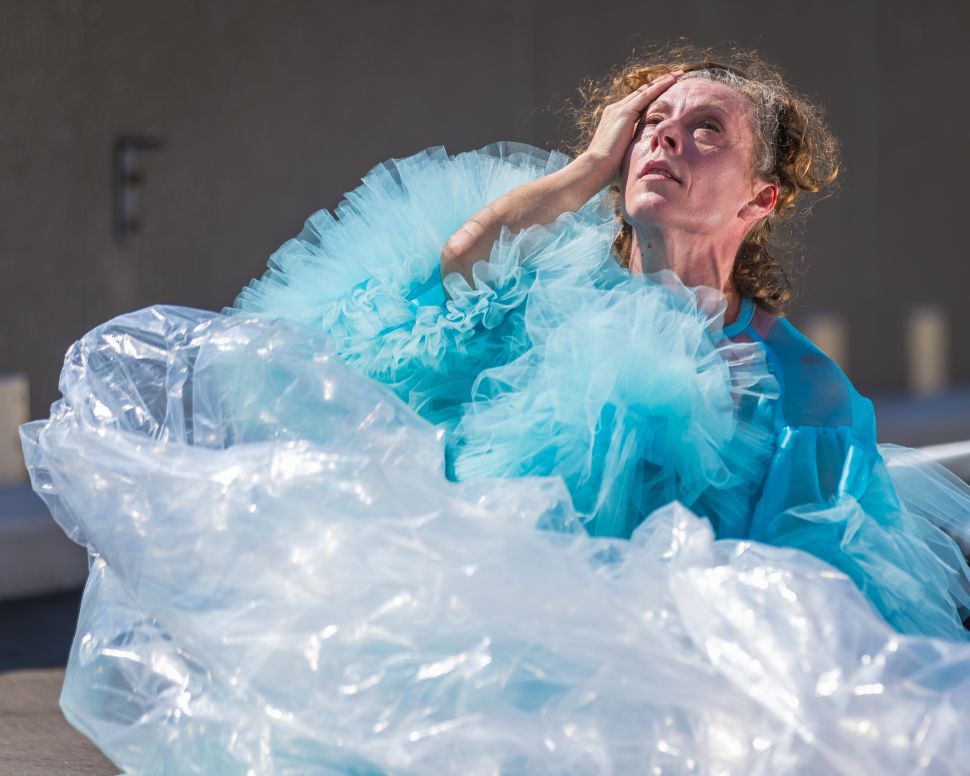
In that vein, Art Nest curator Ruri Pimenta organized “A Forward Retreat” with Peggy Baker, Max Dean, Naomi Dodds, Micah Lexier and Ed Pien to reflect on the question of retirement. The exhibition text sets the tone: “Not retirement. A retreat forward. An exhibition about the longevity of art, of practice, and of the artists who keep the calling alive.” Baker created a choreographic tribute to veteran dancer Julia Sasso. In Storyline (with laughter, tears and beauty), she extends the perceived shelf life of dance beyond assumptions about aging bodies. In One Day, Lexier hands out coins numbered to represent every day of his life. Each coin’s underside confronts mortality directly: “From that day forward I will give the coins away, one coin per person, until all the coins are gone or I am dead.” Pien’s mirrors, arranged among antique vanities, invite viewers to catch a snapshot of themselves amid the crowd and city skyline, prompting reflection on the passage of time. Beside them, Dodds’ Oneself Through Another marks geological and sedimentary time through steel rock-like formations with a similarly reflective surface.
Dean’s “Passing On: An Exhibition of Martha Fleury’s Work” featured 50 years of his late wife’s work installed with upside-down furniture recast as tableaux. An antique settee hovers above a black-and-white painting of a prone figure draped in a blanket; a skeleton at an easel embraces a living figure on its canvas. The gravity-defying arrangements underscore the inevitability of death while keeping Fleury’s work urgently present.
In the booths, Mi’kmaw artist Melissa Peter-Paul from Abegweit First Nation, P.E., used quillwork to invoke ecological time, seasonal harvesting and ancestral ways of making—likely the first time the medium has been shown at the fair. Her people harvest porcupine quills from roadkill after offering a tobacco blessing; the quills are washed three times, dyed and pierced into birchbark, which can only be harvested two weeks a year, around June, when the fireflies come out. In the final step, she weaves sweetgrass—sacred medicine—around each finished work.
Campbellville, Ontario-based artist David Khosravi draws on more than 20 years of practice to give discarded wood new life. He creates vessels from industrial timber offcuts—native Canadian wood with the occasional foreign contrast—inspired by Persian rug patterns to achieve a trompe l’oeil effect that makes wood mimic glazed pottery.
Toronto-based Anna Kavehmehr builds diasporic memory and political resistance into her booth. Her installation honored a friend, a dollmaker killed in recent freedom protests in Iran. Pencil-drawn portraits in red frames, set against black fabric, show figures with distorted eyes and heads that warp like the barely legible Farsi text surrounding them—a meditation on language, loss and the reconstruction of identity across borders and generations.
TOAF this year served as a reminder that artists deserve infrastructures capable of enduring alongside their practices. Rather than treating 65 as the point at which creative labor should wind down, the fair asks what it means to sustain an artistic life over decades. In doing so, it quietly challenges one of the art world’s most persistent assumptions: that an artist’s value is tied to where they fall on a ladder of “emerging,” “mid-career” or “late career.” Artistic lives, it suggests, are better understood through continuity than chronology.
