
Within seconds, nearly a dozen teenage detainees pour out of their cells and converge on Kalief Browder.
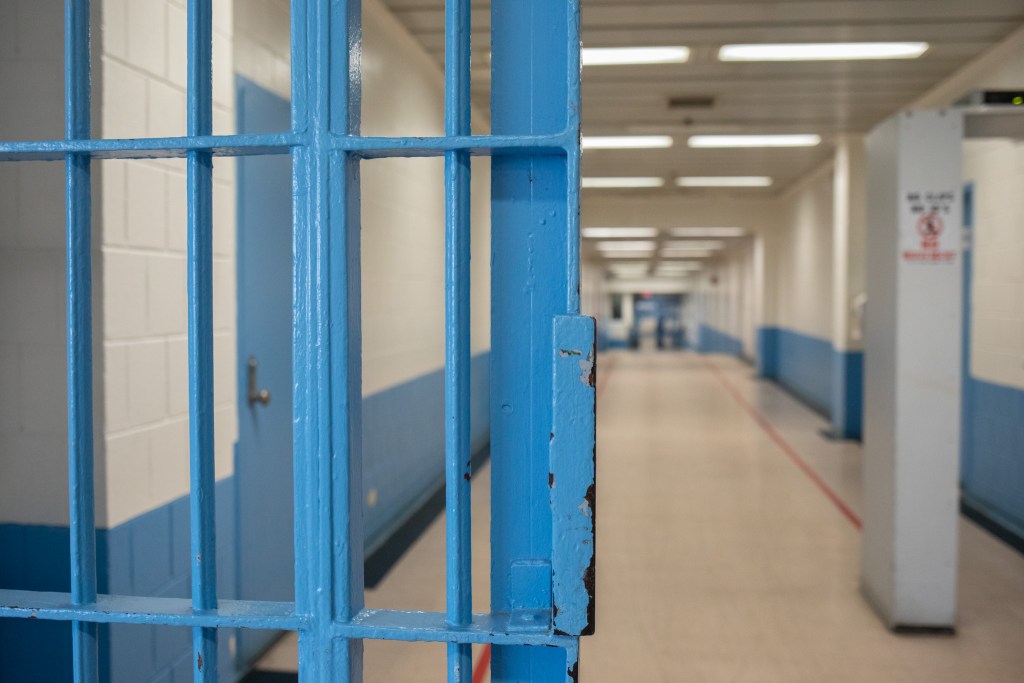
Surveillance footage from 2010 captures the relentless beating inside a Rikers Island housing unit. The attack was possible in part because the cell doors, like hundreds of others throughout the city’s jail system, had failed to lock.
Browder, who was 16 at the time of the beating, became a tragic icon for jail reform after he spent three years jailed on Rikers Island awaiting trial for allegedly stealing a backpack. He died by suicide after his release.
Sixteen years later, roughly 1,550 cell doors remain broken inside two Rikers jails, a high-ranking correction official told The City Reporter.
“If you’re a staff member and everybody can get out of their cells at night, that’s scary,” Vincent Schiraldi, a former corrections commissioner, said in an interview. “That’s scary for you, and that’s scary for the incarcerated people.”
The persistent security failure has become one of the latest challenges confronting court-appointed remediation manager Nicholas Deml, who this month ordered the Department of Correction to develop a new “security plan.”
Under his directive, jail officials must document every broken door in every housing area by Sept. 1 and submit a procurement and replacement schedule a month later detailing the order in which the doors will be replaced, how much it will cost and how the work will be funded.
Correction officers were stationed outside the Rikers Island visitor entrance, Aug. 28, 2025. Credit: Alex Krales/THE CITY
The plan also requires the city to provide monthly progress reports and immediately notify Deml if funding, procurement or other problems threaten to delay the repairs.
According to the high-ranking correction official, roughly 750 broken doors are in the Otis Bantum Correctional Center and another 800 are in the George R. Vierno Center.
Deml’s report didn’t disclose exactly how many doors are broken, how much it would cost to repair them, and when that would be totally done.
A Department of Correction spokesperson said the agency has allocated $23 million to replace cell doors.
“Safety underpins everything we do,” spokesperson Latima Johnson said in a statement. “That’s why the DOC is actively replacing cell doors across Rikers Island while preparing for the transition to a safer, smaller and more humane borough-based jail system.”
The Otis Bantum Correctional Center on Rikers Island, March 20, 2025. Credit: Ben Fractenberg/THE CITY
The emphasis on broken doors mirrors years of criticism from Steve Martin, the federal monitor overseeing the department’s treatment of juvenile detainees. In a January report, Martin called properly securing cell doors “one of the most fundamental, yet most critical elements of correctional security” and noted that fixing them was the first requirement of a court-ordered security plan imposed in 2021.
More than four years later, he wrote, correction officers still do not consistently secure doors, contributing to a broader breakdown in basic jail operations. Staff also routinely fail to supervise housing units, enforce rules, conduct regular tours, control contraband and intervene before conflicts escalate into violence.
“The patterns discussed in the Monitor’s prior reports remain an accurate description of the jails’ dysfunction today,” Martin wrote, adding that the department’s failure to carry out basic security practices “fundamentally breaches” its responsibility to keep people in custody safe.
While the Department of Correction is run by Commissioner Stanley Richards, a mayoral appointee, different aspects of the long-dysfunctional city jail system are overseen by no less than three federal monitors as well as Deml, the remediation manager, all of whom were appointed by amid lawsuits targeting endemic constitutional violations on Rikers Island.
‘It Was Bedlam’
The Rikers door crisis is decades old.
During the final year of the de Blasio administration, Schiraldi said, the department launched an emergency effort to replace hundreds of broken cell doors as violence surged and staffing levels collapsed.
Schiraldi said he worked almost daily with then-First Deputy Mayor Dean Fuleihan — now serving Mayor Zohran Mamdani in the same role — and senior corrections officials to quickly hire a contractor to replace as many doors as possible.
“The doors were popping open. It was bedlam,” Schiraldi recalled. “Staff were calling in sick. The place was super violent. The culture was terrible. You have to understand the doors in the context of all of that.”
Even as crews replaced doors, Schiraldi said, many quickly broke again because officers often failed to stop detainees from jamming or damaging the locks.
“As quickly as we were replacing the doors, people were doing the things that would break them,” he said. “Staff were failing to address that, and the doors were breaking.”
‘Too Far Gone’
Schiraldi said fixing the hardware alone won’t solve the problem.
“You have to change the culture,” he said. “You fix the doors, and staff aren’t engaged, and incarcerated people don’t believe in what’s happening in the department, and the doors are going to get broken. Conversely, nobody’s going to believe in what’s happening in the department unless you can fix the doors.”
Schiraldi pointed to the 2010 assault on Browder as one of the clearest examples of the danger. In surveillance video of the attack, Browder is cornered inside what appears to be a secure area before another teenager kicks open a door, allowing a group of detainees to rush in and assault him.
Zachary Katznelson, executive director of the Independent Rikers Commission, which is pushing for the faster and more efficient closing of Rikers, said repairing the doors is necessary but ultimately won’t solve the deeper problems posed by the aging jail complex.
“Jail doors absolutely need to lock, but the ugly reality is the Rikers jails are too far gone to be truly safe,” Katznelson said. “They are literally falling apart and terribly designed. We need the new borough-based jails to enable DOC to provide proper physical security.”
Our nonprofit newsroom relies on donations from readers to sustain our local reporting and keep it free for all New Yorkers. Donate to THE CITY today.
The post ‘Bedlam’: Rikers Island Can’t Keep Its Doors Locked appeared first on The City Reporter.
