
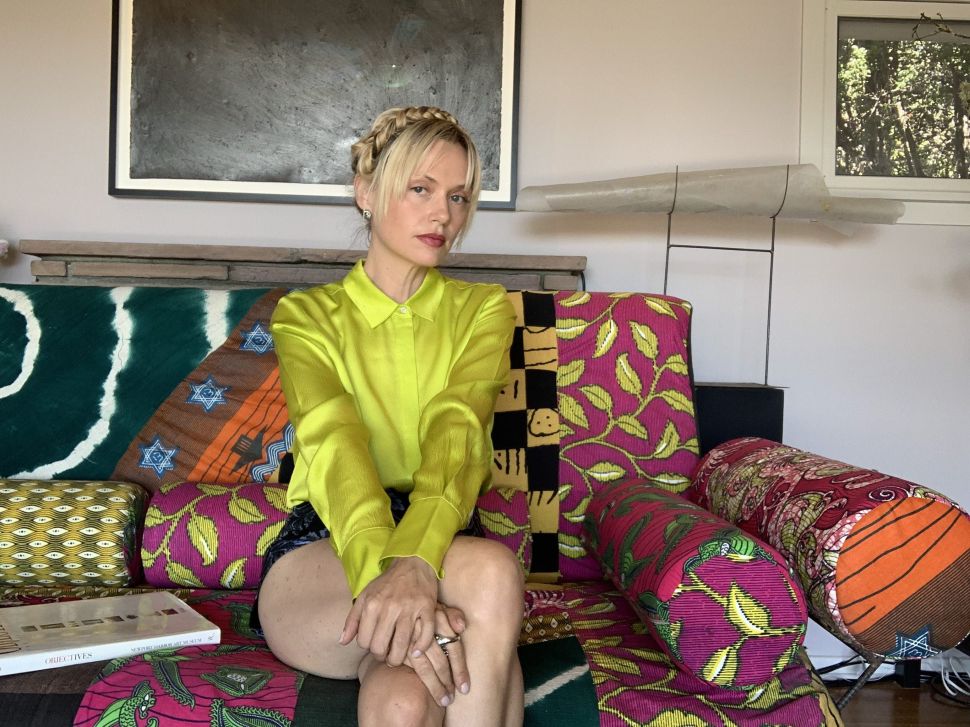
After years of reflection, I find myself looking back on the art world—a world I’ve come to know intimately, one I remain in and one that has been a study in the human condition, a laboratory where art reveals the best and worst of us. In the end, we must reckon with the consequences of our actions, in this life or the one to come.
Recently, a dear friend passed away. Like so many artists, Hilde Lynn Helphenstein was a soul among us who felt more, who was more sensitive, who took too much to heart for the world she nonetheless chose and thrived within. I often wonder where we would be without people like her, those rare, sensitive souls who remind us that beneath the pressure to cool our emotions and cultivate indifference, we still have something worth protecting. Art does that. It does it in a million ways. True art does not merely allow us to remember; it encourages us to transcend the provincial and material obsessions this world relentlessly promotes.
Most of the world knew Hilde as “Jerry Gogosian,” the art world satirist. But within her musings, and her often hilarious dispatches, lay a profound message. She was one of the few women who broke through and held up a mirror, even when the reflection was uncomfortable. She followed her bliss, as Joseph Campbell so eloquently urged us all to do. What I admired most was her courage—the specific kind of courage required to be truly authentic. Authenticity is a rarity not just in the art world but in the broader world, and that should surprise no one: both contain powerful social and structural mechanisms designed to enforce conformity.
I was proud of her, and I told her so. She was creating work that had emotion and beauty, and that captured everything I loved about her. In April, we discussed doing a show together. She wanted to find a better handle on her voice, to interpret and reinterpret her vision on canvas. Those conversations are something I will carry with me.
Those who know me are familiar with my habit of writing texts of, shall we say, considerable length. One friend told another, “Georges sent me a 14-inch text last night,” to which I quickly corrected her, for accuracy, that it had in fact been 15. Hilde loved those texts. We laughed at how strange we both were: me for writing them, her for reading every word. I hope they made some days more bearable. Rereading our conversations now, I feel grateful that I never held back. Rumi wrote that most love is lost in what is said but not meant, and in what is meant but never said. Between Hilde and me, no love was ever lost.
I entered the art world with a specific vision: a gallery that was artist-focused, that had soul, that served as an anchor in an otherwise thunderous sea—a place where people with even a little courage could find something that would be genuinely missed if it disappeared. Art for life’s journey. Because what I have discovered, and what everyone in the art world eventually witnesses, is that the greatest art is almost always made by those most sensitive to the daily weight of existence.
In a world that rewards the worst in us, it is often the healthiest among us—those who truly see the beauty and purpose of life—who have the hardest time. They are, in fact, the sane ones. They exist to remind us that the lives we are pressured to lead in order to succeed are not necessarily the lives we should lead.
Hilde felt too much. She was incapable of setting aside her humanity, even when it would have served her to do so. We live in a world made crueler by the people it elevates for doing exactly that.
I find myself returning to an old question: is it better to lose ourselves and gain the world, or to hold onto what is best in us even as the world grows harsh and indifferent in return… trusting, perhaps, in the promises so many religions make about what waits beyond?
Like so many artists, Hilde struggled with substance abuse, as too many in the art world endure. And yet she never let it harden her. She felt everything. Her art required reflection, soul, honesty and heart, and she gave all of it, always.
The life Hilde led took courage, and I told her so, always. Nothing that is truly worth having—love, trust, compassion, empathy—can be fully experienced without it. In one of our last conversations, I told her not to stress or grow disillusioned, not to feel alone or diminished. I told her that there would come a time when she would arrive at a clearing, a place where no trees crowd in, where love, self-acceptance, genuine friendship and compassion exist without condition. I promised her that when she found it, she should run toward it. That I would meet her there.
I know she’s there now. True to form, she has beaten me to it. And how beautiful it is to think that when I finally arrive, she will already be waiting.
