
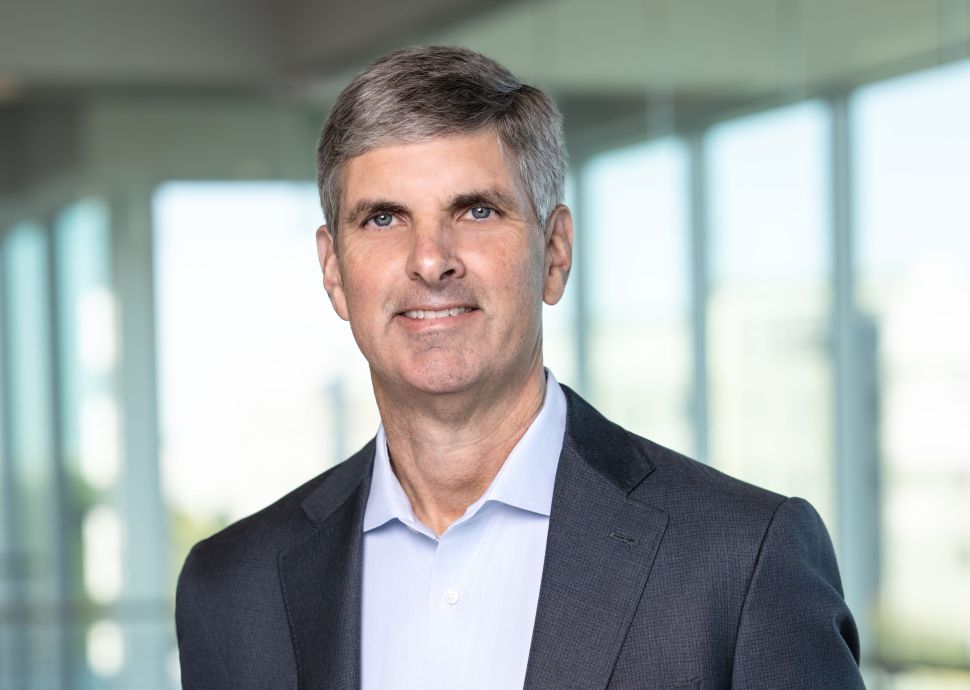
Kevin Ooley has spent 15 years watching other people misunderstand what he does for a living. For most of that time, even his own family didn’t have a clean answer to the dinner-party question. Now the industry he’s spent a career building is impossible to avoid—implicated in every heat wave water advisory, every grid complaint, every anxious headline about whether the A.I. boom is a bubble waiting to pop. Ooley, DataBank’s President and CFO since 2011, becomes the company’s next CEO on January 1, 2027, succeeding Raul Martynek, who will move into the role of executive chairman. The board’s decision followed a full search process and was approved unanimously.
DataBank, founded well before anyone was talking about large language models, has ridden three distinct waves since Ooley joined: the outsourcing of corporate data centers starting in 2011, the cloud explosion of the mid-2010s, and, beginning in late 2022, the A.I. wave that has reshaped the scale of everything the company does. “Data bank’s been along for each of those waves for the ride,” Ooley tells Observer. The arithmetic of that ride is blunt. When DigitalBridge acquired DataBank in 2016, the company was running at roughly $25 million of annualized EBITDA; DataBank expects to close out this year near a $1 billion run rate. It has grown from six data centers in three markets to what Ooley describes as the largest geographic footprint of any data center provider in the U.S.—around 65 to 66 facilities across 26 markets, with roughly ten more under development. The company hit its thousandth employee, or “data banker,” in March.
What’s changed since 2022 isn’t the growth trajectory so much as its shape. DataBank used to build with optionality—a 10-megawatt facility, fit out a couple of megawatts, sell it, build the next hall. As workloads scaled, the company began buying adjacent land on existing campuses. Now it’s breaking ground on 200-to-300-acre campuses built explicitly for expansion, and selling into that capacity faster and further in advance than ever before. “In 2019, you needed to have a data center white floor available, ready to tour the client,” Ooley says. “Now you’re having conversations once you’re getting permitting, and you get your utility agreement in place. You might be pre-leasing twelve, eighteen months in advance.”
The Water Thing
Ooley is aware that “data center” has become shorthand for civic anxiety, and he’s got a specific grievance about which facts get lost in that conversation. Older DataBank facilities, built as far back as 2008, use evaporative cooling technology that does consume water as it evaporates, but he characterizes those as the company’s smaller, legacy sites, not the sprawling A.I.-era campuses drawing public scrutiny. In 2017, DataBank moved to a closed-loop cooling system for its larger builds: water fills the system once and recirculates in sealed pipes rather than evaporating, meaning the facility’s only meaningful water draw comes from employees using restrooms and kitchens. By his estimate, a several-hundred-thousand-square-foot DataBank facility uses about as much water as five households—a claim that undercuts one of the more common assumptions about the industry’s environmental footprint, even as Ooley acknowledges the newer technology hasn’t fully displaced the reputational hangover from the older one.
On power, he’s more circumspect. Prices are rising—inflation, tariffs, transformer and grid repair costs—but he frames data center demand as an unusual opportunity for utilities that have seen little load growth in years to finally invest in modernizing and hardening infrastructure that benefits everyone, not just his tenants. He also points to demand response participation. Because data center load is flat rather than spiky, DataBank can pull large chunks of consumption offline during peak periods, in theory sparing residential customers some of the strain. Whether that math nets out favorably for the ratepayers is, notably, not a claim he tries to fully close the loop on. “I don’t want my residential rates, and my friends and family’s rates, to go up,” he says, “but we think that over time with this investment, partnering with the utilities, we can move to renewable investments… and ultimately bring the cost of power down.”
A.I. Bubble Talk
Asked directly whether the industry is inflating a bubble it can’t sustain, Ooley doesn’t dodge, but he doesn’t over-promise either. He and much of DataBank’s leadership lived through the dot-com collapse. He was, in his words, “a paper millionaire in 1999 and in 2000,” and that memory shapes a deliberate wariness about overextension. Costs to build have risen with inflation and interest rates, and DataBank has passed some of that through in pricing. Today, he says, the industry is in a clear supply-demand imbalance, with demand outstripping supply and community pushback further constraining new capacity—conditions that, in the near term, point toward continued price pressure on A.I. customers rather than relief.
Where it lands in the long term, Ooley won’t forecast with confidence. He expects consolidation along the lines of what happened after the dot-com crash and in the cloud sector, where hundreds of providers narrowed to a handful of dominant players plus specialists. He draws a distinction between A.I. use cases already woven into daily infrastructure—the kind nobody wants to unwind, the way nobody wants to go back to calling an airline to book a seat—and the open question of how far A.I. inference ultimately penetrates into consumer life. In the meantime, he points to concrete, less-hyped applications running in DataBank facilities: pancreatic cancer detection research at health clinics, A.I.-driven fraud detection for financial institutions. “Fraud detection has always been around,” he says, “but this is, you know, on steroids.”
What He’d Do Differently
Ooley says he was never an A.I. skeptic, but he underestimated how fast return on investment would materialize for end users. DataBank has used Claude Code internally to accelerate its own development work, he noted as one example among many. He compares the adoption curve to autonomous driving, which spent a decade feeling stuck before suddenly gaining real traction. The speed and scale of A.I.’s uptake, he says, outpaced anything the industry had seen. “If I could go back in time, we would have built bigger and faster five years ago.”
Succession, Culture and the Fourth Constituent
Ooley describes his reaction to the CEO announcement with a small, telling anecdote. Walking out of the event where the transition was announced, Martynek told him he felt a weight lifted off his shoulders. “Hey, thanks a lot, Raul,” Ooley says, “that weight just landed on my shoulders.” He’s framing his excitement around continuity, executing the existing plan with the existing leadership team, continuing to work with Martynek in his new capacity as Executive Chairman, and expanding DataBank’s employee ownership program, through which any data banker employed a year or longer holds a stake in the company.
His anxieties are more structural: finding the right power in the right locations, being a credible partner to host communities, and managing capital-intensive, large-scale buildouts without overbuilding or falling behind demand. He cites DataBank’s work in Culpeper, Virginia, where the company helped establish a designated “tech zone” for data center development away from residential areas, in coordination with Dominion Energy on power availability.
On hiring, Ooley credits a cultural overhaul from four or five years ago, prompted by friction between personalities and workflows across DataBank’s various acquisitions. An outside firm helped the company identify behavioral “archetypes” — the “hero” trying to solve a problem butting heads with the “caregiver” trying to protect the customer, both pursuing the same goal by different means—and from that process, DataBank built what it calls its cultural cornerstones: put people first, assume positive intent, be data-centered. Leadership talks openly about Good to Great, prioritizes high competency paired with low ego, and has direct conversations that address issues rather than people. The company publishes its Net Promoter Scores—customer satisfaction ratings, now at a record high—internally, along with an internal Employee Net Promoter Score used to gauge staff sentiment and adjust culture accordingly.
He adds a fourth constituent to the traditional trio of investors, customers and employees: community neighbors, a group he expects to become increasingly central to his first year as CEO. DataBank has three solar projects underway, including what Ooley describes as the largest rooftop solar installation in the Houston metro area. The company says it’s at 80 percent renewable power today, working toward a 100 percent target by 2030, up from 40 percent three years ago.
Who Gets the Space
How does DataBank actually decide who gets to lease space when demand outstrips supply? Is it simply the highest bidder, or is there a deliberate tenant mix, as a commercial landlord might curate retail alongside restaurants? Roughly 70 percent of DataBank’s business comes from enterprise customers—financial services, healthcare, content distribution, software—and 30 percent from hyperscalers. The company prioritizes investment-grade, durable clients because that customer profile helps secure cheaper capital when DataBank raises securitized bonds or equity to fund new builds. Existing customers also tend to expand alongside DataBank; roughly 80 percent of the company’s growth comes from accounts already on the books, serviced by a sales team of about 100, of whom only 10 percent focus on new business.
That discipline has a cost. In 2023, Ooley says, DataBank could have filled every available megawatt with so-called neocloud providers—the GPU-as-a-service startups that emerged alongside the A.I. boom—but deliberately capped that allocation to preserve room for enterprise clients to grow. “If we don’t have room for them to grow with us,” Ooley says, “they’re gonna grow somewhere else.”
