
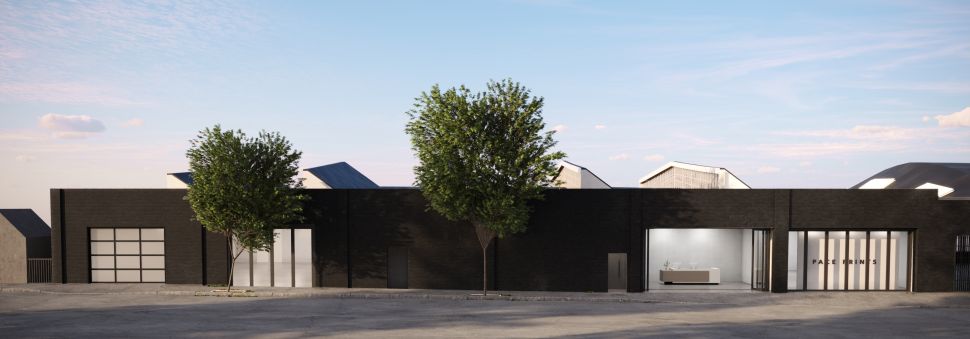
Prints and editions have proven in recent years that an artistic medium can grow significantly without necessarily being well understood by the broader public. Pace Prints announced in February that it will open an 11,700-square-foot facility in L.A. this fall, strengthening the wave of activity in the prints-and-editions collecting category. Almine Rech introduced an editions arm and online sales platform in 2020; David Zwirner launched Utopia Editions in 2021; and Hauser & Wirth opened a dedicated editions space on West 18th Street in 2023, to name just a few. A handful of new fairs focusing on prints and editions have also premiered during this boom, including the Paris Print Fair in 2022, the Brooklyn Fine Art Print Fair in 2024 and the inaugural Signatures Art Fair opening in Paris this November. The momentum is reflected in sales data, too; ArtTactic’s latest Prints and Multiples report found that the category has grown its share in the auction market by 52 percent between 2015 and 2025.
Despite this increasing appetite, however, the fundamentals of the editions business remain opaque compared to that of, say, paintings. Are artists simply reproducing pre-existing works for a larger audience at lower price points? Who funds production? Who actually does the printing? For many art enthusiasts, these and other essential questions still hover around the category. To demystify this fast-growing corner of the market, Observer spoke with more than a dozen galleries, publishers and artists in New York and Los Angeles. Their insights clarify not only how the editions market operates but also the dynamics on which its further expansion depends.
The economics of editions
Most print and editions businesses follow one of two models: workshops that operate their own galleries or galleries that double as publishers by funding production elsewhere. The former group includes printmaking workshops with exhibition programs, such as Gemini G.E.L. and Cirrus, as well as gallery-founded print ventures like Pace Prints, which shares a name with the recently downsized mega-gallery despite operating independently for decades.
In the publishing model, by contrast, galleries finance and organize the logistics of connecting artists with outside workshops. Nicodim gallery, which launched its Fine Art Editions branch in 2021, has worked with Lapis Press; White Cube has partnered with Du-Good Press and Almine Rech with Brand X. By forgoing an in-house workshop, a pure publisher sacrifices control but gains versatility, offering artists a residency-like experience with whichever offsite printer fits their creative interests.
Both workshops-as-galleries and galleries-as-publishers may cover the up-front production costs of an edition, including studio time and materials. Among the most expensive line items are copper plates, which are essential to intaglio printmaking but now cost nearly double their pre-pandemic price.
How are sales of the resulting inventory divided? One common arrangement gives two-thirds of the proceeds to the publisher and one-third to the artist, according to two former directors of print studios. Another popular model awards artists only 10 percent of the sale proceeds until the workshop recoups its production costs, then shifts to a 50-50 split—a structure that Cirrus follows, according to artist Dan Bayles, the firm’s printer and curator. In either case, as more and more editions of a particular print sell, the price of the remaining editions typically rises in response to the increasing scarcity.
Where do prints fit into art-making?
The starting point of this market is its most widely misunderstood aspect. Although some galleries do translate existing paintings into prints, more often artists and publishers collaborate to create editions that are “not posters or reproductions, but original works of art that exist in multiples,” said Joni Moisant Weyl, co-owner of Gemini G.E.L. and founding owner of its New York branch (known as Gemini G.E.L. at Joni Moisant Weyl).
“We all know that the question we often get with prints is, ‘Where is the original painting?’ But that’s not necessarily how prints operate within an artist’s practice,” said Anders Bergstrom, director of Hauser & Wirth’s editions program.
He pointed to Rita Ackermann as one example of a more generative process. Three screenprints that Ackermann made in 2023 with master printer Keigo Takahashi sparked her to create three new paintings—and those paintings, in turn, led Ackermann back to the workshop to create four more screenprints. “That kind of collaboration is a wonderful validation of why we have a print department,” Bergstrom said, adding that printmaking can become “part of a larger thinking process—one that can help an artist expand their vision of art making.”
Printmaking has long been central to how certain artists work. “It isn’t something one has half an interest in,” said Kiki Smith, who has been creating editions since the early 1980s. “Most of the sculptures I make come from printmaking very directly,” she added, analogizing intaglio—printing from cuts made into copper plates—to her process of casting sculptures from lines incised into wet clay.
Connecting artists and printers
While galleries with printshops often make editions with artists already on their rosters, workshops also frequently invite artists represented by other dealers—even if those artists are wholly new to printmaking. Introductions tend to move through existing artistic networks, experts agree.
“Elizabeth Murray introduced us to Julie Mehretu, John Baldessari introduced us to Analia Saban and Julie Mehretu introduced us to Tacita Dean,” said Weyl. Jacob Lewis, CEO and president of Pace Prints, cited a similar example in Leonardo Drew, a longtime collaborator who encouraged the rising artist Kennedy Yanko to come into the paper studio.
It is also common for artists to partner with different workshops on different editions. Hilary Pecis has made etchings with Crown Point Press, screenprints with Cirrus and paper-pulp works with Pace Prints. Saban, who is showing editions that combine woodcut with digital imagery at Gemini’s L.A. branch in the exhibition “Data Center” (through September 4), has previously worked with Mixografia, El Nopal and Lapis Press. “Every print shop has their strength,” Saban said. “They are all experts in their inherent processes, and they don’t necessarily compete.”
A few artists with practices rooted in printmaking have even developed their own imprints. Jasper Johns had Low Road Studio, while Smith founded Thirteen Moons. The freedom of self-publishing, she said, counterbalances editions-reluctance from dealers who conclude the “price point of prints is too low to cover the overhead of how galleries are being run.” But she added that this dynamic is changing thanks to the new influx of publishers and “new generations of artists and printmakers finding creativity and excitement in what they can manifest.”
The resilience of the prints and editions market
Even though profit margins can be thin, editions have been buoyant during the post-pandemic downturn in art sales. Art Basel and UBS’s annual art market reports found that sales of prints and multiples grew by around 4 percent in value from 2023 to 2025, even as the broader trade declined by almost 9 percent in value over the same period.
Much of this resilience owes to the accessible pricing of editions. ArtTactic and the Affordable Art Fair’s April 2026 report “The Art Market Under $50,000” found that more than 55 percent of surveyed collectors owned prints and editions. Painting was the only medium more prevalent. Youth led the charge, too: 68 percent of Gen Z respondents and 60 percent of Millennial respondents collected prints and editions.
Boris Cucalón, editions manager at Almine Rech, said that new collectors in the category are “prioritizing technical craftsmanship and production value over a brand name alone.” This may owe partly to galleries and publishers’ use of prints to entice entry-level buyers in a more holistic way. Nicodim, for instance, debuted its editions branch amid Covid “as a way to support artists, expand access to original works and create new opportunities for engagement during a time of physical distance and uncertainty,” said Sophie Roessler, the gallery’s archivist.
Older editions operations are seeing renewed energy, too. White Cube participated in the 2025 London Original Print Fair, where it had not shown since 2013. Honey Luard, the gallery’s senior director of editorial, said it has “increased our investment in this area” in response to the category’s “resilience” in recent years. “In these uncertain economic times, it is understandable that this segment of the market would be thriving,” she added.
L.A.’s legacy print community
While many of the galleries wading into publishing of late are headquartered in New York, L.A. has long been a hub for prints, with a landscape shaped by veteran studios, publishers and workshops. “We are fortunate in Los Angeles to have very active printmaking studios that embrace the full spectrum of printmaking techniques: from traditional etching or litho to the most advanced forms of digital printing,” said the L.A.-based Saban.
LACMA’s collection is a microcosm of this interplay. Erin Sullivan Maynes, the museum’s associate curator of prints and drawings and the curator of its show “Deep Cuts: Block Printing Across Cultures” (through September 13), described L.A.’s print ecosystem as “one of the most vibrant and unique in the world.” She noted that LACMA maintains close ties with renowned Angeleno print studios Mixografia and El Nopal; stewards significant holdings of editions from Gemini G.E.L., Cirrus and Self Help Graphics (which is now in the midst of its own expansion); and jointly collects works from Edition Jacob Samuel, Hamilton Press and Lapis Press, among others, with the Hammer Museum.
Pace Prints will enter this ecosystem in the fall with a new Murdock Solon Architects-designed workshop and gallery—the company’s first expansion beyond New York. The facility will serve the gallery’s West Coast-based artists, including Pecis, Jonas Wood and Alex Israel. Lewis, who joined with partners to acquire Pace Prints in May 2025, also sees it as a space that “encourages other L.A. artists who we haven’t worked with yet to come in and explore ideas that they maybe couldn’t achieve on their own.”
Pace Prints is arriving amid broader contractions in the L.A. art market. The new outpost will open next door to Marian Goodman Gallery’s soon-to-be-dormant branch in Hollywood. But curators, gallerists and advisors caution against projecting the gallery sector’s broader challenges onto the editions business. “What’s special about the print world is that it’s fundamentally collegial and collaborative,” said independent curator, advisor and publisher Sharon Coplan. “The addition of Pace will only strengthen that.”
Maynes, too, views the expansion of Pace Prints with cautious optimism. She hopes that the company’s leaders “take seriously the collaborative nature” of the city’s editions ecosystem, while affirming the new facility’s potential to create “exciting opportunities for artists, for printers and for the larger print community in L.A.” In this sense, Pace Prints’ latest move stands in for the larger risks and possibilities of the growing editions business.
“Prints and multiples can be a perfect entry point for collectors to acquire works from great artists, and it does seem that galleries are seeing this as an opportunity to create a new revenue source for themselves in rocky economic times,” said Bayles of Cirrus. “This can be positive in furthering printmaking’s role in the arts while creating a real market for the artist if done correctly, and it can also have negative impacts in furthering misconceptions of printmaking as cheap posters or reproductions flooding the market if done incorrectly.”
As the editions market continues to expand, the question will be how printers, artists and sellers shape its next phase.
