This week, Governor Kathy Hochul took the first real step toward what could become the most meaningful civic project New York has attempted in a generation. Her administration launched an exploratory effort to study whether New York City and Lake Placid could jointly host a Winter Olympics.
While not a commitment to bid it is a bold look at a serious question: whether the two ends of our state could stage a Winter Games that is financially successful and environmentally sustainable.
But the larger question is not whether New York can host the Olympics. It is whether New York still has the capacity to undertake a shared civic project at all.
New York does not need the Olympics to reinvent its skyline or build a new generation of stadiums. Unlike many Olympic bids, this would not be a Games built on massive new construction, because most of the infrastructure already exists. The opportunity is not to build a new city, but to reconnect a divided state.
It has been more than twenty years since New York City last chased the Games. The 2012 bid, shaped by the months after September 11, promised a transformed city, and New York built much of that vision even after losing the bid.
The task in front of us today is different.
New York is one state that has always felt like two. Somewhere north of Bear Mountain it quietly splits, divided by geography and income, by culture and daily life, and by the plain fact of distance. Most downstaters have never seen the top of their own state, because you can barely reach it without a car. We are strangers to the place that shares our name.
A joint New York City and Lake Placid Games is a rare chance to close that gap. The pairing sounds improbable, the fastest city on earth connected to a mountain town five hours up the Northway. That contrast is exactly what makes it powerful, and exactly what makes it ours.
Nothing pulls people across a line like sport. It creates a moment where we are all pulling for Team USA. A Winter Games would also put events in front of us that most New Yorkers have never seen in person. There are few sights in sport like a ski jumper hanging in the air with a valley spread beneath them, a bobsled tearing down a chute of ice at ninety miles an hour, or a skater rising into a spin and landing clean on a single blade. Picture those nights at Madison Square Garden and Barclays Center, and that same week in the mountains to the north, reached by an Amtrak train and a bus instead of a long drive.
I know both of these New Yorks. I grew up in Brooklyn, my family has long kept a home in the Adirondacks, and I have spent my life moving between them. The people in each are forever misread by the other, and that misunderstanding is the opportunity. A project this size cannot happen unless regions that rarely act as partners learn to work as one, a rehearsal for how a divided state might begin to see itself. (should we add “anew”)
The idea is also practical. The 2026 Games in Milan and Cortina showed that a global city and a historic mountain town can host together across a distance close to the one between New York City and Lake Placid. I went to the Milan-Cortina Games and made the trip between the host cities by train and bus, and that model works.
Our case is even stronger. New York City already possesses nearly every venue needed to host the indoor events, along with stadiums that could stage freestyle skiing and snowboarding competitions, while Lake Placid remains one of the world’s most proven winter sports hubs. Its ski jumps, sliding track, Nordic center, and Whiteface Mountain are not relics of past Olympics, but active venues that continue to be one of the hosts h for the World Cup. Much of that infrastructure has been modernized through over $750 million in investments made by Governor Hochul and carried out by the Olympic Regional Development Authority. New York would not have to build a Winter Olympics. It already has one.
The economics point the same way. New York City draws more than sixty million visitors a year. The out-of-state and international travelers who came for a Games would find a beauty in the north that exists nowhere else, and they would return. A Games could make the Adirondacks a reason to visit New York rather than an afterthought once people leave the city.
The deepest argument, though, is social. Bringing the Winter Olympics to the most diverse region on earth would challenge old assumptions about who these sports belong to. It would tie neighborhoods in Brooklyn, Queens, and the Bronx to towns like Saranac Lake, Keene, and Tupper Lake through shared work toward something neither could reach alone. Children (”in”) Brooklyn and Plattsburgh could watch and decide that winter sport belongs to them too.
Timing is the one part of this we do not control. With Los Angeles hosting in 2028, Utah in 2034, and Switzerland likely in 2038, the next open Winter Games is 2042, and the committee awards them more than a decade ahead. The work would have to start now.
We may still decide the Games are not for us. But the act of asking, of finding what it would take to bring the two halves of our state into one room, will be worth it whatever we choose. Governor Hochul has long understood that New York’s future depends on a connected upstate and downstate, and she has backed it with steady investment in facilities, transit, and infrastructure.
With this step, winter could become a season we look forward to instead of one we endure, and the line north of Bear Mountain could finally begin to fade. The real prize is not the chance to host the world. It is the chance to understand ourselves.
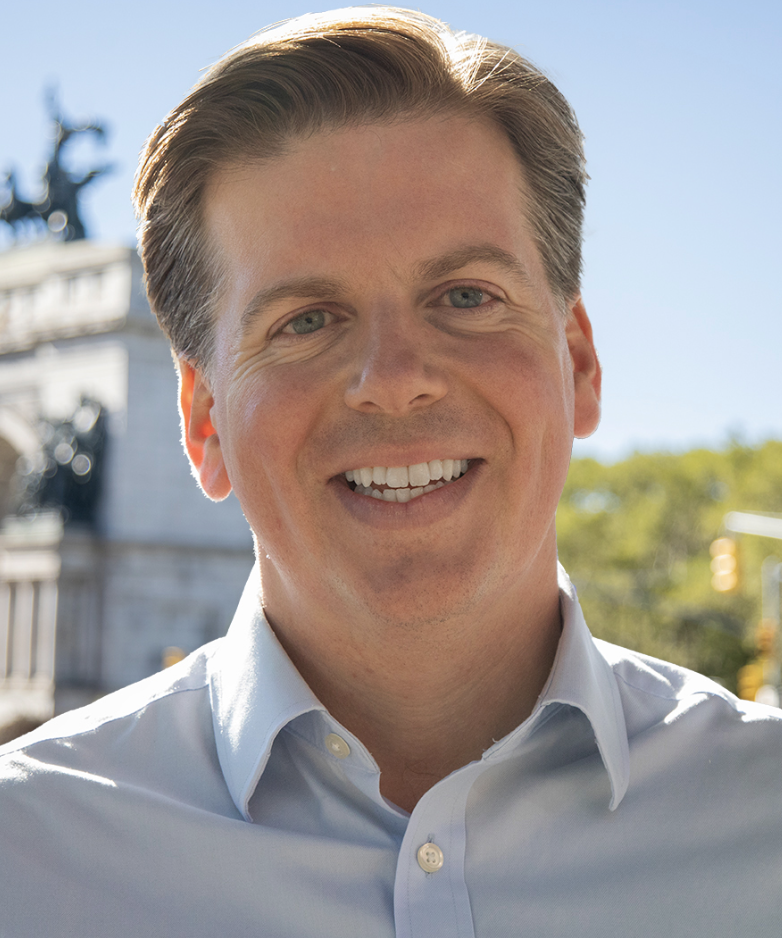
Robert Carroll represents New York’s 44th Assembly District.
The post An Olympic Bid Could Close the Gap Between the Two New Yorks appeared first on EMPIRE REPORT NEW YORK 2026® NEW YORK’S 24/7 NEWS SITE.