
In the modern world, driven by social media and short attention spans, living never seems to slow down let alone stop. We’re flooded with information and images that vanish just as fast. Attention is fleeting; we’re pulled from screen to screen and headline to headline. My husband and I were recently talking about how much the experience of watching TV has changed since I was a child. Back then, it was all black and white with only three channels to choose from, and all of them went off the air at midnight. Today we’re faced with an endless array of channels screaming at us for attention 24/7. Art remains one of the few things left that still challenges this contemporary reality. In fact, it could be the key to reclaiming our ability to slow down, focus and truly understand the world around us.
Now, even network television programs are often interrupted with clutter. Moving images and graphics jump and float across the bottom of the screen promoting the next program in the lineup, all designed to pull the eye away from what is already being watched. Even something as simple as watching The Andy Griffith Show no longer feels like a calming experience. The screen is overcrowded, chock full of visual disruptions and long commercial breaks. Stillness and storylines have been overtaken by constant motion designed to capture attention.
Those distractions are what makes art feel so necessary now. Art needs time. It compels us to slow down, to look a little longer and to notice what doesn’t reveal itself right away. This is especially true for works that are rooted in observation. Art keeps our attention focused on the physical reality around us and can help us to thrive in a world that has become obsessed with passing trends and digital noise. In other words, art helps us to push back against the speed of life. It is built slowly, and it reveals itself gradually to the observer.
We have become a visual culture that demands instant and immediate satisfaction. Images are created simply to briefly stop us mid-scroll. They flash before our eyes, in one stream after another, and are judged in seconds. The result has evolved into a kind of visual shorthand that now defines modern culture, a quick impression that lacks any deeper understanding, a far cry from the days of Mayberry.
Art that is grounded in real-world observation turns this pattern on its head. Whether it’s a carefully detailed interior space, a breathtaking landscape shaped by light and the environment or a figure captured in a quiet moment, observational work requires a different kind of engagement. Time spent looking, really looking, at every minor detail and nuance communicated through the artist’s hand, leads us to our reward. In this way, recognition becomes gradual, meaning accumulates.
This isn’t to say there’s anything inherently wrong with digital art or new technologies, but it’s fair to say there are images shaped by novelty and then there is the work that is molded through attention. The latter tends to endure. It’s grounded in traditions of craft, observation and discipline that connect today’s artists to generations before them.
Sometimes the now-common digital experience becomes so overwhelming that the only option is to close the page entirely. It can feel less like engaging with information and more like what I would imagine a strip club to be like. A dancer wiggling and jiggling their goods as close to the customer’s eyes as possible, to lure attention to the body in front of them.
Online spaces are filled with flashing prompts, shifting colors, pop-ups and moving elements all designed to seize attention the moment you open a page. The result is a kind of visual agitation that makes sustained focus elusive and it helps explain why work shaped through patience and observation feels increasingly valuable today.
On top of that, continuity is easily overlooked in a culture that prioritizes new and now. Yet, the act of observing the world closely and translating light, time and space into a visual language remains among the most fundamental artistic pursuits. For the artist it takes patience, skill and a willingness to stick with a subject long enough to understand it.
For me as a painter, that complexity emerges from a slow and meticulous, almost meditative, practice. The same kind of patient attention found in knitting, making lace, or reading a dense, imagination-stirring book. And art that takes time to make also asks for time in return. Each detail convinces the viewer to linger a little longer, to look again and to spend enough time with it for its deeper qualities to emerge. What first shows itself as a beautiful surface begins to open into something richer, light settling across an interior, the subtle tension in a figure’s posture, the careful arrangement of forms within a space. The more time the artist has invested in truly seeing a subject, the more the admirer is invited to do the same.
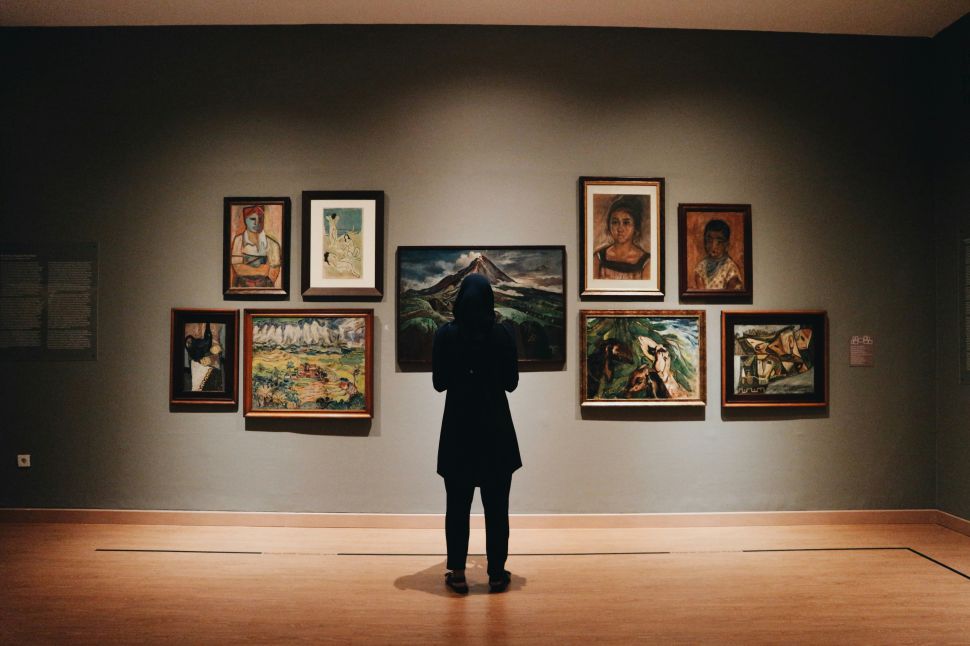
That is part of what makes museums and libraries so valuable. They remain among the few spaces we have left for calm reflection. A painting does not move or change while it is being studied, allowing the admirer to slow down, take in each shape and color, while gradually considering the deeper meaning created through the artist’s choices.
Visual art undeniably carries new weight today. It does the thing that everything else seems to want to keep us from doing so we remain distractedly immersed in a culture of speed. When artists examine the world and show us what they see, they restore presence and sustained attention as well as the chance to think more deeply. That matters far beyond the art itself. The ability to focus and observe more carefully shapes how we view and understand the world around us. When our attention becomes fragmented, shallow understanding often follows. Art offers an alternative to immediacy, one in which depth trumps novelty and reflection trumps reaction.
