
In a heat wave, New Yorkers across the city run their air conditioners all at once. With temperatures spiking, those ACs work harder to keep spaces cool. Demand for power soars.
That’s what’s happening right now in the city. And in the midst of it, a project that was supposed to feed the five boroughs electricity during times like these — easing concerns about possible blackouts — has been out of commission.
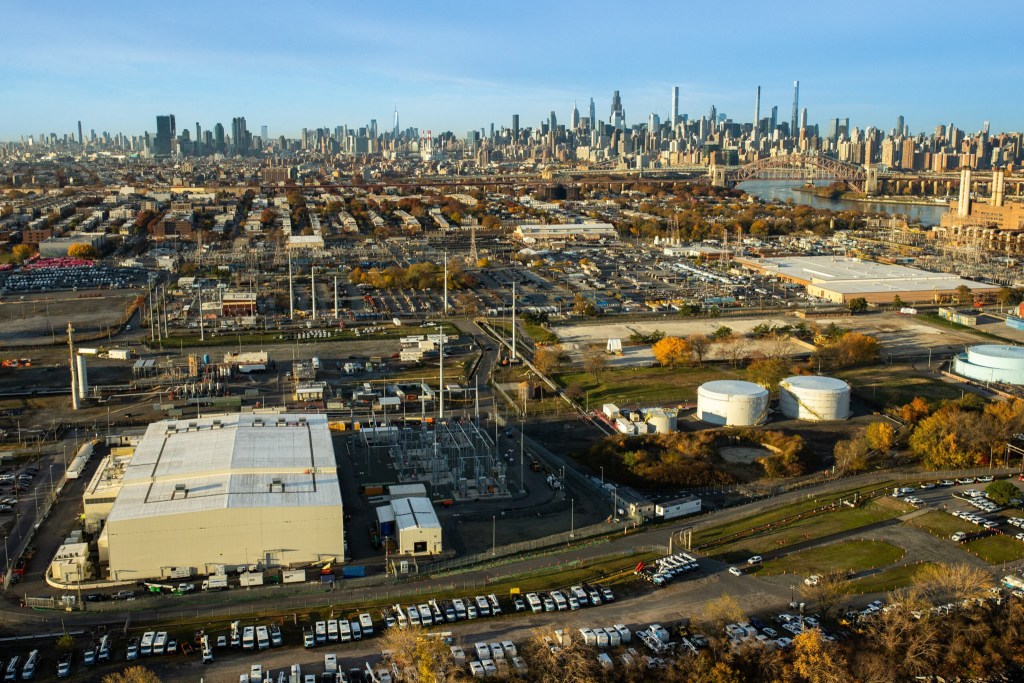
The Champlain Hudson Power Express, a massive transmission line generated from dams in Canada with the potential to carry 1,250 megawatts of electricity to the city, had a problem from Wednesday through Thursday morning, coinciding with the historic heat wave.
Pete Rose, director of stakeholder relations at Hydro-Québec, which runs the line, said the “technical issue” occurred on the Canadian side of the border.
“Crews have been on site working to resolve this issue as quickly as possible,” Rose said in a statement Wednesday. “This remains an evolving situation, and we will reassess if needed.”
As of late Thursday morning, Rose said teams were working to re-energize the line after a tech issue tripped a converter.
At its full potential, the roughly $8 billion line could power about a million homes. The line was ready to go by early June, but its official contract with the state began Wednesday.
That contract says Champlain Hudson Power Express can be called on when the system needs energy the most — like during heat waves — and must provide.
A spokesperson for the New York State Energy Research and Development Authority did not answer questions about whether Champlain Hudson Power Express was in violation of its contract, but indicated the state was aware of the situation.
The New York Independent System Operator, which operates the grid, did not factor the Champlain Hudson Power Express into its assessment of whether there would be enough power for expected high demand this summer. NYISO found that even without the project, there would be enough power — but just barely.
“We’re definitely tight,” said Kevin Lanahan, vice president of external affairs at NYISO. “We’re watching and in touch with Hydro Quebec to make sure and see the progress they’re making bringing that line back in because it will be hugely beneficial.”
NYISO has long cautioned against energy shortfalls in times of rising demand — like heat waves — because new power sources aren’t coming online as quickly as other sources are taken offline. That could mean blackouts or brownouts for New York City.
As of midday Thursday, about 5,200 customers were seeing outages in the city, according to Con Edison’s data. That’s a relatively small number in 3.6 million customers served by the company, but could climb as temperatures increase and demand strains the physical grid.
The Champlain Hudson Power Express coming online, along with a forthcoming offshore wind project, pushed reliability concerns off for several years.
The hydropower line became operational earlier than expected, but did not provide much power to New York City in June. The July contract for the line with the state allows Hydro-Québec to command higher prices for its energy. Before then, the company would get lower rates.
In a June interview with The City Reporter, Rose said, “We’re fully confident to be utilizing the line to its full potential,” starting in July.
Fossil fuel-powered generators power most of New York City’s electric grid. The line was supposed to displace some of those generators, as well as avoid having to run gas-fired peaker plants. Those plants, scattered throughout the city, are typically more expensive to run and can harm local air quality.
New York City is slated to purchase up to $6 billion in renewable energy credits associated with the transmission line to offset the carbon emissions from the running of municipal operations.
Our nonprofit newsroom relies on donations from readers to sustain our local reporting and keep it free for all New Yorkers. Donate to THE CITY today.
The post Canadian Power Line Meant to Shore Up NYC During Heat Waves Out of Service appeared first on The City Reporter.
