
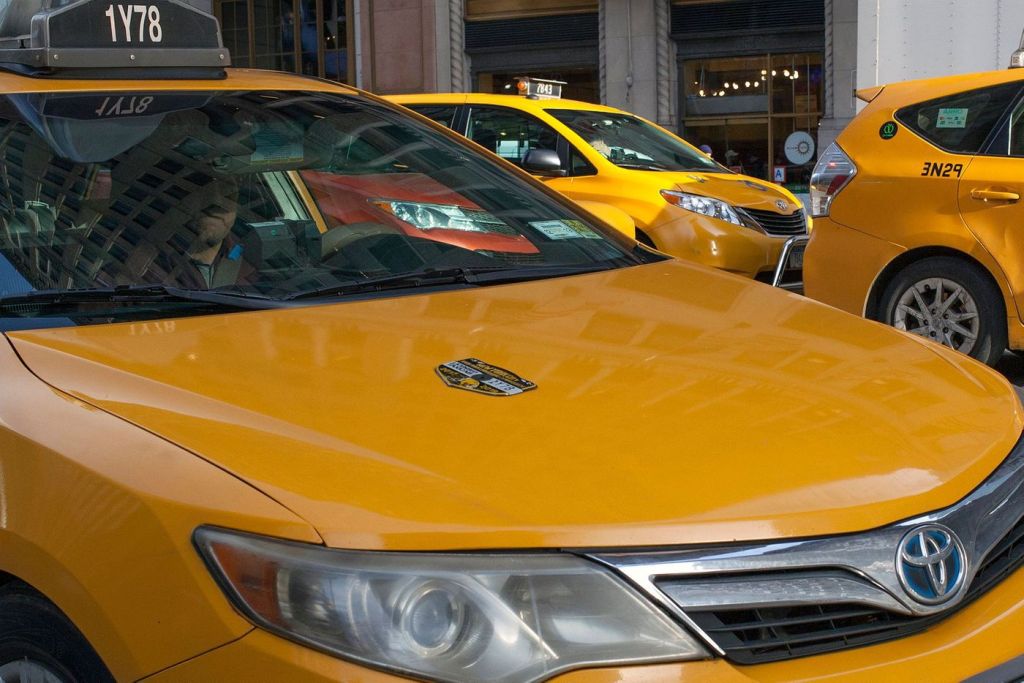
As New York City cabbies contend with a spike in gas prices and a resulting drop in business, the arrival of the World Cup could become another big bump in the road for those behind the wheel.
When Morocco and Brazil face off Saturday just across the Hudson River in the first of eight local matches in the soccer tournament that runs through July 19, yellow taxi drivers will have to work around FIFA’s projected influx of more than 1 million visitors to the city and roadblocks accompanying the global sports spectacle.
Those include the length of 42nd Street being largely restricted to buses and World Cup shuttles on match days, other road closures in Midtown, a series of gridlock-alert days and passengers who may opt to take other modes of transportation.
“I worry that business is going to be shut down, actually,” cabbie Joy Biswas, 37, told The City Reporter while taking a break at a relief stand on West 28th Street. “If someone inside the cab sees the traffic, they’ll get out and I’ll be stuck in it.”
The start of the action at the temporarily renamed NYNJ Stadium in the Meadowlands coincides with a nearly 20% drop in the number of monthly yellow trips from a year ago and a 40% spike in gas prices.
TLC data shows that in May 2025, there were 4.5 million trips, a figure that sunk to 3.6 million in April. The retail price of a gallon of gas, meanwhile, jumped to $4.60 in May — up from $3.28 one year earlier, according to the U.S. Energy Information Administration.
Put that together with the match-day roadblocks planned throughout the tournament, and it’s clear why cabbies are concerned, even as officials have urged New Yorkers and visitors to take mass transit and avoid driving into Manhattan. The drivers are also facing the threat of hustlers cutting into their customer base at JFK and LaGuardia airports.
“The World Cup could be a savior for drivers and it could be a bust,” Bhairavi Desai, executive director of the New York Taxi Workers Alliance, told The City Reporter. “That could largely be determined by the traffic policies of the city.”
Governor Kathy Hochul, Mayor Zohran Mamdani and other officials last week detailed the slate of changes that await city residents once the games begin, emphasizing the use of mass transit and the importance of keeping World Cup shuttle buses as well as local MTA buses on the go along 42nd Street.
“Bottom line is, we’re used to this intensity, we’re used to this traffic,” Hochul said.
While there will be some pop-up taxi stands near World Cup shuttle bus locations, Desai said those may not be enough.
“If all of 42nd Street from First Avenue to 12th Avenue is going to be closed, you at least need taxi stands across that whole width so there are multiple opportunities to pick up passengers,” she said. “That’s right in the middle of Manhattan and it’s major business.”
The city Department of Transportation said a 42nd Street taxi stand near Grand Central Terminal will be closed, along with one near the Port Authority Bus Terminal at 40th Street between Eighth and Ninth avenues.
Additionally, outside of Penn Station, a Seventh Avenue stand between 31st and 32nd streets will be open only after local World Cup matches end. But all other stands will remain open outside of the country’s busiest transit hub that is central to moving soccer aficionados between New York and New Jersey.
“Traffic is not good for business and people will still be driving,” Sohel Malitsa, a yellow taxi driver since 2013, said while taking a break from driving in Lower Manhattan. “So, I have to find the customers because the customers will still need to go to Penn Station.”
Jason Kersten, a spokesperson for the New York City Taxi & Limousine Commission, said city officials are hopeful that visitors will opt to experience a ride in an “iconic” taxicab.
“We’re doing everything to encourage that for travel within the city and the traffic mitigation plan, including piloting additional pop-up taxi stands near World Cup-related activities and transportation hubs,” Kersten said.
“Like all small businesspeople, our taxi drivers deserve an opportunity to share in the benefits from the increased tourism, and a single taxi can conduct many trips per day without adding additional vehicles to our streets,” he added.
Desai said she is optimistic that the city will be “flexible” in adjusting its World Cup-centered policies, particularly if the volume of yellow trips drops because of match day traffic.
“It’s the middle of the summer, when business is already slow,” she said.
Mamady Traore, a taxi driver since 2011, said drivers will have to adjust, as well.
“It’s my job,” he said. “If you worry, you’re not going to make money and might as well just stay inside.”
Our nonprofit newsroom relies on donations from readers to sustain our local reporting and keep it free for all New Yorkers. Donate to THE CITY today.
The post City Taxi Drivers Shook by Upcoming World Cup Roadblocks appeared first on The City Reporter.
