
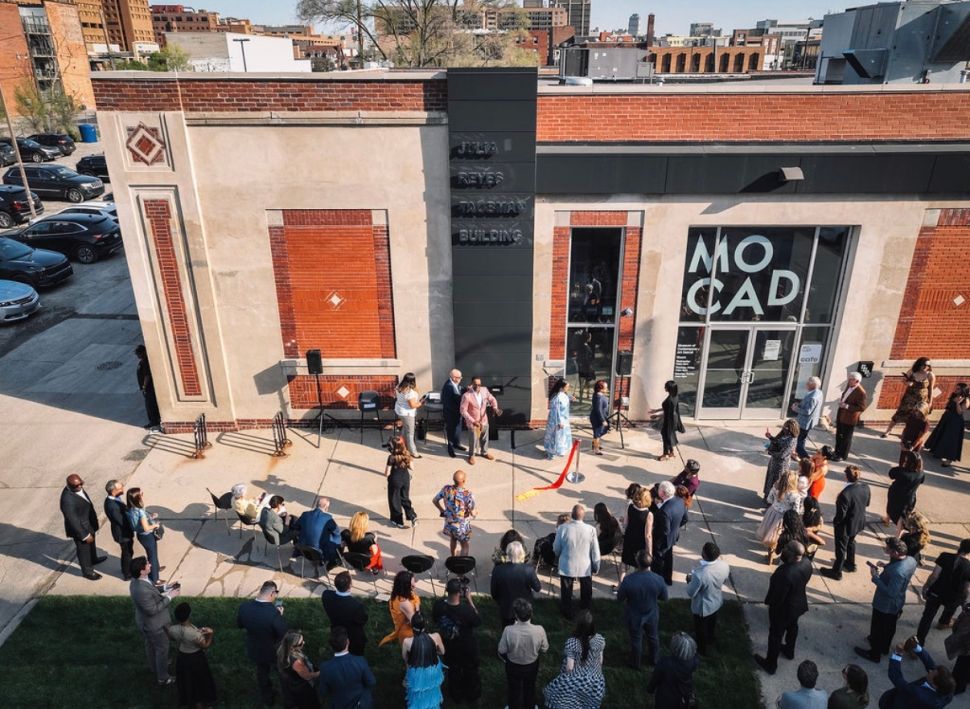
The Museum of Contemporary Art Detroit reopened in April after eight months of renovations, celebrating not only its 20th anniversary but also a vision for art and experimentation that has only grown stronger over the years. The museum has been reimagining institutional engagement with community since its inception, with a people-first ethos that extends beyond visitors and artists to the city as a whole. It is one of the premier sites for cultural and social practice in Detroit, continuing the longstanding legacy of innovation that has come to define the city.
They have a distinct co-directorship model, where the leadership responsibilities are shared between artistic director Jova Lynne and COO Marie Madison-Patton. Together, they combine their individual expertise in artistic practice and museum operations to expand the bounds of how a museum can serve its diverse collaborators and communities. Observer sat down with both Lynne and Madison-Patton to discuss the reopening and their outlook for the museum’s next chapter.
As an institution deeply rooted in community from the start, what does this next chapter mean for continuing to grow your people-led vision?
Jova Lynne: As we move into this next era, we’re thinking deeply about sustainability, care and responsiveness. A people-led institution means listening closely to our communities and recognizing that contemporary art can be a platform for dialogue, experimentation, healing and collective imagination. The anniversary is also a reminder that institutions are living things. They evolve through relationships. So rather than seeing this reopening as a return, we see it as an expansion: expanding access, expanding collaboration and expanding what a contemporary art museum can look and feel like in Detroit today.
Marie Madison-Patton: This next chapter feels really exciting because it gives us the opportunity to reintroduce MOCAD in a way that still feels true to who we’ve always been. Community has always been at the center of our vision, and the renovations allowed us to think more intentionally about how people experience the space and connect with one another here. For me, continuing this vision means staying in conversation with artists, audiences and our neighbors, and making sure MOCAD continues to feel welcoming, accessible and reflective of Detroit. As we grow, I want us to keep building programs and partnerships that feel meaningful and responsive to the people who support and shape this museum every day.
How does your co-directorship model help you best serve your team, the artists you exhibit and the wider Detroit community?
JL: Our co-directorship model reflects the collaborative spirit that defines both contemporary art and Detroit itself. It allows us to lead in a way that is more responsive, balancing the many demands of supporting artists, sustaining staff, building community trust, fundraising and long-term institutional planning. Shared leadership creates space for more thoughtful decision-making and reinforces MOCAD’s commitment to partnership, care and collective exchange. It also mirrors Detroit’s longstanding culture of creative experimentation, where meaningful cultural work has always been built through collaboration rather than any one singular voice.
MMP: I think our co-directorship works because it’s rooted in trust and collaboration. Jova and I bring different strengths and perspectives, and together we’re able to support both the creative vision and operational needs of the institution in a balanced way. It also creates a more collaborative environment internally. We want our team to feel supported and heard, and I think our leadership model reflects that. For artists and the community, it allows us to be more present, more thoughtful and more responsive in the way we approach the work.
Detroit is experiencing a lot of reinvestment and development. How are these changes shaping your approach to exhibitions and programming as the city evolves?
JL: Detroit’s growth and development are creating important opportunities, but they also raise critical questions around access, preservation, displacement and who gets to shape the city’s future. As the city evolves, our role as a contemporary art museum is not simply to reflect change, but to create space for artists and communities to critically engage with it.
That perspective shapes our exhibitions and programming in very intentional ways. We continue to prioritize artists whose work is deeply connected to social practice, cultural memory, experimentation and community dialogue. We’re interested in creating programs that bring different audiences into conversation with one another and ensure that the museum remains accessible and responsive to the communities that have long sustained Detroit’s cultural landscape.
MMP: Detroit is always changing, and I think MOCAD has a responsibility to stay responsive to those shifts while remaining grounded in the communities that have always shaped the city. A big part of our work is thinking about how programming can reflect what people are experiencing in real time, while also creating opportunities for dialogue, connection and reflection.
As the city continues to grow and evolve, it’s important to me that MOCAD remains accessible and welcoming to everyone. I want the museum to continue supporting artists who are engaging with issues around culture, identity, community and change, while also making sure our programming feels relevant and connected to the people who live here every day.
As you look to MOCAD’s future, what is one lesson from your shared work together at the museum that guides you?
JL: One lesson that continues to guide me is that institutions are strongest when they remain in conversation with the people they serve. Over the years, I’ve learned that meaningful cultural work doesn’t happen in isolation—it’s built through listening, collaboration, adaptability and trust. Our shared leadership has reinforced the importance of approaching the museum not as a fixed authority, but as a living, evolving space shaped by artists, staff, audiences and community. That mindset continues to guide how we think about programming, partnerships and the future of MOCAD as a place rooted in care, experimentation and collective imagination.
MMP: What continues to guide me is understanding that the long-term health of an institution comes from balancing structure with adaptability. A lot of my work focuses on making sure MOCAD has the operational support, resources and internal systems needed to grow in a sustainable way, while still allowing space for creativity and new ideas to thrive.
Working within a shared leadership model has solidified the value of being collaborative and solutions-oriented. Every day brings different challenges and opportunities, so being able to communicate openly, adjust when needed and stay focused on the bigger picture is essential. For me, the work is ultimately about stewardship, making sure MOCAD can continue to serve artists, staff and the Detroit community in a thoughtful and lasting way.
