
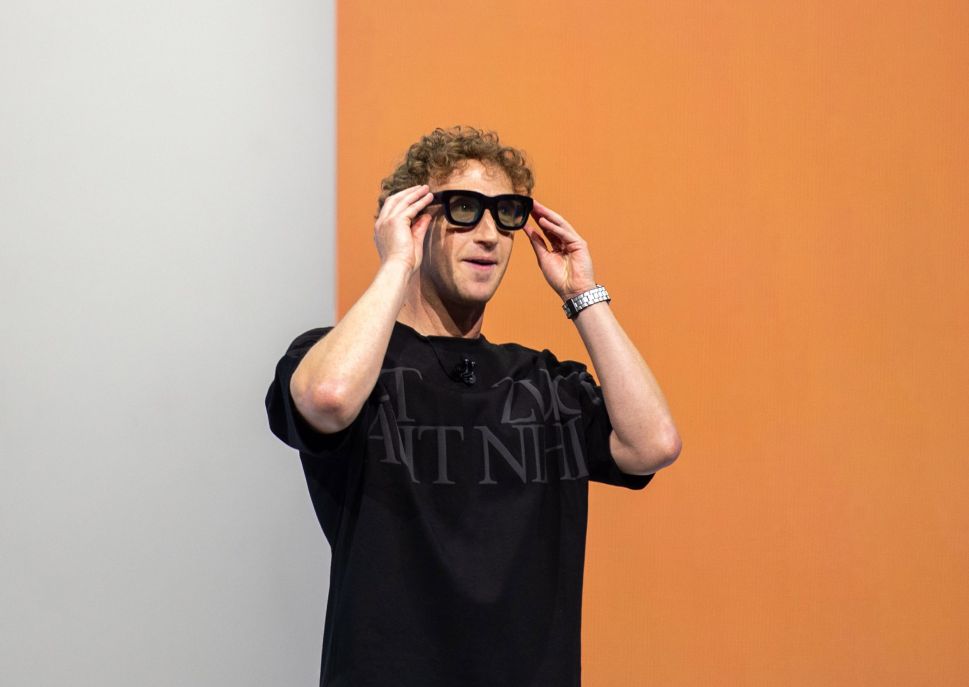
Building on the success of Meta’s Ray-Ban smart glasses, Mark Zuckerberg is now on a quest to make A.I. wearables fashionable. Yesterday (June 23), Meta unveiled a new in-house line simply called Meta Glasses, starting at $299. While still produced with Ray-Ban parent EssilorLuxottica, the new glasses drop the Ray-Ban branding entirely. Central to that effort is a high-profile collaboration with Kylie Jenner, whose custom-designed “Meta Starfire Kylie Edition” frames bring one of social media’s most influential figures directly into the company’s wearable strategy.
At launch, the lineup includes three styles—the Adventurer, Fury and Jenner’s Starfire edition—ranging from square to more oval silhouettes.
The specs are similar to the Ray-Ban Meta models, though Meta promises slightly improved battery life. The glasses include built-in cameras, open-ear speakers and microphones, allowing users to capture up to three-minute videos in 3K resolution, take calls, send texts and access live translation in more than 20 languages. Voice commands via “Hey Meta” activate the company’s A.I. assistant for real-time queries.
For Zuckerberg, this release is as much about image as it is about technology. The Meta Glasses debut with Muse Spark, Meta’s latest multimodal A.I. model. Moving beyond Ray-Ban and partnering with Jenner, who has more than 382 million Instagram followers, also gives Meta a direct line to younger, style-conscious consumers.
“This is the first step of Meta taking a really hard pass at becoming relevant in the fashion glasses world,” Peter Bristol, VP of Industrial Design at Meta, said during a press briefing.
Meta’s announcement comes just days after Snap introduced its own A.I.-powered glasses, SPECs, and ahead of Apple’s widely anticipated entry into the category.
Industry observers see Meta’s pricing and positioning as a calculated move. “It was a very smart and strategic move for Meta to drop these cheaper but just-as-powerful-as-their-Gen2 smart glasses within 72 hours of Snap’s announcement. They are effectively a tenth of the price of Specs but with more immediate and impactful function, fashion and feasibility,” Matt Maher, CEO of M7 Innovations, told Observer via email.
Still, Maher cautioned that Apple remains “the real 800-pound gorilla,” citing its improving Siri ecosystem and strong privacy reputation as potential advantages in future wearable launches.
Meta currently leads the smart glasses market with an estimated 82 percent share, and EssilorLuxottica reported selling more than 7 million Meta A.I. glasses in 2025. But the broader category remains volatile. Recent devices like the Humane AI Pin, Rabbit R1 and Apple Vision Pro have struggled to gain traction, highlighting the difficulty of turning experimental hardware into everyday essentials.
Zuckerberg’s bet is that style can succeed where pure technology has faltered. Whether that is enough to turn smart glasses into a true fashion staple remains an open question.
