
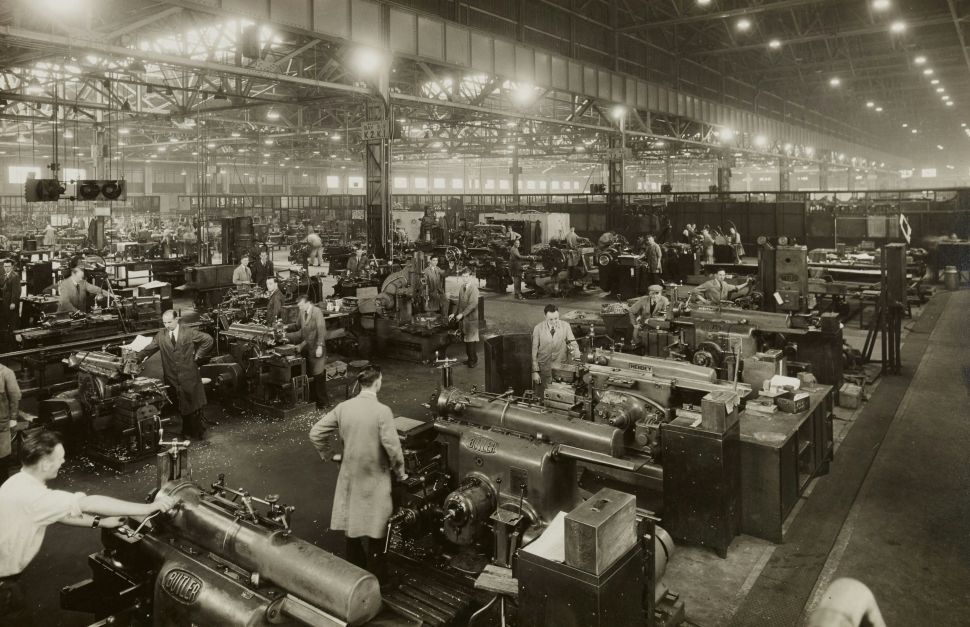
There has been considerable coverage of how artificial intelligence agents are increasing office workers’ productivity by handling simple tasks such as scheduling meetings, summarizing documents and drafting emails. However, an area where this technology is often overlooked, despite making significant strides, is industrial environments such as factories, construction sites, power plants and the infrastructure that keeps the global economy running.
In these less glamorous but critical industries, A.I. agents—enabled by technological advances such as spatial computing—are serving a fundamental purpose at a time of heightened, sector-wide pressure. Many of these working environments are plagued by skill gaps, aging workforces and employees carrying unsustainable workloads. Human error in these conditions is a very real risk, impacting not just productivity levels but also putting lives at risk.
The rise of agentic A.I. and its implementation across the enterprise domain is changing that, improving decision-making, safety and cost management in ways the sector has not seen before. According to research from McKinsey, advanced industries could benefit from annual revenue increases of $450 billion to $650 billion and cost savings of up to 50 percent by the end of the decade due to A.I. agents.
The urgency of that opportunity has only intensified. The U.S. manufacturing sector is currently navigating one of its most turbulent periods in recent history as tariff volatility, reshoring pressure and supply chain restructuring simultaneously increase demand for domestic industrial output, exposing workforce vulnerabilities. For the industrial operators moving the fastest, agentic A.I. is already an operational response to them.
The workforce crisis driving industrial A.I. adoption
The case for agentic A.I. in field work settings has never been more urgent. Two problems are particularly acute: the talent shortage and a rapidly aging workforce. In American manufacturing alone, 3.8 million jobs will need to be filled in the next ten years as the sector battles skill gaps and struggles to attract new entrants. Meanwhile, people aged 50 and over are projected to make up 30 percent of the global workforce by 2050.
That talent deficit places considerable strain on the people already working in industrial settings, degrading productivity, impairing decision-making and increasing the likelihood of accidents caused by human error. The human cost of that risk is well documented. The U.S. Bureau of Labor Statistics reported more than 5,000 fatal work injuries in 2024, with construction and extraction accounting for the highest share of any sector. The Occupational Safety and Health Administration (OSHA) estimates that workplace injuries and illnesses cost U.S. businesses more than $170 billion annually. In front-line industries, accidents don’t just endanger employees. They damage corporate reputations, trigger regulatory scrutiny and can deprive the wider population of critical services. When field work support A.I. agents are deployed to industrial workplaces, many of these risks can be largely avoided, with substantial benefits for both workers and employers.
Field work support A.I. agents work by analyzing video and imagery captured from cameras installed across an industrial environment, alongside user-inputted written information such as workplace safety rules and instruction manuals. Unlike text-based large language models (LLMs), field work support A.I. agents use multimodal LLMs, capable of recognizing 3D imagery to turn multimodal data into actionable insights. Those insights could include near-miss warnings when, for instance, a fatigued employee is about to come into contact with dangerous machinery, or workplace safety reports that can be quickly read and acted on by frontline management teams.
Crucially, A.I. agents never tire, meaning safety issues will not be missed regardless of whether a human employee overlooks something or whether an incident occurs outside of standard working hours. What’s more, because A.I. agents can learn and adapt over time, they remain effective tools in a fast-changing workplace.
Fujitsu enables field-work A.I. agents through its agentic A.I. benchmarking suite, FieldWorkArena. It can interpret over 40 different types of data, including images and written materials, and assist with 500 field tasks. In practice, that means an industrial operator can deploy the system against their existing camera infrastructure and safety documentation and begin receiving actionable insights without rebuilding their operational environment from scratch. Innovations like this are designed to accelerate the deployment of A.I. agents, ensure their smooth integration into existing operations and ultimately make field work safer and more efficient.
Safer workers, stronger operations
By integrating spatially aware agentic A.I. assistants into the industrial workplace, everyone within the organization wins. For the average worker, there is less cause for concern about accidents that could harm both their own health and the business. They can complete work accurately and on schedule, supported by up-to-date, summarized instructions and real-time spatial data provided by the A.I. assistant.
This technology will also enable workers to keep pace with the latest knowledge and skills needed to stay effective in their roles and advance in their careers. The assistant will be able to perform tasks that most people would find prohibitively time-consuming, like monitoring and deciphering large amounts of machine data or flagging anomalies across complex systems before they become failures.
Employers benefit, too. More productive workers mean higher-quality products and services that reach customers faster, driving customer satisfaction, retention and, ultimately, profitability. A safer workplace also improves staff retention, helping businesses close the skills gap that has become one of the sector’s most costly and persistent challenges. The financial stakes of that retention problem are significant: the Society for Human Resource Management estimates that replacing a single employee costs between 50 percent and 200 percent of that person’s annual salary, a figure that compounds quickly in skilled industrial roles where training cycles are long and institutional knowledge is hard to replace. Every preventable accident that drives an employee out of the workforce carries consequences that extend well beyond the incident itself.
A safe workplace, staffed by people who are genuinely supported in their roles, is also a powerful recruitment tool, helping to close skills gaps before they widen further. With 2025 Gartner HR research showing that 65 percent of employees are excited about the prospect of leveraging new A.I. tools in their roles, investment in an agentic A.I. assistant is likely to translate into measurable gains in staff satisfaction and performance over time.
A.I. can serve as an effective cost-reduction strategy for industrial businesses, too. By preventing accidents and errors caused by a lapse in human judgment or unsafe working conditions, organizations can avoid costly litigation, expensive remediation efforts and the revenue loss that safety failures generate. By continuously monitoring every area of the working environment, A.I. assistants can identify inefficiencies eating into margins and surface targeted recommendations for long-term savings.
The implementation challenge
This doesn’t suggest that implementation is without friction. Industrial operators considering agentic A.I. face real challenges: integrating new systems with legacy infrastructure, managing workforce concerns around monitoring technology and justifying upfront deployment costs against return timelines. The evidence suggests that the most successful deployments start narrow—a single facility, a clearly defined use case, a measurable safety outcome—and build organizational confidence prior to scaling. The technology works best when it’s introduced as a tool that supports workers rather than surveils them, and when frontline teams are involved in shaping how it is deployed.
There’s no denying that industries like manufacturing, energy and construction play an integral role in the functioning of the global economy and society. Yet they are currently being held back by overstretched and understaffed teams, persistent skill shortages and the difficulty of keeping pace with rapid technological change. Agentic A.I. and data-driven decision-making offer a credible path through these challenges, as tools that keep workers safer, more capable and better supported than they have ever been.
