
Some of the most powerful people building A.I. are now asking, in effect, to be stopped. Leading firm Anthropic recently conceded that “if it were possible to effectively slow the development of this technology to give ourselves more time to deal with its immense implications, we think that would likely be a good thing.” It is a remarkable admission. The architects of the future are telling us they cannot see clearly into the world they are making.
They have reasons to worry, and so do we. In the space of a few months, we have seen frontier models shut down due to national security concerns, watched the most powerful cyberweapon in history brought into being, witnessed an upheaval in the labor market that economists are still struggling to map and learned of the genuine mental-health toll exacted by A.I. systems engineered to be addictive, in some cases with tragic consequences. Meanwhile, A.I. has begun to improve itself, refining its own code in a process of recursive self-improvement that carries the unsettling possibility of runaway development. Even the recent papal encyclical Magnifica Humanitas warned that a technology built for profit rather than human flourishing risks becoming a new Tower of Babel: a monument to ambition that ends in confusion and collapse.
Faced with all this, the instinct is to believe we are living through something unprecedented, and that no generation has stood quite where we stand, peering over the edge of a technology it does not fully understand. But that instinct would be incorrect. We have been here before. And the place we were, as it happens, was Cambridge, Massachusetts, exactly fifty years ago this summer.
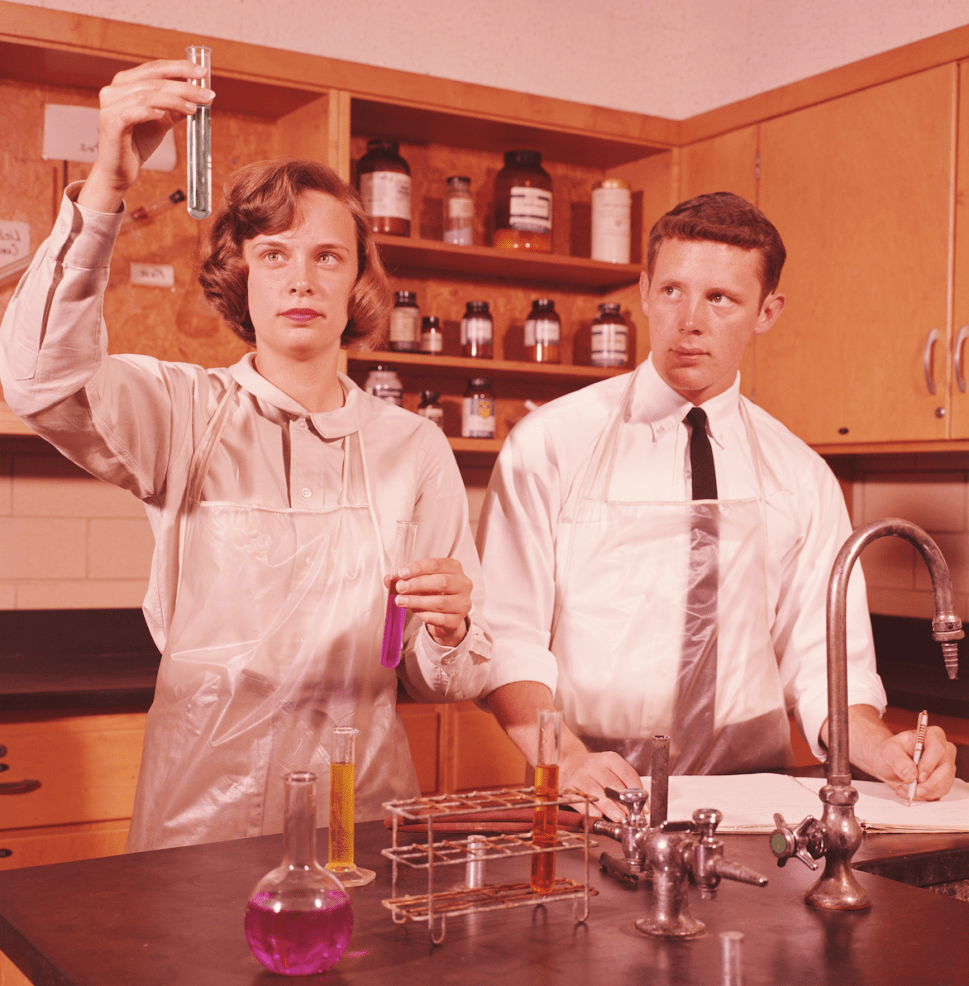
In the 1970s, the frightening new technology was not silicon but DNA. Scientists had learned to splice the genetic material of one species into another—stitching human genes into bacteria—and the public reaction ranged from wonder to dread. Would this invention lead to miracle cures for diseases, or unleash what the newspapers gleefully called “Frankenstein bugs”? Prior to the now-famous 1975 Asilomar conference in California, the scientists themselves did something almost unheard of: they paused their own research to ask how it might be conducted safely.
But the more instructive drama unfolded a year later, not in a conference center but in a city hall. In the hot summer of 1976, Cambridge erupted in a debate over whether Harvard should be allowed to build a laboratory for recombinant DNA research. The mayor feared a plague. Leading scientists threw themselves into the fray, some demonstrating the safety of their work in farmers’ markets while others warned, just as publicly, of the dangers. It was polarised, heated and frequently chaotic—democracy at its least dignified and, it turned out, its most useful.
Instead of simply banning the research or waving it through, Cambridge tried something braver. It convened a Cambridge Experimentation Review Board: ordinary citizens—a public health nurse, a nun, an engineer, a former mayor among them—charged with weighing the evidence and reaching a verdict. These were not specialists. They were residents who would have to live with the consequences. Over months of patient hearings, they listened, questioned, disagreed and, finally, decided. They did not stop the science. They produced a sensible framework of safeguards – strikingly similar, in the end, to what the Asilomar scientists had recommended.
The result is one of the great quiet vindications of public trust. Far from strangling innovation, Cambridge’s clear rules made the city the obvious home for a new industry. Biotechnology companies put down roots there precisely because the ground rules were known. Today, Kendall Square, a short walk from where those hearings took place, is routinely described as “the most innovative square mile on the planet.” Regulation did not kill the future. It built it.
This is the lesson worth carrying into our own anxious moment. The dominant assumption in the A.I. debate is that there are only two options: reckless acceleration or fearful prohibition. Cambridge in 1976 proved there is a third path, and that it runs through the public rather than around it.
We are not entirely without models. Some American states have begun, tentatively, to legislate. UNESCO has issued ethical guidelines. Intriguingly, several experts now argue that China is ahead of the United States on certain dimensions of A.I. safety – a reminder that the question of who governs this technology, and how, is also a question about which values the future will encode. The European Union has produced sweeping legislation; California has tried and stumbled. Yet almost all of this happens at a great height, in legislatures and international bodies, far above the citizens whose lives will be reshaped.
What is missing is the very thing Cambridge had in 1976: deliberation close to the ground. Imagine citizens’ assemblies on A.I. convened not in Geneva or Washington but in town halls and libraries – the way Ireland used citizens’ assemblies to break decades of deadlock on abortion and same-sex marriage, or the way Taiwan has used digital platforms to let ordinary people help shape technology policy or here at MIT through the work of the Center of Constructive Communication on developing systems for technology-enhanced community listening. The expertise of engineers is necessary, but it is not sufficient. The people who built the technology cannot be the only ones deciding how it is governed, any more than we would let arms manufacturers write the rules of war.
The stakes, if anything, are higher now. Recombinant DNA was a contained problem in a handful of laboratories. A.I. is already woven into our clinics, our courts, our classrooms and the minds of our children. The frontier is widening too, from the potential of A.I. to accelerate the development of mirror life to the potential proliferation of A.I.-engineered pathogens, and each new technology arrives wrapped in the same false choice between blind progress and blind prohibition.
Fifty years ago, a group of ordinary people in Cambridge refused that choice. They were trusted to weigh an existential risk, and they rose to it. They gave us both safety and the most innovative square mile on the planet. The question for us is whether we still believe the public can be trusted with the future, or whether we will leave it, by default, to the very people who admit they cannot control what they have made.
