
Situated in prime Midtown locations near Grand Central, the boutique Fitzpatrick hotels were perfectly positioned to take advantage of a surge of tourists flooding into New York for the World Cup. But with seven of the eight World Cup matches to be played at MetLife Stadium across the Hudson completed, revenue increased only about 15% over June last year.
“The World Cup brought business to the city and it helped us, but I was expecting a lot more, said CEO John Fitzpatrick. “Its not the big hype everybody was talking up.”
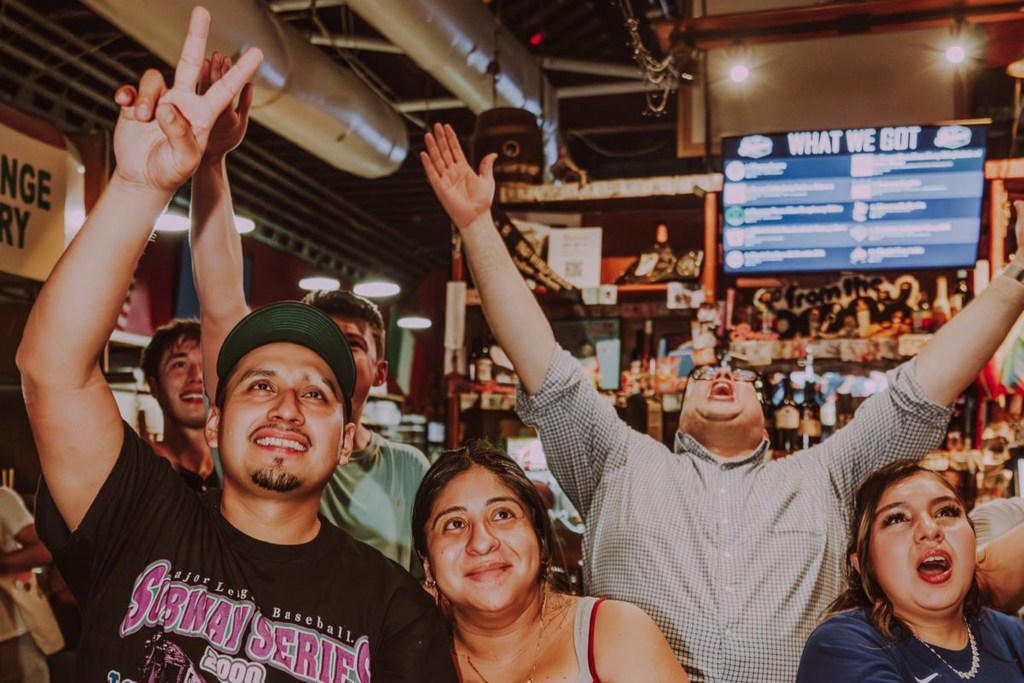
But it was a different story at the Bronx Beer Hall in Belmont, where match days saw business spike anywhere from 85% to almost double at a time in the summer.
When Colombia went to a penalty shootout against Switzerland last week, bartender Kaliee Pierce could not hear herself over the roars of the crowd. “The energy is just unmatched right now in New York in general but especially at the beer hall,” she said.
With only the World Cup final yet to be played at MetLife, an event with sky-high prices expected to attract a corporate crowd akin to the Super Bowl, the premiere sporting event’s economic impact on New York is becoming clear: Hotels saw an uptick in business but far below expectations, while bars have cashed in on the soccer fever that infected so many New Yorkers.
Cafe Paulette owner Angelique M. Rufty-Graux, left, watches France play Morocco in the World Cup quarterfinals, July 9, 2026. Credit: Ben Fractenberg/The City Reporte
“I think we will end up with a very fun event that did a lot to rehabilitate America’s image in the world — or at least it did until Trump intervened to get an American player’s red card overturned,” said Victor Matheson, a sports economist at Holy Cross University and a dedicated soccer fan. “And cities should see a modest benefit that should mostly cover hosting costs.”
The hype came from a FIFA projection of the economic impact. It estimated that the events would generate $3 billion in economic activity in the New York area based on the assumption that 1.2 million extra visitors would come for the tournament. They were expected to spend $1.7 billion, support 26,000 jobs and produce $432 million in state and local tax revenue, the international football group predicted.
FIFA did not respond to a request for comment.
While it will take a while for final numbers to be collected, it is clear from the hotel figures that nowhere near that number of people came to New York for the matches.
For example, the Hotel Association of New York projected that if more than 1 million visitors came to the city, hotel revenue would increase by $300 million. With one match to go, the association says it now expects the increase will be only $100 million — just one-third of the original estimate.
A key reason is that when their rooms didn’t fill up, hotels had to reduce rates, which happened in all 11 U.S. cities that hosted games.
Matheson got tickets to one of the matches in Kansas City. With downtown hotels asking $500 a night, he booked at a Motel 6 40 miles away to save money.
“Three days before the game I cancelled that room, and moved to a nice Hilton near the airport for the same price,” he said. “Tons of affordable rooms available days before a game doesn’t give off ‘biggest event ever’ vibes.”
The reason became clear when he attended the match. Most of the crowd were residents of the Kansas City area.
TV or Not TV
When it comes to bars and restaurants in New York City, those that did best were the places fans already knew.
Houston Hall, a downtown sports bar, is equipped with a giant projector screen and attracted three to four times its usual visitors on match days, said owner Jeremy Merrin. But his Times Square restaurant Havana Central saw revenue increase only 10% or 15%, even on match days.
“It definitely matters what kind of venue you are. And whether you have TVs or not,” he said.
This is why Frantz Metellus, the owner of Rustik Tavern, a cozy American restaurant bordering Clinton Hill and Bedford-Stuyvesant, has not seen dramatic increases in his numbers despite running promotions on food and drinks during game time, and advertising watch parties. His revenue for the quarter containing the tournament’s opening weeks grew about 5% above the same quarter last year, compared to a 4% year-over-year growth rate in the first quarter of 2026.
“It hasn’t really been that huge for us. A handful of people are probably coming in to watch … maybe it’s a group of eight to 10,” he said.
Metellus said the diehard fans who plan their day around a match already know where they are going — usually to local sports bars. He described watching bars in his neighborhood prepare for this moment since the last World Cup — hanging up soccer jerseys and flags.
“I think it was intentional,” he said of the marketing.
For the bars on the winning side of the line, the boost is that customers are showing up on weekdays and afternoon hours, when these places would usually be empty.
Anthony Ramirez, who co-owns the Bronx Beer Hall with his brother Paul Ramirez, said he has not seen higher spending by customers, but higher total revenue with increased visitors.
“People are coming during times they normally wouldn’t come,” he said. They are also staying longer. “It becomes their day,” Ramirez added.
Soccer fans watch a World Cup game at the Bronx Beer Hall. Credit: Courtesy of Bronx Beer Hall
For example, sales at the beer hall rose 86% on June 13, a Saturday, when customers were expected. But the following Tuesday, June 16, saw an increase of 95%, marking a slightly larger increase than the weekend. The summer is usually the slowest stretch of the year for the bar, Ramirez added, which makes the numbers all the more impressive.
Although venues interviewed had not hired any additional staff to help with the rush, the employees are getting more shifts and, with the increased traffic, significantly more tips.
On the beer hall’s biggest match days, according to figures provided by the bar, tips went up more than 130%. Pierce said the tips of her team have been increasing at similar rates as the gross revenue: “It’s great for bartenders right now.”
Ramirez said nobody has turned down a shift since the tournament began. “Everyone wants to come in,” he said.
Matheson said most cities’ additional revenue probably covered their hosting costs. But that will not be true for New York City.
Even before the World Cup began, City Comptroller Mark Levine had estimated the event could cost the city more than it generates. He estimated that even if 1.2 million visitors came, the actual revenue would cap at $55 million, compared to an estimated $70 million in security and emergency costs. With nowhere near the expected number of tourists, the city’s red ink is likely to balloon.
Ramirez is not counting it this way. “The energy of the city, the sort of unity that everyone’s feeling, it’s pretty awesome.” he said. “Forget business.”
Our nonprofit newsroom relies on donations from readers to sustain our local reporting and keep it free for all New Yorkers. Donate to THE CITY today.
The post NYC Hotels Missed Promised World Cup Boom, While Sports Bars Cashed In appeared first on The City Reporter.
