
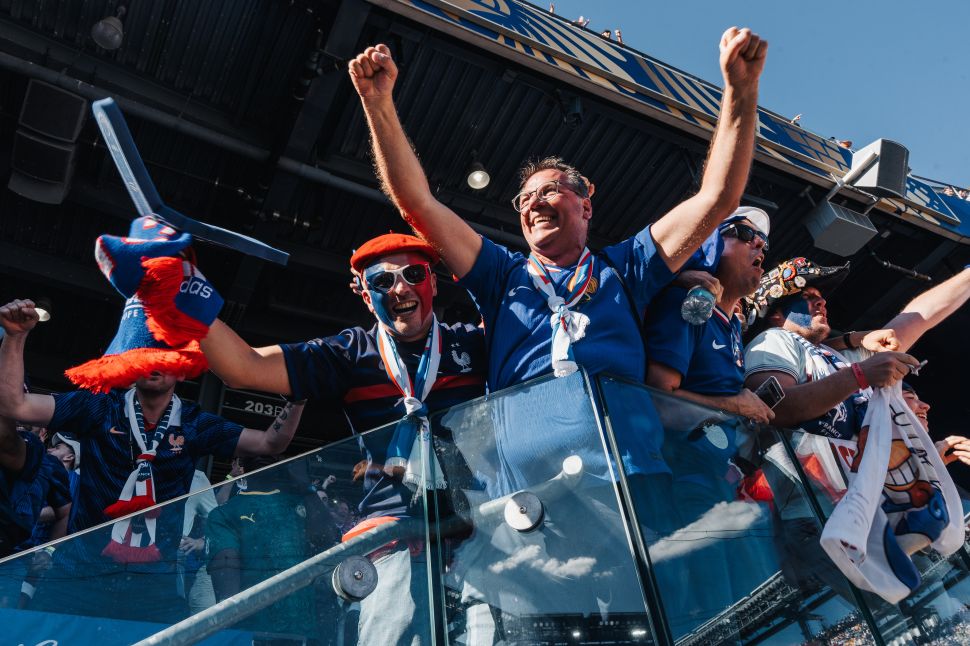
Ask someone to name the best thing they have ever bought. Many people will mention a car, a watch, a home, or another meaningful purchase. Then ask a different question: What was the greatest experience of your life? The answer almost always changes. People smile. Their energy changes. They begin telling stories. They remember who they were with, where they were, and how they felt. It might have been watching the FIFA World Cup with their father, taking their children to their first Olympic Games or celebrating a Super Bowl win with lifelong friends. The memory returns in vivid detail because moments like these become part of who we are. Very few people describe an object that way. That difference says a lot about how we define value.
For many years, the commercial engine of major sporting events was straightforward: sell tickets, negotiate media rights and secure sponsorships. Today, a growing share of value is created through hospitality, premium access and curated experiences that extend far beyond the seat in the stadium. For organizers, team and host cities, the experience itself is increasingly becoming the product.
That evolution mirrors a broader shift in luxury. For decades, luxury was measured by what people owned. Now, it is increasingly defined by what people experience. A recent McKinsey & Company study found that consumers across all income segments overwhelmingly prioritize luxury experiences as the ultimate indulgence. More people are choosing memories over possessions because experiences satisfy something that products cannot.
That consumer preference is reshaping revenue models across sports and entertainment. Premium hospitality packages, VIP experiences, behind-the-scenes access and destination travel have become some of the fastest-growing and highest-margin parts of major events. With traditional ticket inventory inherently finite, organizers are creating new value by expanding what fans can experience rather than simply where they can sit.
An expensive purchase may bring excitement for a while. An unforgettable experience grows more valuable over time. We tell the story again. We share it with others. We revisit it years later and remember not just what happened, but who we were when it happened. The memory becomes part of identity.
A championship game with clients can become the beginning of a relationship built on trust rather than transactions. A trip with lifelong friends becomes a story retold for decades. Taking a child to their first major sporting event becomes part of a family’s history. Years later, people rarely remember every play. They remember the emotion, the conversations, and the feeling of being fully present together. The event provides the backdrop. The people create the memory.
That is why experiences command a premium. A watch tells time. A great experience becomes part of your life. Great hospitality helps make those moments possible. Premium dining, exclusive lounges, curated itineraries and personalized services create experiences that command higher prices while strengthening long-term loyalty among fans, partners and corporate clients.
It is not defined solely by luxury finishes or exclusive spaces. It is defined by how people feel. Great service removes friction, anticipates needs and allows guests to be fully present. Food, design and amenities matter, but they are rarely what people remember most. People remember the warmth of a welcome, the ease of the experience, and the sense that everything simply worked. The human element is still the ultimate differentiator.
Luxury itself is also becoming more personal. For years, premium experiences revolved around exclusivity. Today, they revolve around choice. Some guests want private lounges, exceptional dining, and behind-the-scenes access. Others simply want a more comfortable way to experience a major cultural or sporting moment. Both groups are looking for the same thing: a closer connection to the moment.
That shift is reshaping how experiences are designed. What matters is not separation from the crowd, but immersion in it.
For years, sports executives focused on monetizing media rights. The next frontier may be another equally valuable asset that could be called experience rights: the premium access, hospitality and immersive moments that cannot be streamed, summarized or generated by A.I. Broadcasters can distribute every match to millions of viewers, but they cannot replicate the feeling of walking into a stadium, meeting athletes, entertaining clients or sharing a once-in-a-lifetime moment with family. Those experiences remain inherently scarce. As digital content becomes more abundant—and progressively generated, personalized and summarized by A.I.—physical experiences become relatively more valuable precisely because they cannot be replicated. The more infinite digital content becomes, the more valuable finite live moments feel.
The next wave of global events reflects this change. The FIFA World Cup in North America and the LA28 Olympic & Paralympic Games are shared cultural moments that bring millions of people into cities and communities in ways that feel immediate and unfiltered. These events are no longer measured just by attendance, television ratings or sponsorship revenue. Their commercial success depends on how effectively they monetize premium hospitality, travel, dining, local experiences and corporate entertainment across entire host cities. The stadium is still the centerpiece, but the economic opportunity now extends far beyond it.
But the most lasting impact will be measured by how cities transform around the stadiums. The Super Bowl, for example, temporarily reshapes a city into something larger than itself. Streets become gathering points. Ordinary spaces take on meaning. A city begins to feel like a shared stage where strangers are connected by the same moment. The NCAA Championships create a similar effect on a more intimate scale. Entire communities come alive. Team colors appear in every storefront and conversation. For a few days, the city itself becomes part of the experience.
That expansion matters because today’s sports economy reaches far beyond the venue itself. Hotels, restaurants, transportation providers, retailers and cultural institutions become part of the product fans are buying. The value created by major sporting events spreads beyond the ninety minutes played on the field across an entire destination.
When people travel for these events, they do not stay contained within venues. They explore. They wander without plans. They eat where locals eat. They discover parts of a city they never intended to visit. Most of all, they remember the people.
This summer offered an early glimpse of what that looks like. Scottish supporters and the people of Boston embraced one another with enthusiasm and curiosity, sharing stories about the kindness of strangers they met along the way. Norwegian supporters transformed Times Square into a spontaneous celebration, drawing passers-by into spontaneous chants and celebrations. Across multiple cities, visitors and locals mixed in ways that felt unscripted and deeply human.
Those moments may never appear in official statistics, yet they are often the ones that stay with people the longest. Not the final score, but the feeling of being welcomed. Not the event, but the sense of belonging somewhere unfamiliar. That may be the greatest value the experience economy creates.
In a world where so much of life happens through screens, shared experiences remind us why we travel, celebrate, and gather in the first place. They create stories that families pass down, friendships that deepen over time and relationships that begin in moments of genuine connection.
The more sophisticated digital experiences become, the more valuable physical ones may prove. A.I. can personalize highlights, generate commentary and recommend exactly what every fan wants to watch. But it cannot recreate collective anticipation before kickoff, the atmosphere inside a packed stadium or the relationships built while experiencing those moments together. Digital abundance increases the relative scarcity of being there.
Consumers still appreciate beautiful products and luxury goods. Increasingly, however, they want those purchases to create something that cannot be put on a shelf. They want memories. Years from now, most people will struggle to remember the best thing they ever bought. They will never forget the people they were with when they experienced something extraordinary. Because in the end, we do not remember what we owned. We remember what we lived.
As media become infinitely reproducible, live experiences become one of the few forms of scarcity left. The organizations that learn to design, monetize and deliver those moments will shape the next era of value creation across sports, hospitality and entertainment.
